


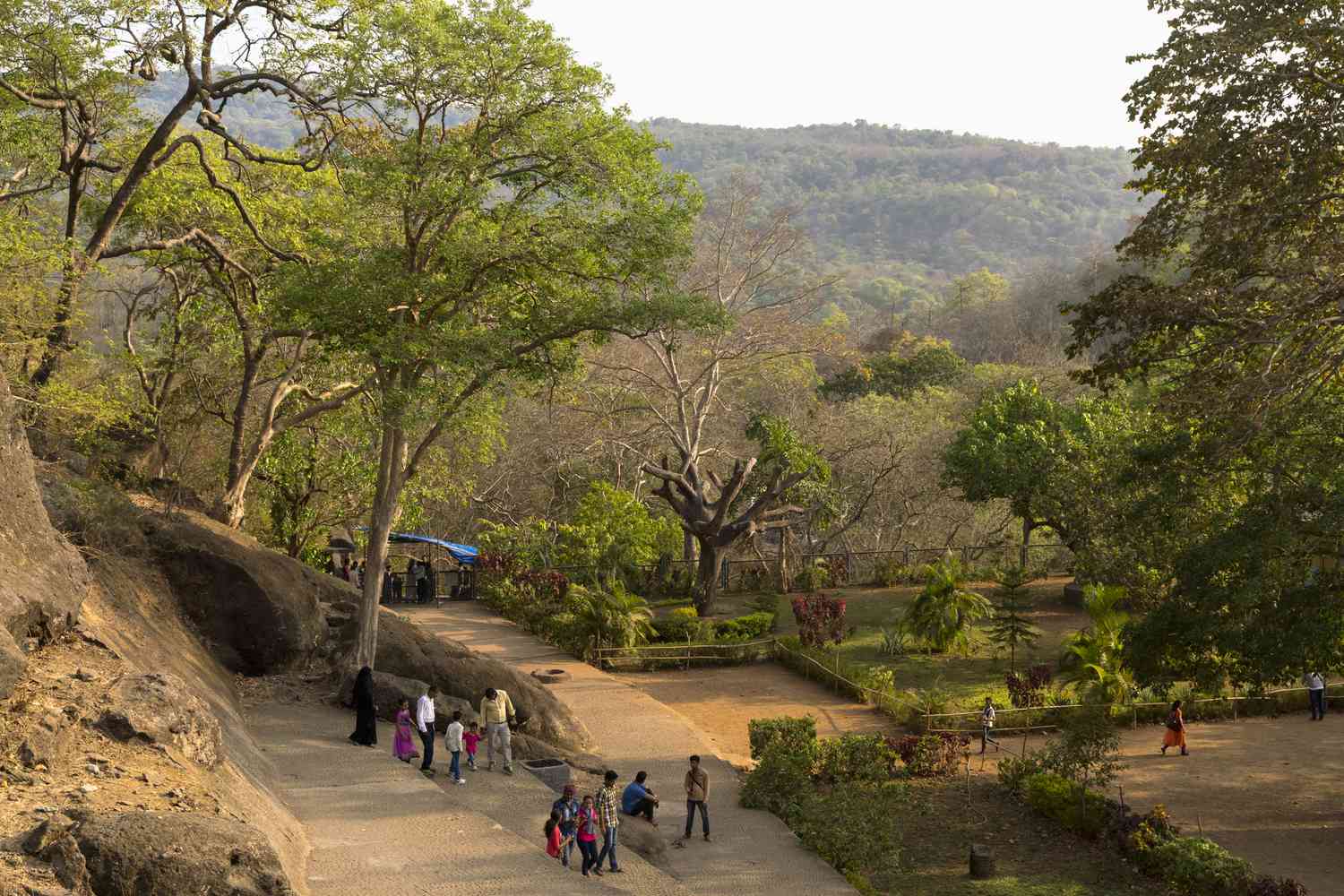
Mumbai’s northern periphery is witnessing renewed tension between ecological protection and unregulated development, as large-scale construction activity has emerged within an Ecologically Sensitive Zone (ESZ) bordering the Sanjay Gandhi National Park (SGNP). The site, located in Chena village off Ghodbunder Road in Thane district, has raised concerns among environmental groups who argue that the integrity of the buffer zone is being compromised at a pace that outstrips regulatory oversight.
Satellite imagery and on-ground checks indicate significant landscape alteration on roughly ten acres of privately held forest land. According to residents and independent observers, excavation work, debris dumping and tree clearance have accelerated over the past two months, reshaping what was once a dense green patch. A concrete access road has also been laid, extending deeper into the forested slopes. Workers at the site informed visitors that the ongoing activity is part of a residential project intended to house tribal families displaced by another development along the Chena riverfront. They also claimed that the landowner had secured all necessary permissions, though they declined to share further details on the approvals or their timelines. Environmental groups dispute this narrative. A complaint submitted to district and state authorities argues that the works violate ESZ rules, which restrict quarrying and mining to limited personal use by local communities. An environmental advocate involved in the complaint noted that the excavation appears “clearly commercial in scale” and therefore outside permissible activity in a protected buffer.
The land in question was earlier categorised as reserve forest before being reclassified following litigation initiated by the owner. Although legally recognised as private, it retains a forest designation that typically requires additional scrutiny for any construction or land alteration. Activists also contend that key procedural steps may have been bypassed. Their complaint asks how construction was sanctioned in the absence of a zonal master plan, which is a prerequisite for project clearances within ESZ boundaries. A member of a local conservation network said that follow-ups with forest officials yielded no clarity, with state departments redirecting the issue between themselves and the ESZ monitoring committee. Local residents added that agricultural land once cultivated by tribal communities adjacent to the main site has also been cleared, prompting fears of an expanding development footprint. Several trees, they say, were felled without public disclosure or community consultation. Those opposing the works have demanded an immediate suspension of excavation, a review of all permissions granted, and restoration of damaged stretches of the forest edge. Officials from the ESZ monitoring committee did not comment, while municipal authorities in Mira-Bhayander did not respond to queries.
As cities like Mumbai and Thane confront development pressures and long-standing housing gaps, the episode underscores the need for transparent governance, stronger ecological assessments and urban growth models that do not compromise critical natural buffers. Sustainable planning, experts note, will require coordination between state agencies and communities to ensure natural ecosystems remain central to urban resilience.
Also Read: Mumbai Renews Babulnath Temple Land Lease For Thirty Years At One Rupee
