


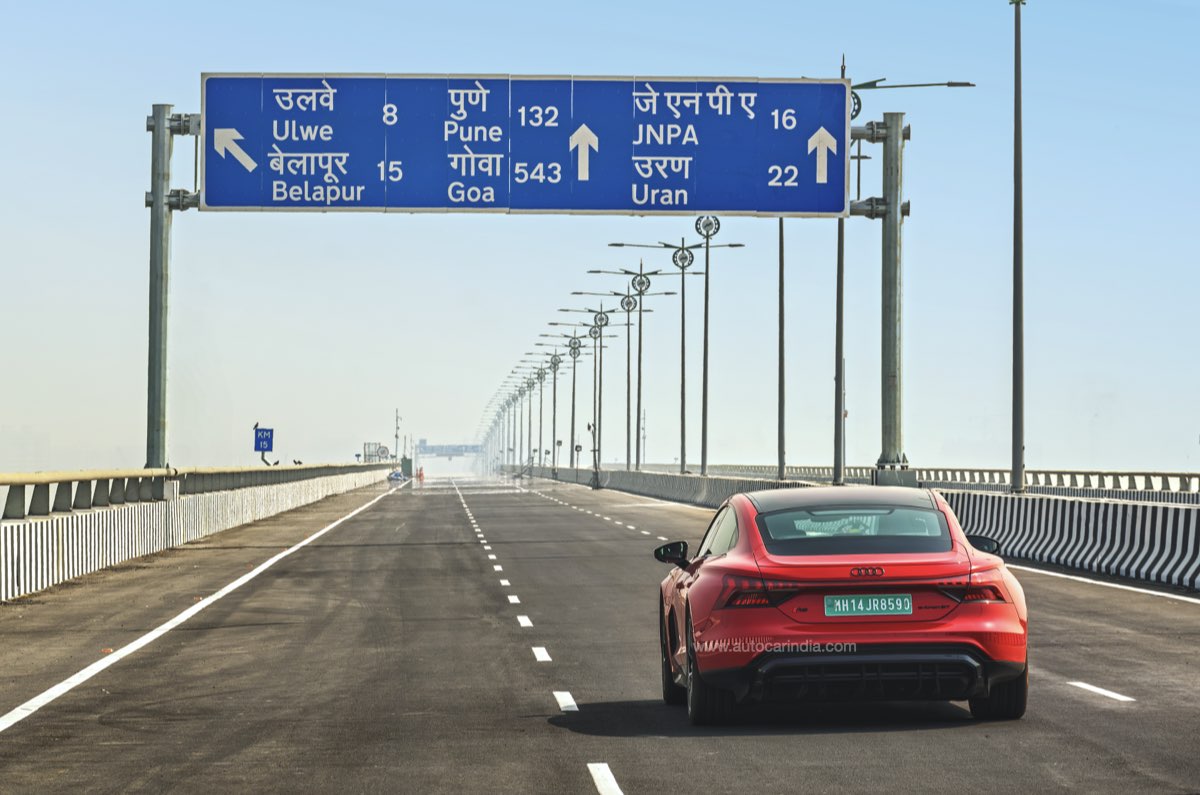
The Maharashtra government has extended toll exemption benefits to electric vehicles using the iconic Bandra-Worli Sea Link.
This decision comes under the ambit of the state’s Electric Vehicle Policy 2025 and aligns with its broader strategy to support sustainable transport infrastructure and incentivise green mobility. Currently used by approximately 60,000 vehicles every day, the sea link connects Mumbai’s western suburbs to the central business district. With an estimated 8% of these vehicles being electric, the move is set to benefit thousands of daily commuters and commercial operators, easing the cost of mobility while reinforcing the state’s commitment to clean transport.
The toll for the Bandra-Worli Sea Link currently ranges from ₹100 for private four-wheelers to ₹210 for heavier commercial vehicles, making it one of the more expensive intra-city bridges in the country. The waiver is expected to lead to substantial annual savings for EV users while serving as a behavioural nudge towards zero-emission mobility. The decision comes after sustained demand from citizens and EV advocacy groups for parity with other toll-exempt stretches such as the Mumbai-Pune Expressway, the Nagpur-Mumbai Samruddhi Mahamarg, and the Atal Setu (Mumbai Trans Harbour Link). The Maharashtra government has approved the waiver in principle, with an official notification expected shortly. A steering committee is being constituted to oversee implementation under the Electric Vehicle Policy 2025. This committee will determine the framework for integrating toll exemptions across various urban and intercity corridors while ensuring minimal revenue disruptions to infrastructure operators.
The financial implication of the policy is not minor. The state is projected to absorb a fiscal burden of nearly ₹3,000 crore over five years to offset the revenue loss from waived tolls, motor vehicle tax exemptions, and EV subsidies. However, officials argue that the long-term economic and environmental dividends—from improved air quality to reduced dependence on fossil fuels—far outweigh the upfront cost. Experts in urban mobility and environmental policy view the initiative as a critical leap forward in mainstreaming electric vehicles, especially in a city like Mumbai, which grapples with high traffic density and declining air quality. The Bandra-Worli Sea Link, which stands as a symbol of Mumbai’s infrastructure prowess, now also becomes a symbol of its green transition.
This latest development adds momentum to a range of interventions under the state’s EV policy. Apart from toll waivers, the policy offers subsidies on vehicle purchases, exemptions from road tax, and discounted toll rates on other roads under public agencies such as the PWD, MMRDA, and MSRDC. With this move, Maharashtra is not just encouraging personal EV adoption but also laying the groundwork for transforming logistics, public transport, and shared mobility in one of India’s most densely populated states. As cities continue to search for cleaner, smarter transport solutions, policies like these could well become the blueprint for equitable and sustainable mobility nationwide.
Also Read: Pune Bengaluru Expressway to Cut Travel Time by Half
