


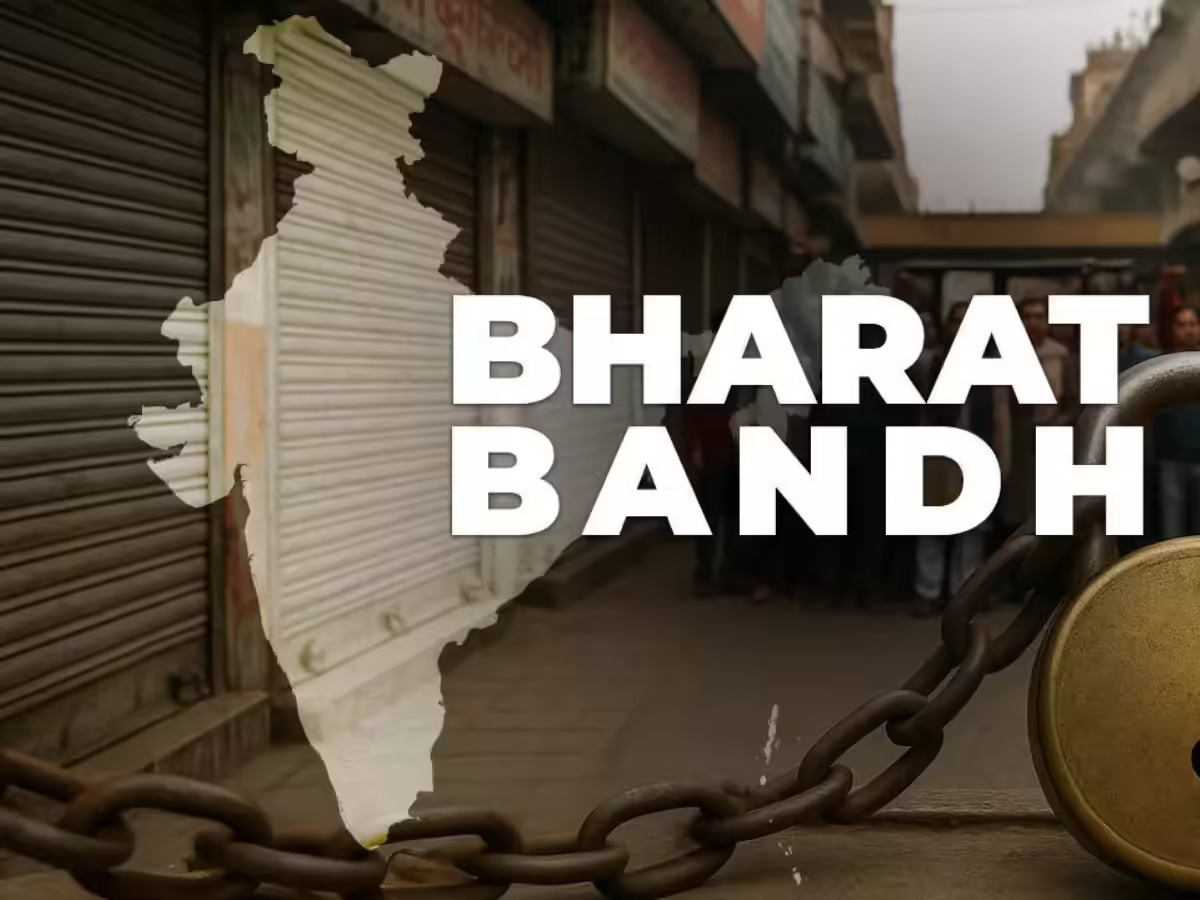
Mumbai prepared for a potentially turbulent Wednesday as a nationwide general strike, termed Bharat Bandh, gained traction among trade unions, workers’ associations, and farmer groups. While suburban train services and city buses in the financial capital operated as scheduled in the morning hours, a lingering uncertainty remained over the continuity of essential services as the day progressed.
The strike, spearheaded by central trade unions and supported by various sectoral outfits, is a collective expression of dissent against policy decisions seen as skewed towards corporatisation and erosion of workers’ rights. Labour reforms, aggressive privatisation of public sector units, and rural economic distress are among the core grievances uniting protesters under the Bharat Bandh banner. In Mumbai, which is often considered a barometer for national economic activity, the response to the bandh was mixed but closely monitored. No government-mandated shutdown was declared, yet several public services reported strain due to employee absenteeism and union participation in the protest.
Banking services bore the brunt early in the day. With multiple bank employees’ unions extending support to the strike, several branches in the city functioned with skeletal staff. Cash transactions, cheque clearances, and counter services were either delayed or suspended. Officials from the financial sector confirmed that while online banking remained unaffected, branch-level disruptions were unavoidable given the turnout. The insurance sector also aligned itself with the protest. According to officials, participation from employees across both public and private insurance companies was significant, further limiting customer service operations. Though the Reserve Bank of India and large private banks maintained a business-as-usual stance, many ATMs reported cash refill delays in certain pockets of the city.
Postal services faced similar disruptions, with postal unions joining the protest demanding better wages and opposing workforce rationalisation. Delays in mail delivery and service counters were reported in several areas, especially in the eastern suburbs and extended metropolitan regions. Officials at regional postal offices acknowledged that a sizeable portion of staff had abstained from duty in solidarity with the nationwide agitation. Power services, another critical component of urban life, were flagged as vulnerable in advance of the bandh. While Mumbai did not experience blackouts, the union representing over 25 lakh electricity workers nationwide had earlier announced its participation in the strike. Experts stated that while the city’s power supply system is largely automated, field services such as fault resolution and maintenance could face delays, especially if the protest prolongs or intensifies.
Despite the broad-based participation across sectors, the city’s transport network remained largely unaffected during the early hours of the bandh. Mumbai’s suburban railways, which serve over 70 lakh commuters daily, continued operating on regular schedules. Officials from the railway divisions confirmed no formal call for protest had been issued by their unions. Similarly, Brihanmumbai Electric Supply and Transport (BEST) buses were operational, with depots reporting standard turnout. However, union representatives cautioned that should the strike widen in influence, services might be scaled back as a precautionary or solidarity measure later in the day.
Educational institutions across Mumbai functioned as per routine. No holiday notification was issued by the Maharashtra state education department. However, several private school managements indicated that student attendance was lower than usual, likely due to parental caution and perceived transport risks. Colleges reported normal operations, although some campuses witnessed student-led solidarity gatherings in support of the strike’s demands. Corporate offices in key business hubs including Bandra-Kurla Complex, Lower Parel, and Andheri East remained open. However, several firms across the information technology and financial services sectors issued advisories encouraging employees to opt for remote work if necessary. Business continuity teams were kept on standby in many multinational firms, reflecting the seriousness with which the corporate sector assessed the bandh’s potential implications.
Retail activity in major commercial pockets of Mumbai — including Crawford Market, Dadar, and Andheri — remained robust. Traders and small business owners largely chose to stay open, with shopkeepers expressing concerns over revenue loss amid rising costs. Restaurant and hospitality services also remained unaffected, with no significant decline in footfall reported during the morning hours. The protest was marked by peaceful demonstrations in parts of the city. Mumbai Police deployed additional personnel at key junctions, railway stations, and commercial areas to prevent untoward incidents and ensure civic order. Senior officials confirmed that while protests had been scheduled at specific locations, no reports of violence or mass arrests had been received by noon.
Experts note that the Bharat Bandh, although disruptive in limited pockets, brings to the fore deeper structural concerns. “The mobilisation of such a vast number of workers signals a growing disconnect between macroeconomic policymaking and ground-level socio-economic realities,” an urban economist commented, adding that sustained neglect of worker-centric policies could further widen urban inequalities. Mumbai, like other Indian megacities, continues to grapple with balancing economic growth and inclusive development. Events like the Bharat Bandh highlight the tension between reform and resistance — a duality that urban planners, policymakers, and citizens must acknowledge as cities strive to become more equitable, sustainable, and human-centric.
As the day unfolds, the full extent of the bandh’s impact will become clearer. But one thing remains certain — the issues at the heart of the strike are not fleeting. They demand long-term systemic interventions aimed at building a fairer urban economy where public services, worker rights, and citizen welfare can coexist without conflict.
Also Read : Bengaluru bike taxi riders demand central MoRTH rules to resume services
