Mumbai Schools And Colleges Closed Amid Heavy Rain Forecast
Mumbai has been battered by its third consecutive day of intense monsoon rainfall, triggering a red alert and widespread waterlogging. This deluge has not only disrupted daily life but also served as a powerful reminder of the city’s vulnerability to climate-induced extreme weather, stressing the urgent need for a more resilient, sustainable, and equitable urban infrastructure. While officials have mobilised a coordinated response, the crisis has exposed deep-seated vulnerabilities in the city’s transport and drainage systems, sparking a crucial conversation about its preparedness for a future defined by climate uncertainty.
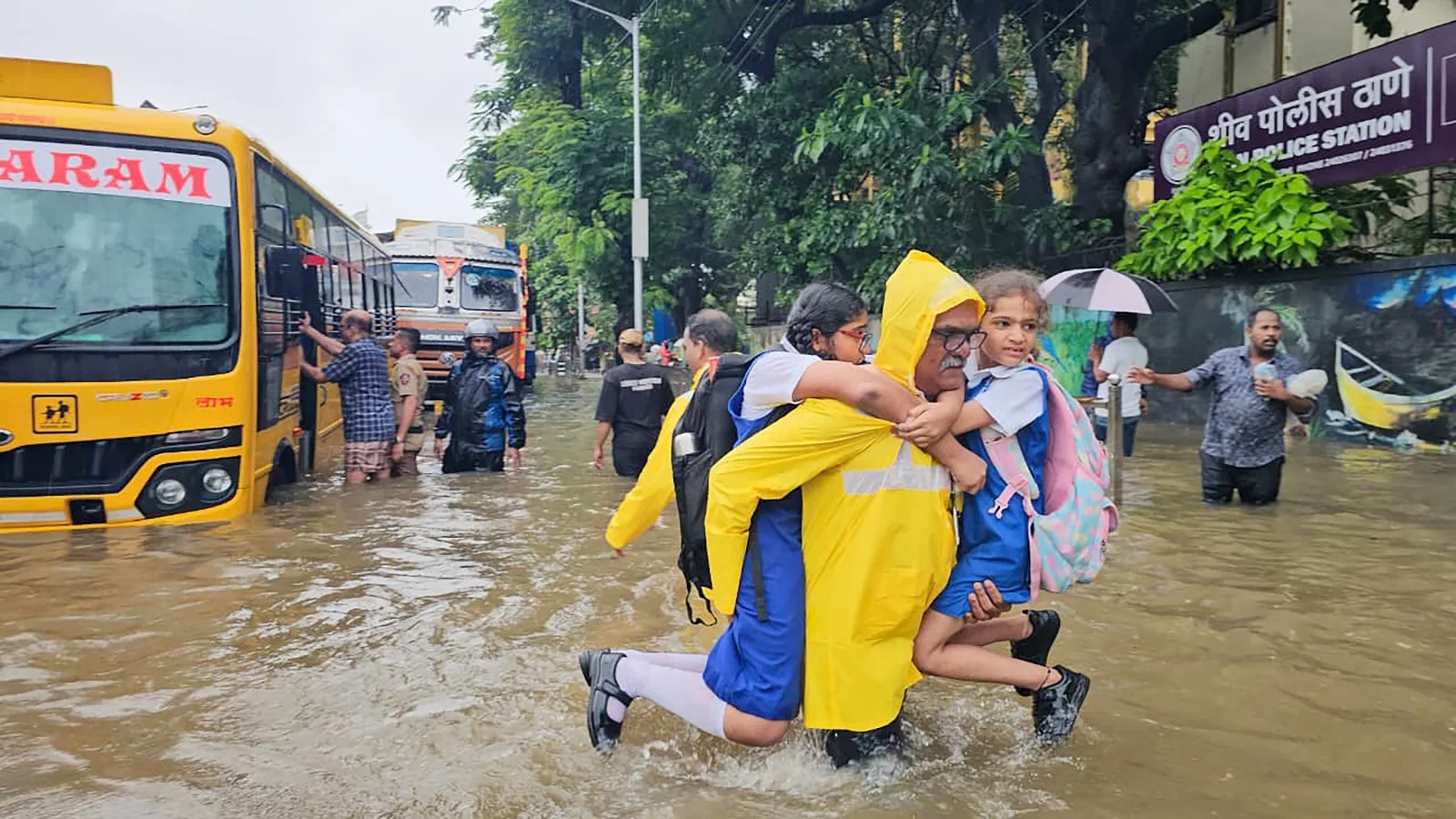
The human impact of the downpour was immediate and dramatic. Reports emerged of heroic efforts to rescue schoolchildren trapped in a waterlogged bus in Matunga and citizens carrying ailing family members through knee-deep water to reach Chembur’s Maa General Hospital. These incidents underscore the high stakes of urban resilience and the disproportionate impact of such events on the most vulnerable. With the city’s civic body declaring a holiday for all schools and colleges and officials urging residents to stay indoors, daily life came to a standstill. Rainfall data revealed the ferocity of the downpour, with Vikhroli recording over 139mm and other areas receiving more than 100mm in a short span, a volume that traditional storm-water drains were simply not built to handle.
The chaos highlights a critical challenge for a metropolis striving to be a sustainable and eco-friendly city. The failure of surface-level transport, with local trains facing delays and road traffic grinding to a halt, underscores the fragility of existing infrastructure. While bus services remained operational in most areas, the overall disruption points to a pressing need to invest in more resilient transport systems, such as the city’s elevated and underground metro lines. This shift towards climate-proof infrastructure is a crucial step towards a zero-net-carbon future, as it ensures that citizens can rely on clean public transport even during extreme weather, reducing the reliance on private vehicles that contribute to emissions.
From a social perspective, the monsoon crisis also shines a light on urban equity. The communities most affected are often those residing in low-lying areas, with limited access to resources. A chaotic urban environment during a flood creates an unsafe and unreliable situation, disproportionately affecting women and other vulnerable groups. The proactive rescues and advisories from authorities, while commendable, also serve as a stark reminder of the city’s need for a more robust and inclusive infrastructure that ensures the safety and mobility of all citizens, regardless of their gender, social, or economic status.
The deluge, therefore, is more than just a seasonal inconvenience; it is a critical test of Mumbai’s long-term sustainability. It is a wake-up call for city planners to move beyond a reactive disaster management approach and adopt a proactive, long-term strategy of building a climate-resilient metropolis. The lessons from this monsoon must be a catalyst for reimagining the city—one that integrates robust drainage systems, invests in all-weather public transport, and builds with an unwavering commitment to both ecological balance and social equity. This is the only path to ensuring that Mumbai remains a liveable city for generations to come.