


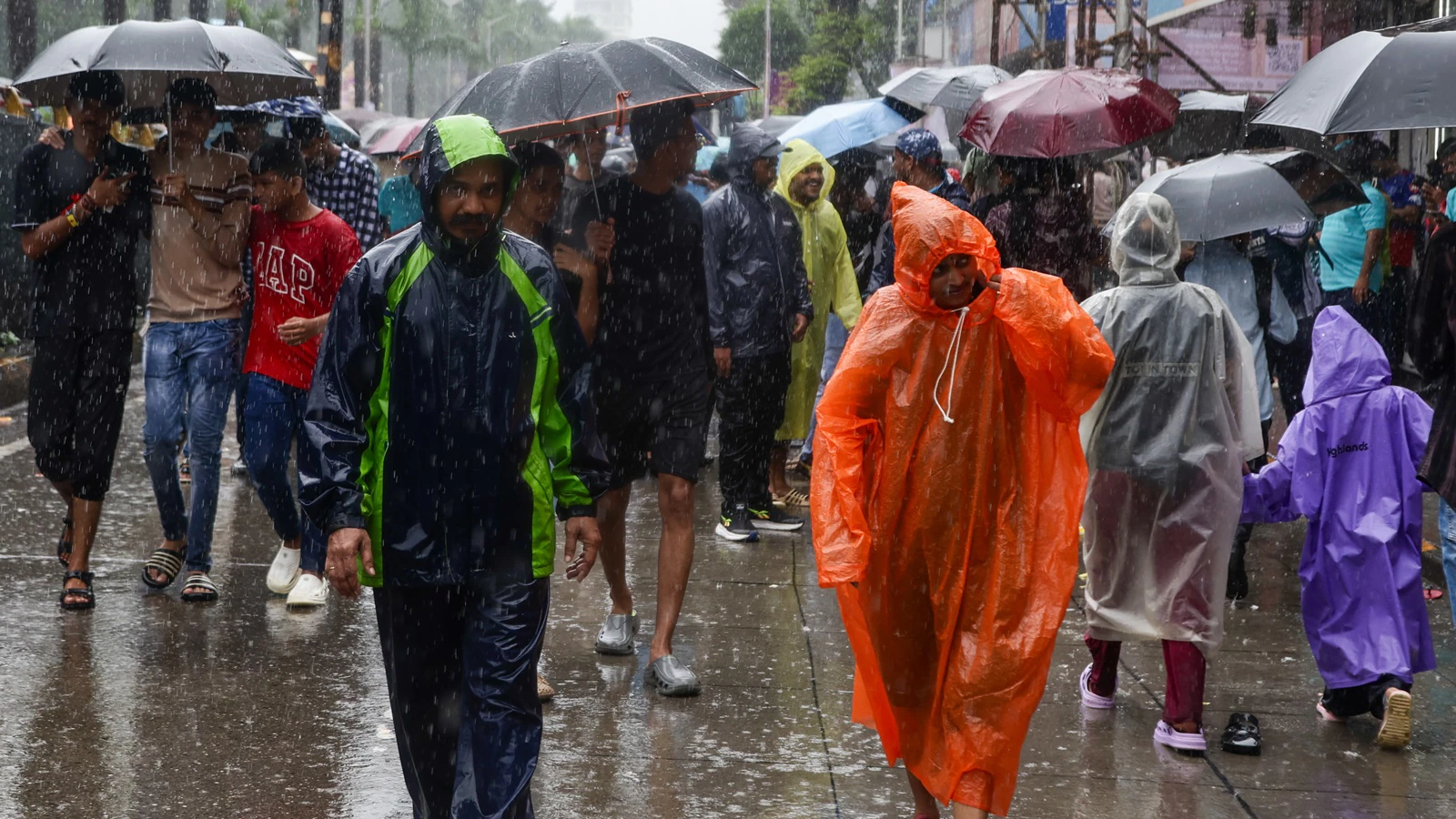
Mumbai has crossed a major monsoon threshold, recording 120 percent of its annual average rainfall by mid-September, with the India Meteorological Department (IMD) issuing multiple alerts for heavy showers across the city and its neighbouring districts. The unrelenting downpour from Sunday night through Monday left several areas waterlogged, paralysing road traffic and straining civic infrastructure.
Data from the Santacruz observatory shows cumulative rainfall this season has touched 2,786 mm, far above the city’s average annual 2,207 mm. This makes 2025 one of the wettest years in recent memory. Eastern suburbs reported over 2,400 mm of rainfall, western suburbs logged more than 2,370 mm, while the island city recorded nearly 1,912 mm. In some locations, 24-hour rainfall crossed 200 mm, with Bandra, Worli and Mankhurd among the hardest hit. The IMD on Monday issued a Nowcast Red Alert for Mumbai and surrounding regions, warning of intense spells with thunderstorms. While Raigad district remains under a red warning, Mumbai, Thane and Palghar are under an orange alert, signalling very heavy rainfall, valid till Tuesday morning. The forecast further indicates that the city could experience gusty winds, thunderstorms and heavy showers over the next two days under a yellow alert.
Waterlogging was reported in several parts of the city beyond the usual hotspots. Roads near Worli Naka and Atria Mall, often prone to flooding, were submerged deeper than normal, with local officials attributing it to clogged stormwater drains impacted by ongoing infrastructure works. Dadar TT, Mahalaxmi junction, Kurla, Andheri subway and Ghatkopar also faced severe water accumulation, with traffic diversions enforced in multiple zones. Civic officials from the disaster management cell noted that the high tide compounded the flooding, overwhelming drainage capacity. The BMC and Mumbai Police issued advisories, urging residents to avoid low-lying areas and warning of delays in suburban train services. The disruption brought into sharp focus the continuing challenge of flood mitigation despite years of investments in stormwater upgrades.
Meteorologists clarified that the current rainfall surge is not linked to monsoon withdrawal. The southwest monsoon has started retreating from Gujarat and parts of Maharashtra, but experts attributed Mumbai’s intense spell to altered wind circulation and low-pressure conditions in the region. This unusual weather system, they said, highlights the growing unpredictability of seasonal rainfall in the backdrop of climate change. For citizens, the prolonged heavy rainfall has meant yet another reminder of the city’s vulnerabilities. The recurrent flooding points to the urgent need for more resilient drainage systems, better solid waste management to prevent choke points, and infrastructure planning that accounts for extreme weather events. With the season yet to officially conclude, the question now is whether Mumbai’s civic systems can sustain the pressure without further large-scale disruption.
Also Read: Maharashtra To Lease Government Land For Advertisement Hoardings
