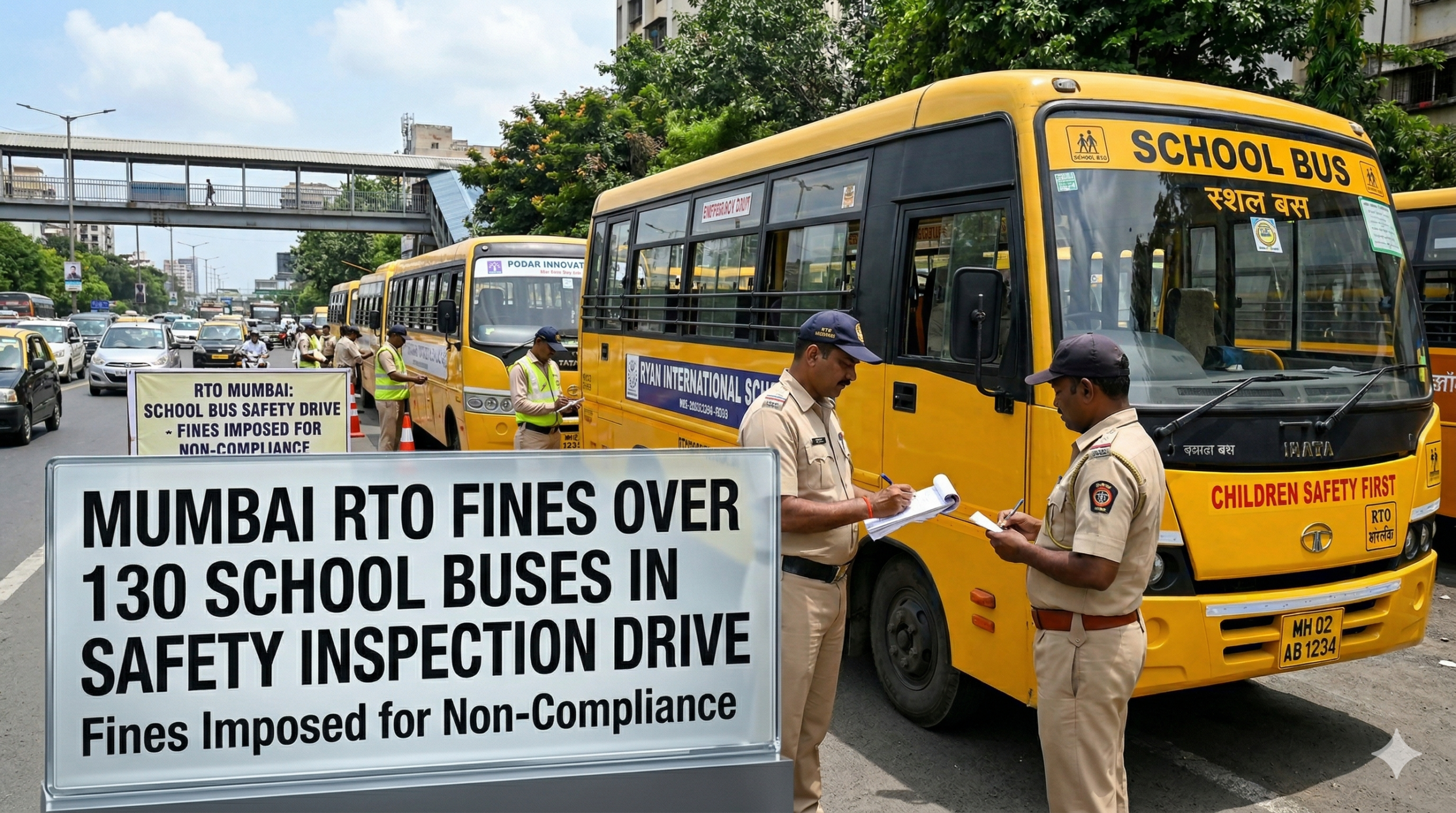
Mumbai’s transport authorities have intensified enforcement on student transport systems ahead of the new academic year, penalising a significant number of school buses for safety violations and regulatory non-compliance. The crackdown reflects growing concern over the reliability and safety of school transport infrastructure in one of India’s most densely populated urban regions.
Over the past month, officials carried out inspections across hundreds of school buses, identifying multiple violations and imposing fines as part of the Mumbai school bus safety drive. Authorities reported that a notable proportion of vehicles failed to meet basic operational standards, raising questions about preparedness as schools reopen. Among the key issues flagged were instances of unauthorised vehicles operating as school buses without proper permits, a practice that exposes children to heightened risk. Additionally, several buses were found lacking essential safety features such as designated attendants, proper signage, and compliance with prescribed vehicle specifications. These shortcomings are particularly concerning in a city where road congestion and traffic complexity demand higher safety standards for vulnerable passengers.
Urban mobility experts note that the Mumbai school bus safety initiative comes at a critical juncture, as revised state-level regulations governing school transport begin to take effect. These norms are designed to improve accountability among operators, mandating features such as trained staff, surveillance systems, and emergency preparedness measures. However, enforcement remains the key determinant of effectiveness. Authorities have indicated that inspections will continue in the coming weeks, with a focus on ensuring that all school buses adhere to mandated safety protocols. The enforcement drive is also intended to act as a deterrent, signalling stricter oversight in a sector that has historically faced compliance challenges. Beyond regulatory action, officials are urging parents and school administrations to play a more active role in ensuring safe transport arrangements. Verification of safety equipment, including GPS tracking, fire extinguishers, and monitoring systems, is being emphasised as a shared responsibility. Experts argue that such collaborative vigilance is essential in bridging gaps that enforcement alone cannot address.
From a broader urban development perspective, the issue highlights the need for integrated planning of school transport within city mobility frameworks. Safe and reliable student transport not only reduces traffic congestion caused by private vehicles but also contributes to more equitable access to education. Sustainability considerations also come into play. Well-regulated school transport systems can support shared mobility models, reducing emissions and easing pressure on road infrastructure. However, achieving these outcomes requires consistent enforcement, robust data systems, and accountability across stakeholders.
As Mumbai prepares for the new school term, the focus will be on translating enforcement drives into long-term behavioural change among operators. Strengthening the Mumbai school bus safety ecosystem will be critical to ensuring that daily commutes for thousands of students are not only efficient but also secure and resilient.
Mumbai RTO Fines Over 130 School Buses In Safety Inspection Drive