


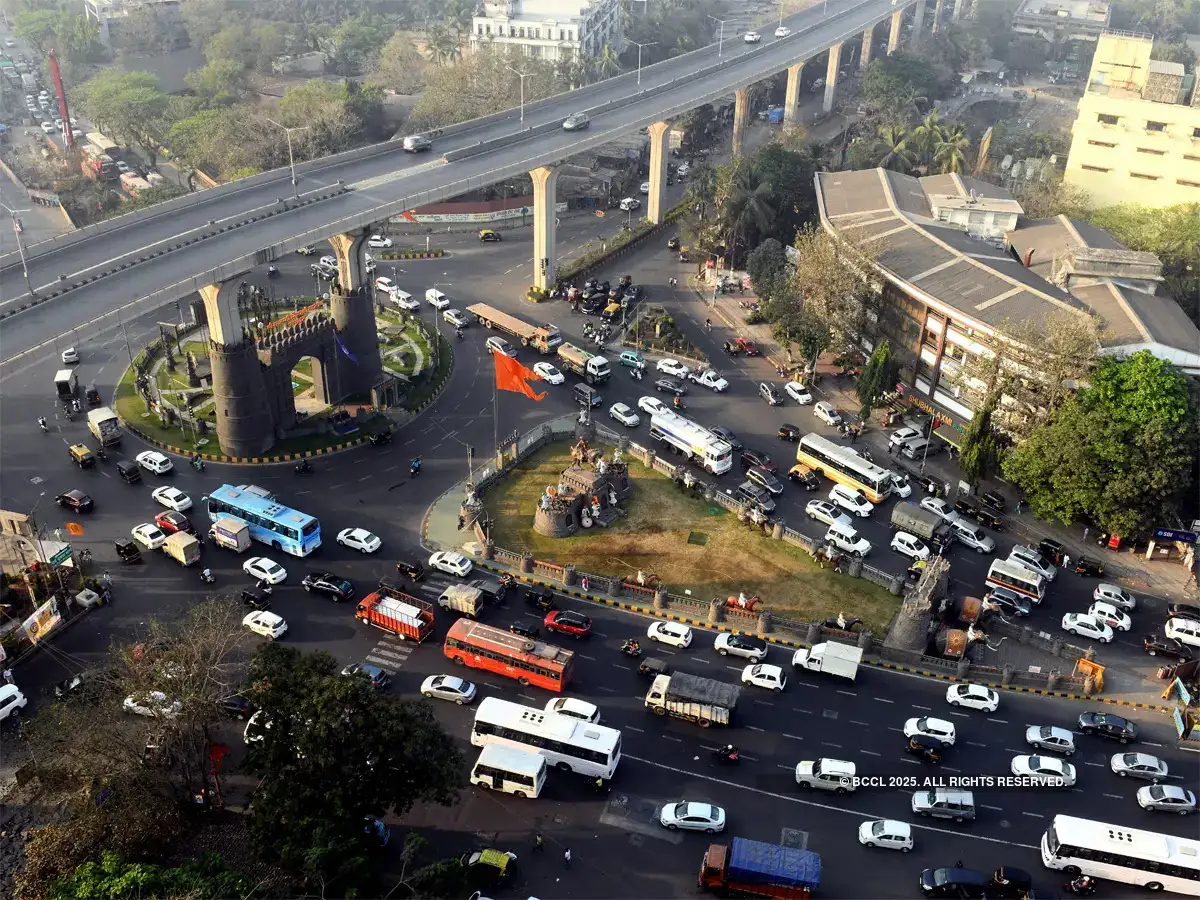
Mumbai’s ambitious infrastructure development faces a critical juncture as the Supreme Court of India has issued a stern directive to the Mumbai Metropolitan Region Development Authority (MMRDA), signalling a potential re-tender for two colossal projects collectively valued at approximately ₹14,000 crore.
This judicial intervention, prompted by an appeal from Larsen & Toubro (L&T) Ltd against its technical disqualification, casts a significant spotlight on the tendering process, demanding heightened transparency and accountability in the allocation of public funds. The unfolding legal scrutiny underscores the imperative for robust governance mechanisms in delivering critical urban infrastructure, ensuring equitable participation and optimal resource utilisation for a gender-neutral and sustainable city. The judicial admonition on May 26 arose during a hearing concerning L&T’s challenge to its exclusion from the bidding for the Mumbai Elevated Road Project (₹6,000 crore) and the Road Tunnel Project (₹8,000 crore). These projects, crucial extensions of the Mumbai Coastal Road, are envisioned to enhance connectivity and ease congestion, vital for Mumbai’s continued economic vibrancy. Hyderabad-based Megha Engineering & Infrastructure Ltd (MEIL) emerged as the lowest (L1) bidder in this contested process. Chief Justice of India B.R. Gavai, presiding over a two-judge bench, expressed palpable surprise at L&T’s disqualification, explicitly citing the firm’s established credentials, including its selection for the Central Vista project. “The very name of the bidder, it’s difficult to believe, he has been chosen to construct the Central Vista by the Central government,” CJI Gavai reportedly remarked, indicating a perceived incongruity in MMRDA’s assessment.
L&T’s challenge stems from two Bombay High Court orders dated May 20, which upheld MMRDA’s decision to withhold reasons for technical disqualification until after the projects were awarded. L&T has vehemently argued that this approach is arbitrary and fundamentally lacks transparency, leading to MEIL being declared L1 at a substantially higher cost. The infrastructure giant asserted its bids were approximately ₹2,521 crore lower for the Road Tunnel Project and ₹609 crore lower for the Elevated Road Project compared to MEIL’s quoted figures. This significant cost disparity, if proven, represents a substantial potential saving for the public exchequer, reinforcing the Supreme Court’s emphasis on safeguarding public interest. During the proceedings, CJI Gavai’s insistence on public interest and transparency became a focal point. When MMRDA’s counsel, Senior Advocate Mukul Rohatgi, contended that “question of money doesn’t arise if you are disqualified,” the Chief Justice firmly countered, “question of money also arises if it’s a public interest matter…you better take instructions. The public money would be saved.” He further asserted, “We are in an era of transparency…if it’s arbitrary, the person should have an opportunity to challenge.” This judicial stance signals a clear expectation for public authorities to adopt transparent tendering practices that withstand rigorous scrutiny, promoting fair competition and preventing potential financial inefficiencies.
The controversy surrounding these tenders is further amplified by the profile of MEIL, the Hyderabad-based firm. With a valuation of ₹67,500 crore, MEIL has garnered significant attention as a prominent purchaser of electoral bonds. Data released by the Election Commission of India reveals MEIL purchased bonds worth ₹966 crore, with a substantial portion – approximately ₹584 crore – directed to the Bharatiya Janata Party (BJP). The broader Megha group, encompassing associated entities such as Western UP Power Transmission Company Limited, SEPC Power, and Evey Trans Private Limited, collectively contributed ₹1,232 crore through electoral bonds, positioning it as one of the largest political donors in the nation. This extensive financial contribution to the ruling political party, both at the Union level and in Maharashtra where MMRDA operates, inevitably casts a shadow, raising questions about potential undue influence or perceived lack of a level playing field in the tendering process. MEIL, founded in 1989 by Pamireddy Pitchi Reddy and currently led by his nephew P.V. Krishna Reddy, boasts a portfolio of major infrastructure projects, including the $14 billion Kaleshwaram Lift Irrigation Project in Telangana, which itself faced scrutiny from the Comptroller and Auditor General (CAG) for alleged irregularities. The firm was also awarded the Zojila Tunnel project, further solidifying its presence in India’s critical infrastructure landscape. The Mumbai Elevated Road Project involves a 9.80 km bridge along Vasai Creek, while the Road Tunnel Project encompasses a 5-km twin tunnel system on Thane Ghodbunder Road, both pivotal for the Mumbai Metropolitan Region’s connectivity.
The Supreme Court has scheduled the next hearing for May 29, anticipating MMRDA’s official response to the court’s suggestion for a re-tender. The outcome of this legal battle will not only determine the fate of these critical Mumbai infrastructure projects but also set a crucial precedent for transparency and accountability in public procurement across the nation. It underscores the broader societal interest in ensuring that large-scale urban development projects are executed with utmost integrity, free from any perception of impropriety, and ultimately serve the greater good of an equitable and sustainably growing city.
Also Read: Development Projects Worth Rs 70000 Cr to Transform Four States
