


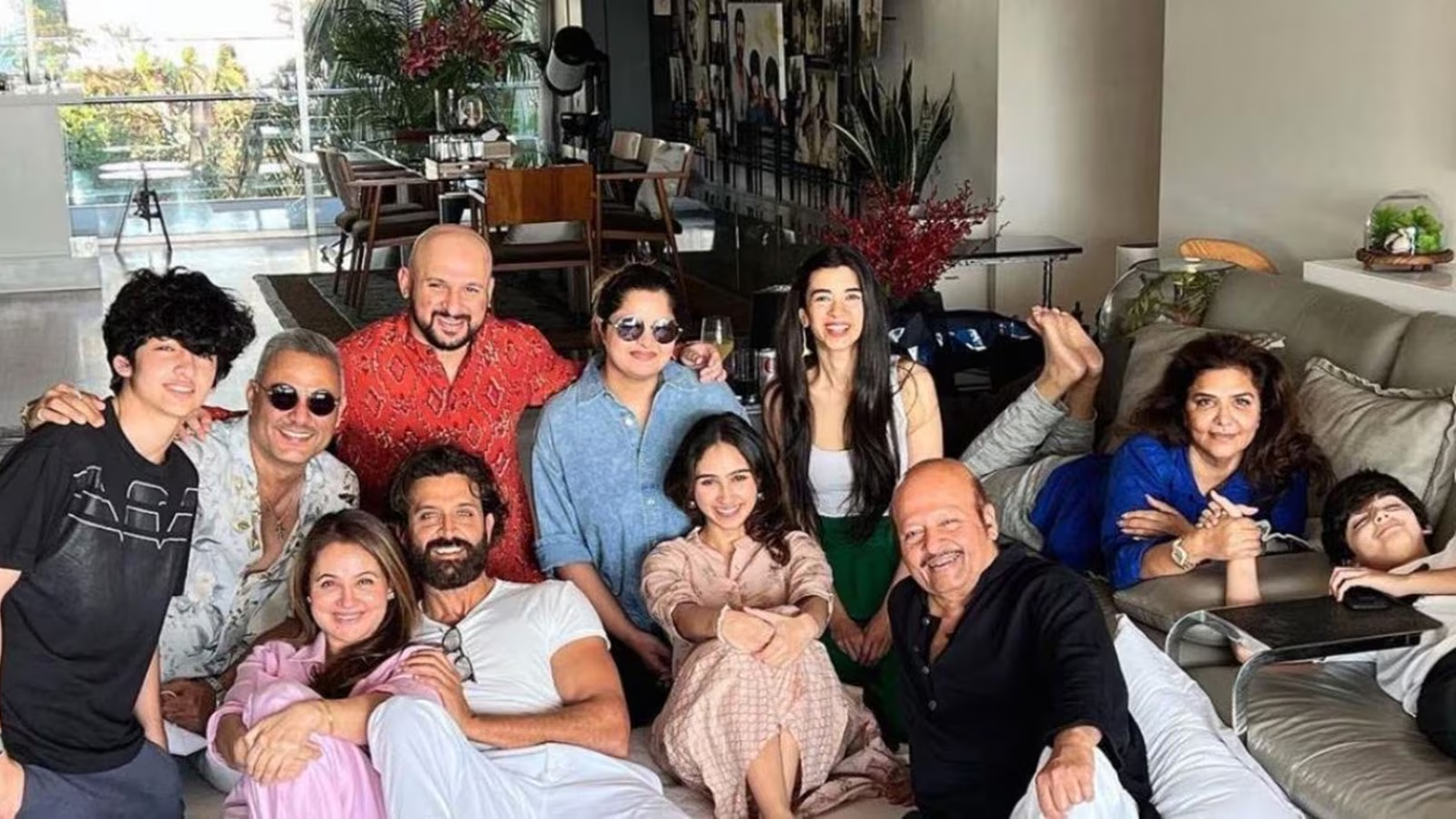
Mumbai’s commercial real estate market has recorded another prominent transaction, with a well-known film industry family leasing a premium retail property in Andheri West to Fabindia Limited. The agreement, valued at Rs 14.5 lakh per month in the first year, highlights the continued interest of private investors particularly high-net-worth individuals in stable, income-generating urban assets.
The space, located in a mixed-use complex on Veera Desai Road, offers roughly 6,400 sq ft of carpet area. Industry analysts note that the lease rate, which works out to about Rs 227 per sq ft, reflects the growing demand for accessible high-street formats in dense, transit-connected neighbourhoods. Andheri West, with its combination of residential catchments, metro access and media-driven footfall, has emerged as one of Mumbai’s more resilient retail corridors. Documents reviewed by Urban Acres show that the agreement was formalised in early December 2025, with the property handed over a few months earlier. The deal includes a security deposit of Rs 87 lakh and the right to use five parking bays an amenity that several retailers consider essential given Mumbai’s constrained public parking supply. The lease runs for five years, with the tenant committed for 15 months and the owners bound through the entire tenure.
Rental escalation has been scheduled in tranches over the five-year period. After the initial monthly rent of Rs 14.5 lakh, the amount rises to Rs 15 lakh in the second year, followed by a jump to Rs 16 lakh in the third. The final two years see a steep increase to Rs 18.4 lakh per month, a pattern that reflects broader inflationary trends and the premium placed on established retail assets in the city’s western suburbs. A senior executive at a proptech analytics firm said the deal aligns with a rising pattern of high-profile individuals diversifying into commercial real estate. According to the executive, retail and office assets continue to draw investor appetite because they offer regular income while holding long-term capital appreciation potential. “This category of investors sees commercial property as a stable hedge in a volatile market,” the person added. Retail experts say Fabindia’s decision to expand in urban high streets indicates confidence in foot-traffic-driven formats, even as several brands balance their presence between malls, standalone stores and digital platforms. For cities like Mumbai where liveability demands sustainable, accessible and walkable commercial districts such leases contribute to strengthening mixed-use urban ecosystems.
While the owners did not respond to requests for comment and Fabindia’s response is awaited, analysts observe that the transaction underlines a shift towards professionally managed commercial portfolios among private investors. If supported by improvements in public transport, pedestrian safety and equitable urban design, corridors like Andheri West could further evolve into inclusive, low-carbon retail hubs that serve both residents and businesses.
Also Read: Chandigarh Housing Board Seeks Private Developer For Sector 53 Land Auction
