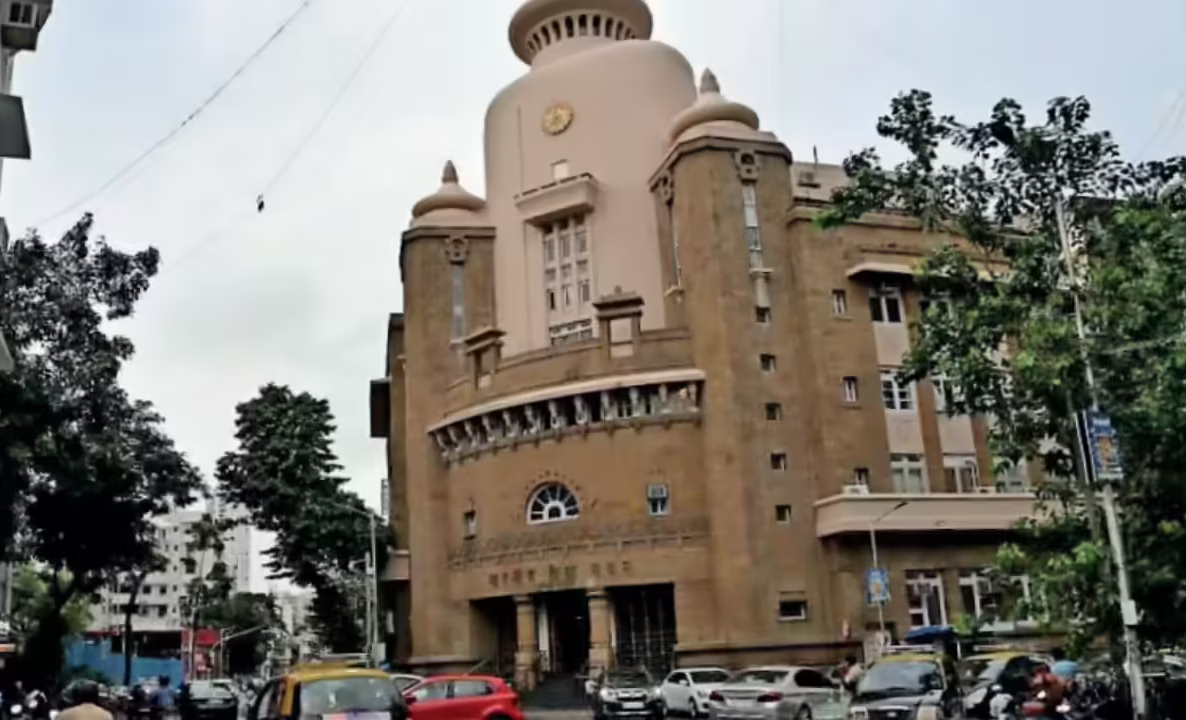
Across Mumbai’s vast network of roads and avenues, only a small fraction carry the names of women a detail urban historians say reveals how the city’s civic memory has largely overlooked female contributors to its social and institutional development. Municipal data suggests that out of nearly 2,000 kilometres of roads maintained by the city administration, fewer than 150 kilometres are dedicated to streets named after women, highlighting a notable gender imbalance in urban naming practices.
Street naming in large cities often serves as a record of collective memory, commemorating individuals whose work shaped civic life, infrastructure, education, and public health. Yet planners and historians say the representation of women in these recognitions remains limited, even in cities like Mumbai that played key roles in social reform movements and early public institutions.
Several roads across neighbourhoods such as Gamdevi, Sion, Mulund and Mahim do carry the legacy of pioneering women, though many residents remain unaware of the stories behind them. For instance, a coastal road connecting key residential and institutional areas in South Mumbai commemorates a 19th-century social reformer who championed women’s education and established one of the earliest organisations supporting women’s rights and vocational training.
Elsewhere in central Mumbai, a street near August Kranti Maidan honours one of the city’s first Indian women doctors, remembered for creating spaces where women could access medical care comfortably at a time when cultural barriers prevented many from seeking treatment. Her contributions also included maternal healthcare initiatives and training programmes that expanded nursing skills among women across communities. In Sion, another road carries the name of a social organiser who built one of the country’s largest voluntary networks of women’s community groups during the early twentieth century. The organisation she founded focused on leadership training, social participation and civic engagement among women, at a time when public roles for them were still restricted.
Even Mumbai’s historic transport infrastructure reflects women’s contributions. One of the city’s busiest arterial roads commemorates a philanthropist whose financial support helped build a causeway linking two coastal neighbourhoods in the mid-1800s. The project dramatically improved mobility and safety for travellers crossing the marshy stretch during monsoon seasons, illustrating how private philanthropy once played a decisive role in urban infrastructure development. In suburban Mulund, a smaller road named in recent years recognises a local community figure remembered for encouraging girls’ education and supporting neighbourhood welfare initiatives.
Urban planners say recognising women through streets named after women does more than honour individuals. It influences how cities frame public memory and civic identity. Naming streets, parks and transit stations after diverse contributors can make urban landscapes more representative of the communities that shaped them. Experts argue that as cities redesign neighbourhoods for sustainability, accessibility and inclusive public spaces, naming policies could also evolve to reflect broader social histories. For rapidly expanding metropolitan regions like Mumbai, where infrastructure, housing and mobility networks continue to grow, such decisions shape how future generations understand the city’s past. Municipal officials indicate that street renaming and naming proposals continue to be reviewed periodically. For urban historians and planners alike, expanding the presence of streets named after women could become one small but meaningful step toward a more inclusive civic narrative.
Mumbai Roads Named After Women Tell Hidden History