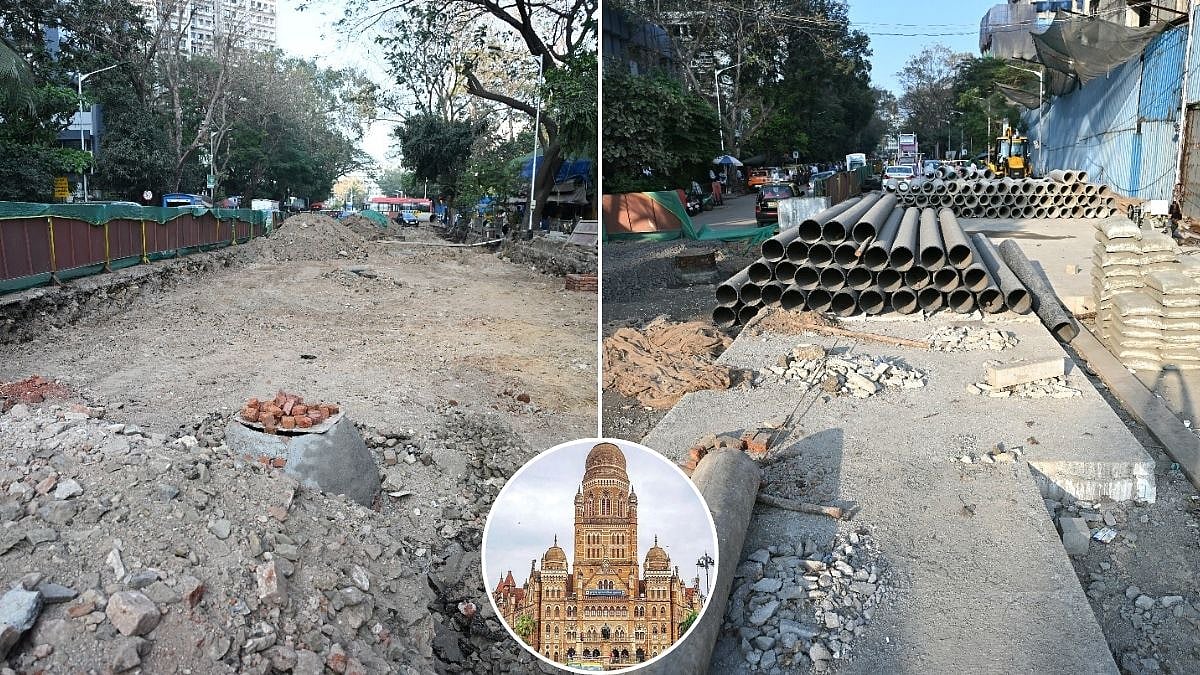
Mumbai’s ambitious road concretisation drive is creating mounting frustration among commuters, residents, and local businesses, as prolonged construction disrupts daily life across the city. The Brihanmumbai Municipal Corporation (BMC) has completed just under 60% of its targeted road upgrades, leaving hundreds of roads partially finished or untouched, and contributing to traffic congestion, dust pollution, and safety concerns.
The project, spanning 2,121 roads and 678 km, aims to replace ageing asphalt with durable concrete surfaces to create pothole-free streets. As of January 28, BMC reports 920 roads (232 km) fully concretised, 631 roads (183 km) under active construction, and 570 roads (147 km) yet to commence. A senior municipal official emphasised that while the initiative is vital for long-term urban mobility, interim disruptions are unavoidable. To enhance transparency, BMC has launched a dedicated public dashboard providing real-time updates on road works, including maps, progress percentages, and the local engineers overseeing each stretch. “The dashboard is designed to empower citizens with daily information, helping them plan commutes and monitor project progress,” said an official involved in the programme.
The municipal body expects the first phase of 905 roads to reach 85–90% completion post-monsoon 2026, while 80% of Phase II roads are targeted for completion within the same timeframe. The entire project, estimated at Rs 12,000 crore, is slated to conclude by May 2027, with monsoon months halting construction to ensure safety. Despite these assurances, residents report widespread inconvenience. Citizens have flagged safety risks as poorly managed work zones force pedestrians and vehicles into narrow lanes, increasing the likelihood of accidents. Dust pollution has also spiked along major arteries, raising health and environmental concerns. A civic activist noted that some internal roads in western and central suburbs were unnecessarily dug up, prompting allegations that contractor convenience may be driving construction priorities rather than urban needs.
Ward-wise data indicates that western suburbs are seeing the most intensive construction. K-West (Andheri, Jogeshwari, Vile Parle West) has 53 roads under work, followed by R-Central (Borivali) with 45, H-West (Bandra, Juhu, Santacruz West) with 42, P-North (Malad) with 41, and P-South (Goregaon) with 38 roads partially completed. Urban planners argue that prioritising high-traffic corridors is logical, but balanced attention to secondary roads is essential for equitable urban mobility. Experts suggest that while concrete roads offer durability and reduced long-term maintenance, project management and citizen engagement remain critical. Ensuring clear communication, enforcing safety standards, and mitigating environmental impacts such as dust pollution are central to sustaining public trust.
As Mumbai navigates its largest road concretisation initiative, the city faces the challenge of reconciling short-term disruption with long-term infrastructure benefits. Citizens, urban planners, and municipal authorities will need continuous coordination to ensure the project delivers resilient, climate-conscious, and inclusive urban roads by 2027.
Mumbai Road Works Cause Traffic Snarls And Dust Pollution