


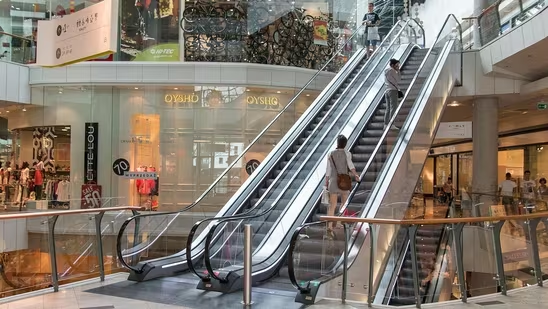
Mumbai’s western suburb of Borivali is emerging as a serious contender in the city’s organised retail landscape, as an international fashion retailer secures a large-format store at Sky City Mall. The lease, covering more than 11,000 square feet of ground-floor retail space, reflects rising confidence among global brands in suburban consumption hubs backed by transit connectivity and dense residential catchments.
The five-year lease, commencing in early 2026, follows a hybrid rental structure combining fixed monthly payments with a revenue-linked component. Such arrangements have become increasingly common in India’s organised retail sector, aligning landlord income with store performance while moderating risk for retailers entering new urban markets. Industry analysts say this model signals a shift away from purely fixed rentals, particularly in newly developed malls. Sky City Mall forms part of a larger mixed-use development integrating residential towers, retail, and social infrastructure. Urban planners point out that projects of this nature reduce travel distances for daily needs, supporting people-first urban design and lowering transport-related emissions. As Mumbai continues to densify, suburban mixed-use developments are expected to play a critical role in balancing economic growth with liveability. The Borivali leasing activity also highlights the growing maturity of Mumbai’s suburban retail ecosystem. Once considered secondary markets, suburbs such as Borivali, Goregaon, and Malad are now witnessing consumption patterns comparable to established commercial districts. Improved metro connectivity, road upgrades, and higher disposable incomes have reshaped these areas into self-sustaining urban centres.
Market participants note that large ground-floor retail spaces are increasingly being absorbed by international brands seeking visibility, footfall, and long-term presence. The presence of multiple anchor tenants within the same mall further strengthens the commercial viability of such assets, creating clustered destinations rather than standalone shopping centres. Beyond commercial considerations, the development carries broader urban implications. Retail-led employment generation, particularly for youth and women, contributes to local economic resilience. At the same time, newer malls are under pressure to adopt energy-efficient systems, improved waste management, and climate-responsive building practices, aligning with Mumbai’s wider sustainability goals. India’s organised retail sector continues to expand alongside urbanisation, with suburban markets absorbing a growing share of new supply. Analysts suggest that as global brands scale cautiously across Indian cities, suburbs offering strong infrastructure, predictable governance frameworks, and integrated land use will remain attractive.
The Borivali transaction underscores this structural shift. Rather than chasing legacy high streets alone, international retailers are increasingly betting on well-planned suburban nodes reshaping how Indian cities consume, commute, and grow.
Also Read: India Property Trusts Gain New Funding Pathways
Mumbai Retail Leasing Signals Suburban Consumption Shift
