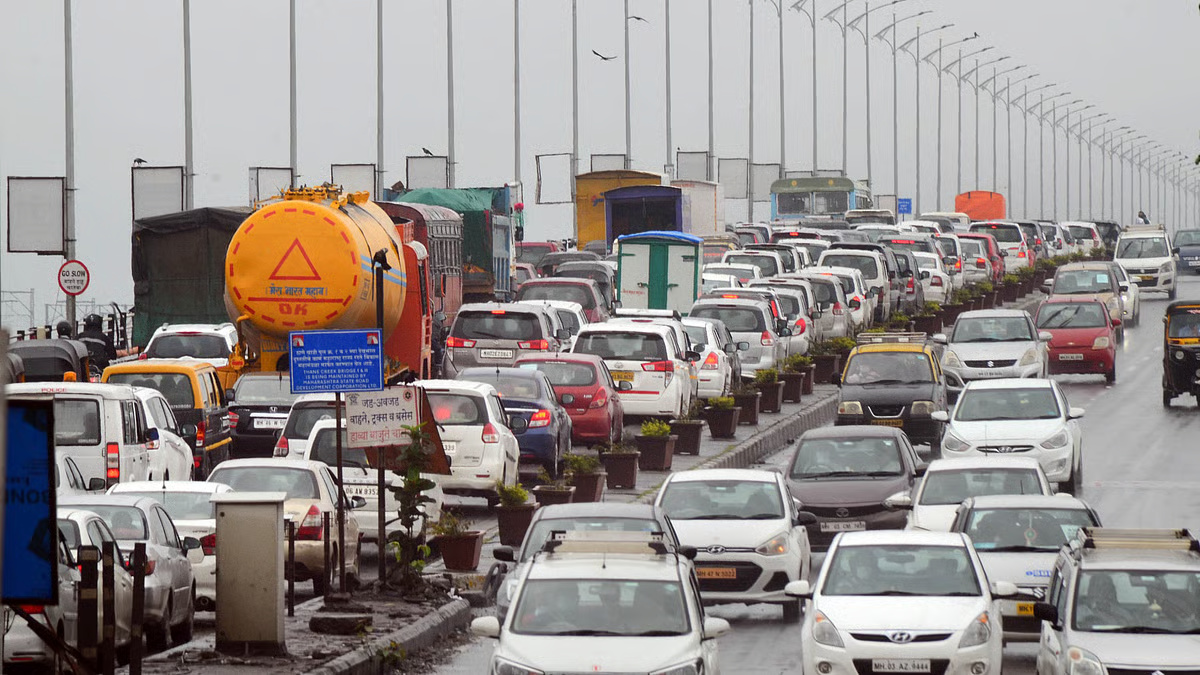
Mumbai’s traffic authorities have introduced time-based restrictions on heavy vehicle movement across the city, aiming to ease chronic congestion during peak commuting hours and improve overall road efficiency. The new regulations, which apply citywide, are designed to prioritise daily passenger movement on Mumbai’s overstretched road network, particularly during morning and evening rush periods when travel demand is at its highest.
Under the revised framework, heavy commercial vehicles will no longer be permitted to enter or move through key city corridors during designated peak hours. Traffic planners have identified these windows as the most disruptive for commuter flow, with large trucks and trailers frequently slowing down traffic on arterial roads, flyovers and expressways. By limiting their movement during these periods, authorities expect smoother travel for buses, private vehicles and two-wheelers. According to traffic officials involved in the rollout, the restrictions are aligned with broader congestion management strategies being adopted across major Indian cities. Mumbai’s vehicle population has grown steadily in recent years, while available road space has remained largely unchanged. At the same time, ongoing metro construction and utility upgrades have reduced effective carriageway widths in several locations, intensifying pressure during office hours.
The peak-hour restrictions apply across major roads and transport corridors, including flyovers and expressways that often act as bottlenecks during rush periods. Urban mobility experts say that regulating freight movement by time of day is a globally recognised practice, particularly in dense cities where separating commuter and freight traffic can significantly improve average travel speeds and reduce collision risks. Importantly, the policy maintains exemptions for vehicles providing essential services. Supplies critical to daily urban life—such as food distribution, fuel delivery and drinking water—will continue to move without interruption. Emergency services, including ambulances and fire response vehicles, are also unaffected. Officials say these exemptions ensure that traffic regulation does not compromise public welfare or economic continuity.
From a commuter perspective, the impact could be substantial. Traffic analysts estimate that restricting heavy vehicles during rush hours could reduce delays on certain routes by up to 20–30 minutes, particularly on stretches known for frequent truck-induced congestion. Reduced idling and stop-start traffic could also contribute to lower vehicular emissions, supporting the city’s longer-term climate and air quality objectives. Enforcement will be a critical factor in determining the success of the initiative. Traffic police units have indicated that violations may attract penalties under existing motor vehicle laws, including fines and possible vehicle detention. Logistics operators are expected to adjust delivery schedules accordingly, shifting non-essential freight movement to off-peak hours.
As Mumbai continues to balance economic activity with liveability, the peak-hour heavy vehicle ban reflects a growing emphasis on demand management rather than road expansion alone. If implemented consistently, the measure could offer a relatively low-cost, high-impact tool to improve daily mobility while setting the stage for more people-centric traffic planning across the metropolitan region.
Mumbai Restricts Heavy Vehicle Entry During Peak Hours