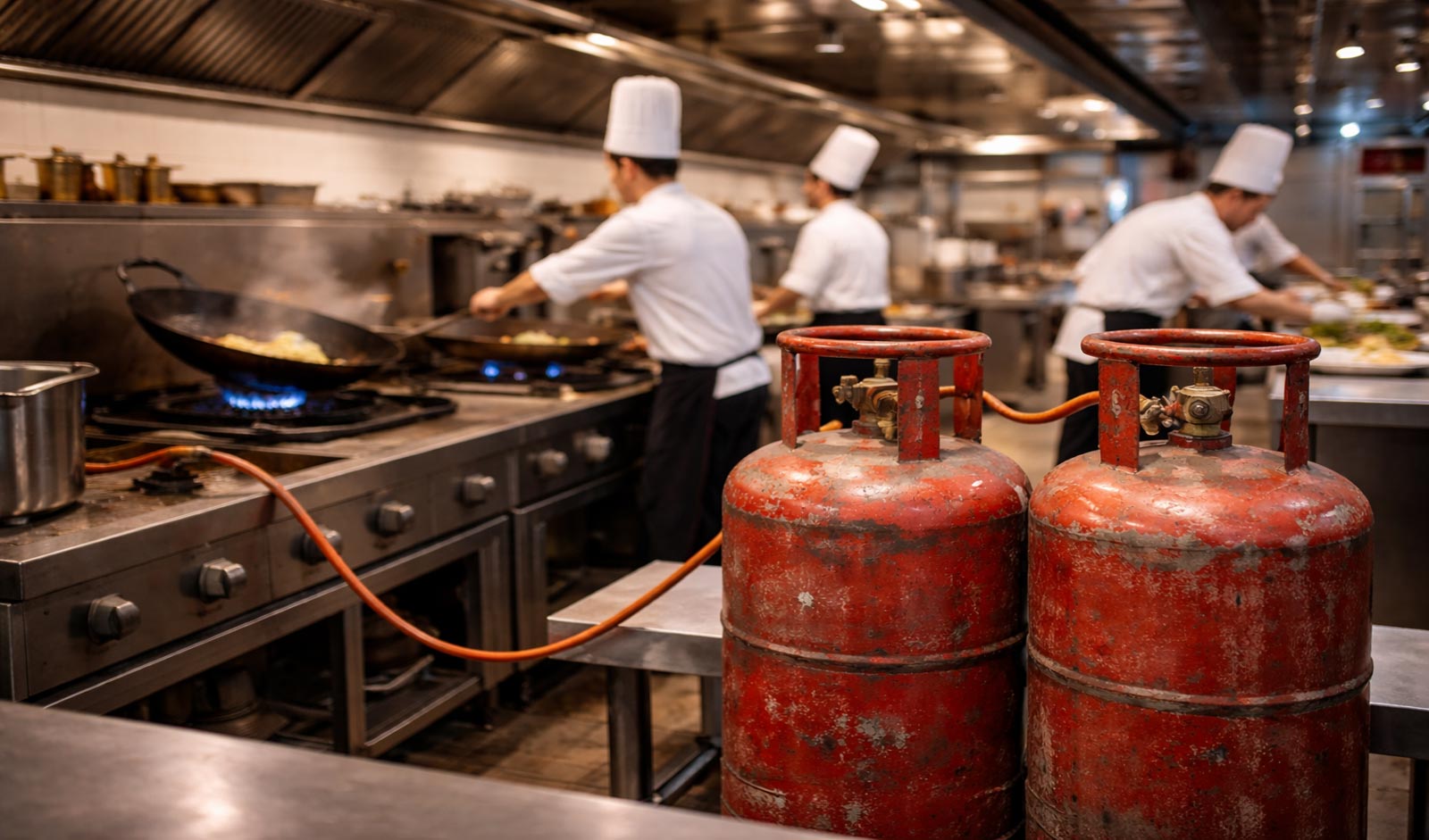
A growing number of restaurants across Mumbai are preparing to transition to piped natural gas, signalling a structural shift in how the city’s food businesses manage energy supply amid recurring disruptions. Nearly 2,000 establishments are expected to adopt piped gas Mumbai restaurants solutions in the coming months, driven by recent instability in commercial LPG availability.
The move follows a period of supply strain that exposed the vulnerability of relying on cylinder-based fuel systems. At the height of the disruption, many eateries struggled to maintain operations, with several forced to scale down menus, reduce service hours, or temporarily suspend kitchen activity. Industry observers note that such interruptions not only affect business revenues but also disrupt the daily food ecosystem relied upon by office workers, delivery networks, and low-cost meal providers. In response, hospitality operators are increasingly viewing piped gas Mumbai restaurants adoption as a long-term risk mitigation strategy. Unlike LPG cylinders, piped gas offers continuous supply through fixed infrastructure, reducing dependency on logistics chains that are sensitive to global market shifts and transportation bottlenecks.
Officials associated with the rollout indicate that applications are being prioritised in areas where pipeline networks already exist, allowing quicker connections. South Mumbai, despite its dense built environment and complex underground utilities, has emerged as a key demand centre. Urban infrastructure experts point out that retrofitting gas pipelines in older, high-density neighbourhoods presents engineering challenges, but also offers high-impact benefits due to concentrated commercial activity. The transition is being supported by policy measures aimed at accelerating approvals for pipeline expansion. Authorities have streamlined permissions for pending infrastructure proposals, enabling faster extension of networks to commercial users. This reflects a broader push towards integrating cleaner and more reliable energy systems into urban infrastructure.
From a sustainability perspective, piped natural gas is often considered a relatively cleaner alternative to conventional fuels, though experts caution that its long-term environmental impact depends on usage patterns and the pace of transition to renewable energy sources. Nevertheless, in the near term, it offers improved efficiency and lower emissions compared to traditional LPG use in high-volume kitchens. Cost considerations are also influencing the shift. While initial connection expenses may be higher, businesses benefit from more predictable pricing and reduced operational disruptions over time. For establishments operating at scale, this can translate into greater financial stability.
The shift towards piped gas Mumbai restaurants adoption also highlights the intersection of urban infrastructure and economic resilience. As cities grow more complex, the reliability of essential services—from energy to transport—becomes critical for sustaining local economies. In the months ahead, the pace of adoption will depend on infrastructure readiness and execution capacity. If scaled effectively, the transition could redefine energy use in Mumbai’s hospitality sector, offering a more stable and resilient foundation for one of the city’s most dynamic industries.
Mumbai Restaurants Shift To Piped Gas Amid LPG Shortage