


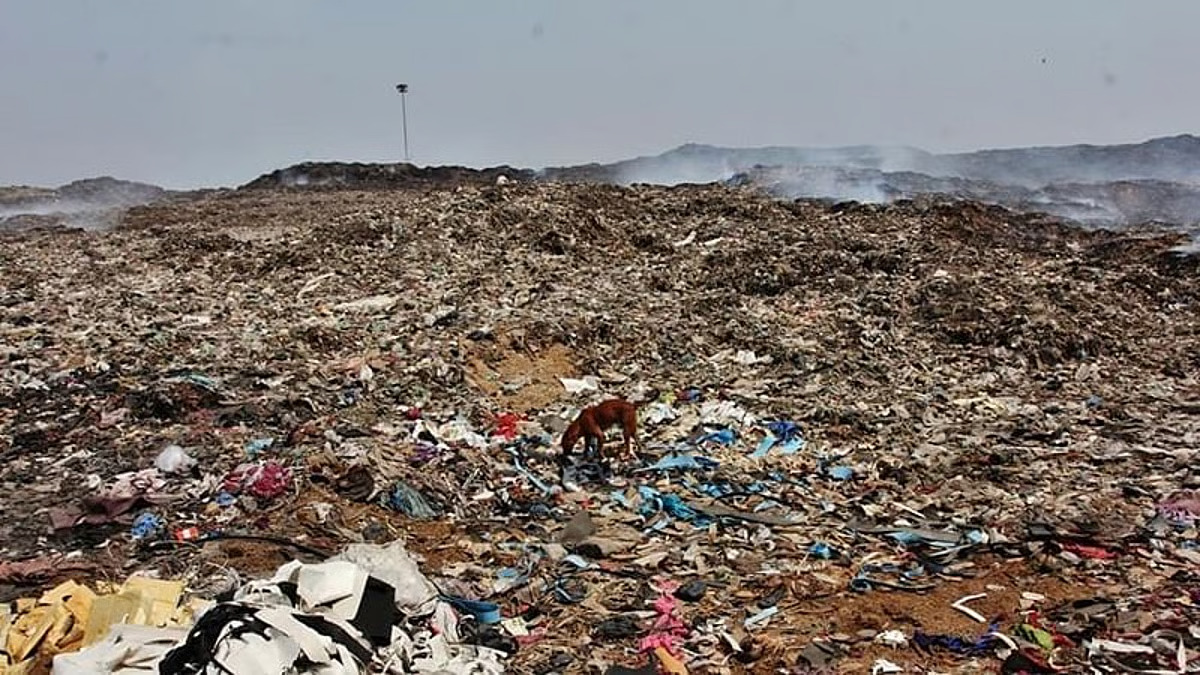
Mumbai’s upscale Juhu neighbourhood, known for its beaches and cultural vibrancy, is grappling with a growing public health and hygiene crisis caused by unchecked roadside garbage dumping. Residents allege that waste is being regularly discarded at multiple points along Juhu Tara Road and Juhu Gymkhana Road, creating foul conditions and posing potential health hazards.
Local community representatives say that the problem has persisted for months, with garbage accumulating near prominent locations such as the Juhu bus depot and educational institutions. These unattended waste piles often consist of mixed refuse, including food scraps and commercial waste, which not only emit a strong stench but also attract stray animals and pests, worsening the area’s sanitation standards. Residents claim that the waste is largely dumped by local vendors and small commercial establishments that lack convenient access to proper disposal facilities. In several stretches, there are either no waste bins installed or existing bins remain insufficient to meet the volume of daily waste. Compounding the problem, the civic body’s waste collection services are reportedly irregular and fail to adequately service all affected locations.
Urban planning experts point out that while Mumbai’s coastal areas require stricter waste management protocols due to their environmental sensitivity, Juhu’s case reflects broader lapses in city-wide waste governance. The absence of a decentralised waste segregation and disposal system, they say, undermines not only neighbourhood cleanliness but also the city’s environmental sustainability goals. Civic activists stress that Juhu’s waste problem is not limited to aesthetic concerns. The accumulation of uncollected waste can lead to mosquito breeding, increase the risk of communicable diseases, and degrade the coastal ecosystem through runoff into the sea. Given that Juhu attracts thousands of visitors daily, poor sanitation here could have wider public health implications beyond the immediate locality.
Residents are now urging the municipal corporation to adopt a two-pronged approach—installing larger waste collection points at strategic locations and ensuring more frequent and efficient collection services. Experts also recommend integrating technology-led waste tracking systems to monitor collection patterns, alongside imposing penalties for commercial establishments that illegally dump waste. While officials from the municipal ward were unavailable for comment at the time of reporting, urban governance specialists believe that the situation demands urgent intervention. They caution that allowing such lapses to persist risks setting a dangerous precedent for waste management in other high-density, high-footfall areas of Mumbai.
For Juhu, a neighbourhood that has long been one of Mumbai’s cultural and residential landmarks, the call for a cleaner, healthier, and more sustainable environment has never been louder.
Also Read : Central Railway Announces Night Traffic And Power Block For August 9-10
