


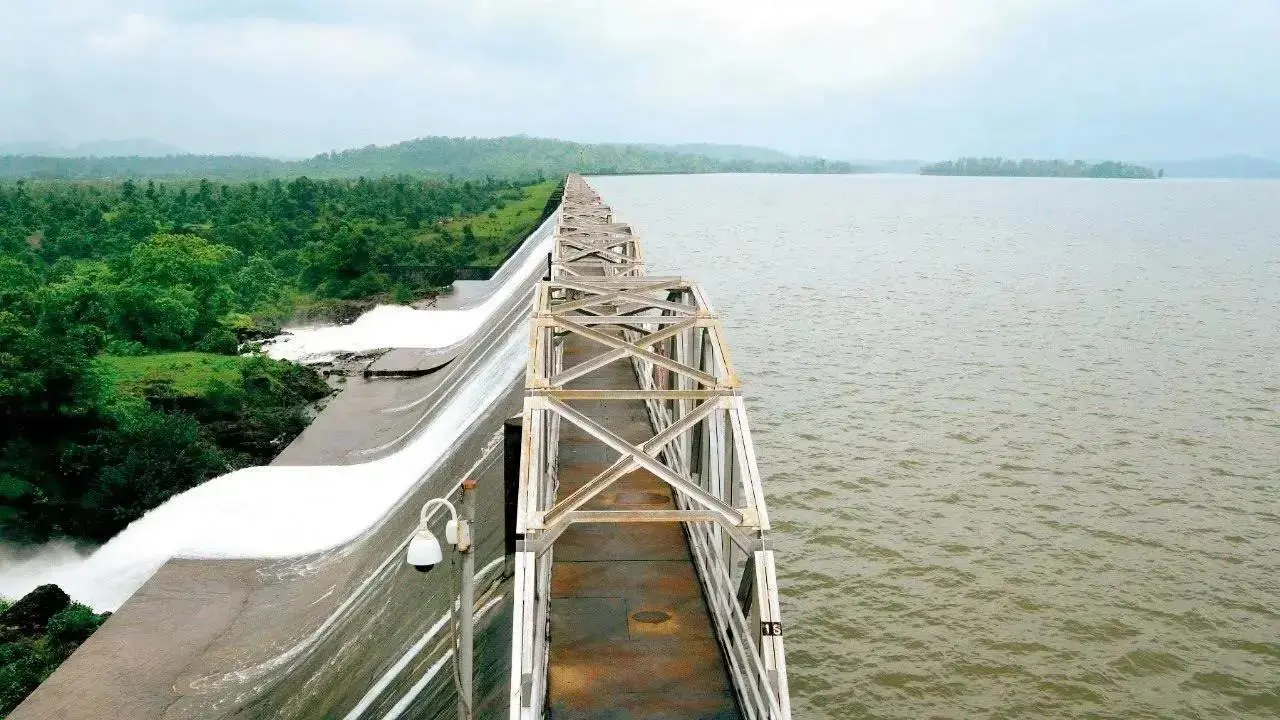
Mumbai’s water security appears to be in a promising position as the city’s seven key lakes collectively reach 81.47 per cent of their total required capacity. According to civic officials from the Hydraulic Engineer’s Department, the city currently holds over 11.79 lakh million litres (ML) of usable water stock, alleviating concerns that had mounted earlier due to inconsistent monsoon patterns.
Bhatsa, the largest contributor among the reservoirs, holds 5.46 lakh ML of water—nearly half of the total supply—after a 0.20 metre rise in the past 24 hours. The catchment area has recorded cumulative rainfall of over 1,470 mm this season, helping shore up reserves well ahead of the critical depletion period. Modak Sagar, another key source, began overflowing on July 9 following continuous rainfall. Although it is operating just below its full capacity at 163.14 metres, it has reached nearly 100 per cent of its live storage, adding 1.28 lakh ML to Mumbai’s water grid. Similarly, Middle Vaitarna is at 92.43 per cent capacity, having risen by 0.18 metres over the last day.
Tansa Lake has also shown a steady increase, currently storing 1.32 lakh ML of water, equating to 91 per cent of its potential. The Upper Vaitarna reservoir, though slightly lower at 76.64 per cent, has maintained a stable rise in levels, presently holding 1.74 lakh ML. Smaller reservoirs like Vihar and Tulsi have also been filling up steadily, despite their limited overall contribution to the city’s needs. Vihar stands at 52.58 per cent of live storage, while Tulsi is nearing 85.5 per cent. These lakes, located in Mumbai itself, have benefited from consistent local rainfall patterns.
Overall rainfall in the lakes’ catchment zones, as measured at the Bhandup Complex, has reached 828 mm so far this season. Officials noted that the current storage levels provide substantial relief to the city, reducing the likelihood of water cuts or restrictions, should rainfall trends continue. With several lakes already nearing overflow status and more rain forecasted, the civic body remains cautiously optimistic. Efforts to monitor inflow and regulate release from reservoirs like Upper Vaitarna have already been put in place. Officials from the city’s hydraulic department reaffirmed that reservoir management is operating under heightened supervision to maximise collection while ensuring dam safety.
The city’s sustainable water planning depends not only on rainfall but also on prudent resource management, leak reduction, and equitable distribution. With a relatively strong start to the monsoon season, Mumbai is better positioned to maintain consistent water supply for its over 12 million residents without immediate concern.
Also Read : Pune Launches ₹628-Crore Road Upgrade Along Metro Corridor Amid Public Outcry
