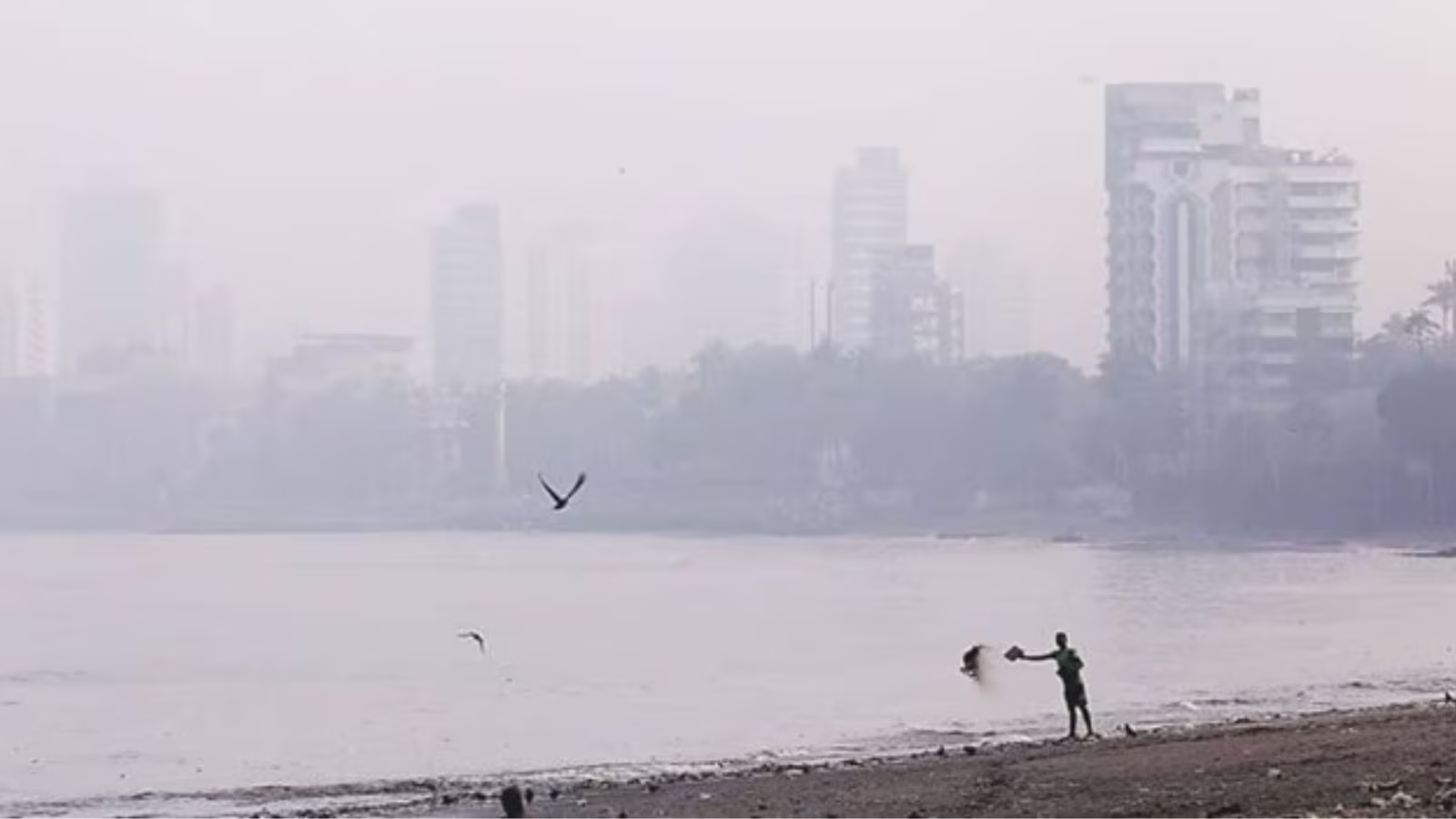
Mumbai experienced an unusually cool start on Wednesday, offering brief relief from its persistent humidity even as the city continued to struggle with deteriorating air quality. Early-morning temperatures dipped to the upper winter range, encouraging residents outdoors, but a noticeable smog layer quickly reasserted the city’s ongoing environmental challenge. With the overall Air Quality Index (AQI) touching 275, the day began on a mixed note—comfortably cool, yet far from clean.
Weather observers noted that maximum temperatures are expected to rise to around 33°C later in the day, with overnight temperatures projected to fall to approximately 18°C. Officials from the weather bureau said this pattern of cooler mornings is typical during transitional winter weeks, but the presence of haze over several neighbourhoods signalled persistent pollution accumulation. The haze muted the otherwise pleasant morning, affecting visibility across the island city and suburbs. Until recently, Mumbai had benefitted from a spell of heavy rainfall that briefly washed the atmosphere clean. For a few days, residents enjoyed clearer skies and improved visibility as rainfall flushed out suspended pollutants. However, with the monsoon activity now absent, particulates have quickly rebounded. Urban planners and environmental experts observed that without sustained mitigation measures—such as green buffers, improved public transport uptake and strengthened construction controls—these fluctuations will continue to define the city’s winter air.
By Wednesday morning, the city’s AQI had firmly entered the ‘unhealthy’ bracket. Several monitoring stations reported significantly worse conditions. The Wadala Truck Terminal recorded a severe AQI level of 394, reflecting the influence of industrial activity and high traffic volumes in the vicinity. Deonar, Malad, Colaba and Worli also reported severe or near-severe conditions, reaffirming that both coastal and inland pockets are vulnerable to winter pollution episodes. Suburban localities fared somewhat better but still remained in the poor-to-unhealthy category. Readings ranged from 123 in Kandivali East to 220 in Jogeshwari, indicating that particulate matter levels remain elevated across the metropolitan region. An environmental official noted that the city’s varied reading patterns point to “localised pollution pockets driven by traffic congestion, waste burning and construction dust”.
Air quality experts emphasised that Mumbai’s geography—bounded by sea on three sides and dense built-up areas inland—intensifies pollutant trapping during low-wind conditions common in November. They argue that the city needs to accelerate its transition toward pollution-resilient infrastructure, such as widespread adoption of cleaner mobility, enhanced dust-control protocols and increased urban tree cover. These measures, they add, are essential not just for compliance but for safeguarding public health. With winter approaching and wind speeds expected to remain low, officials anticipate intermittent smog episodes through the season. They have urged citizens, particularly vulnerable groups, to minimise early-morning outdoor exposure on high-AQI days. As Mumbai attempts to balance comfort with clean air, sustainable urban policy choices will determine whether seasonal relief can coexist with a healthier, more resilient environment.
Mumbai Reports Cool Morning Conditions While Pollution Levels Touch AQI 275