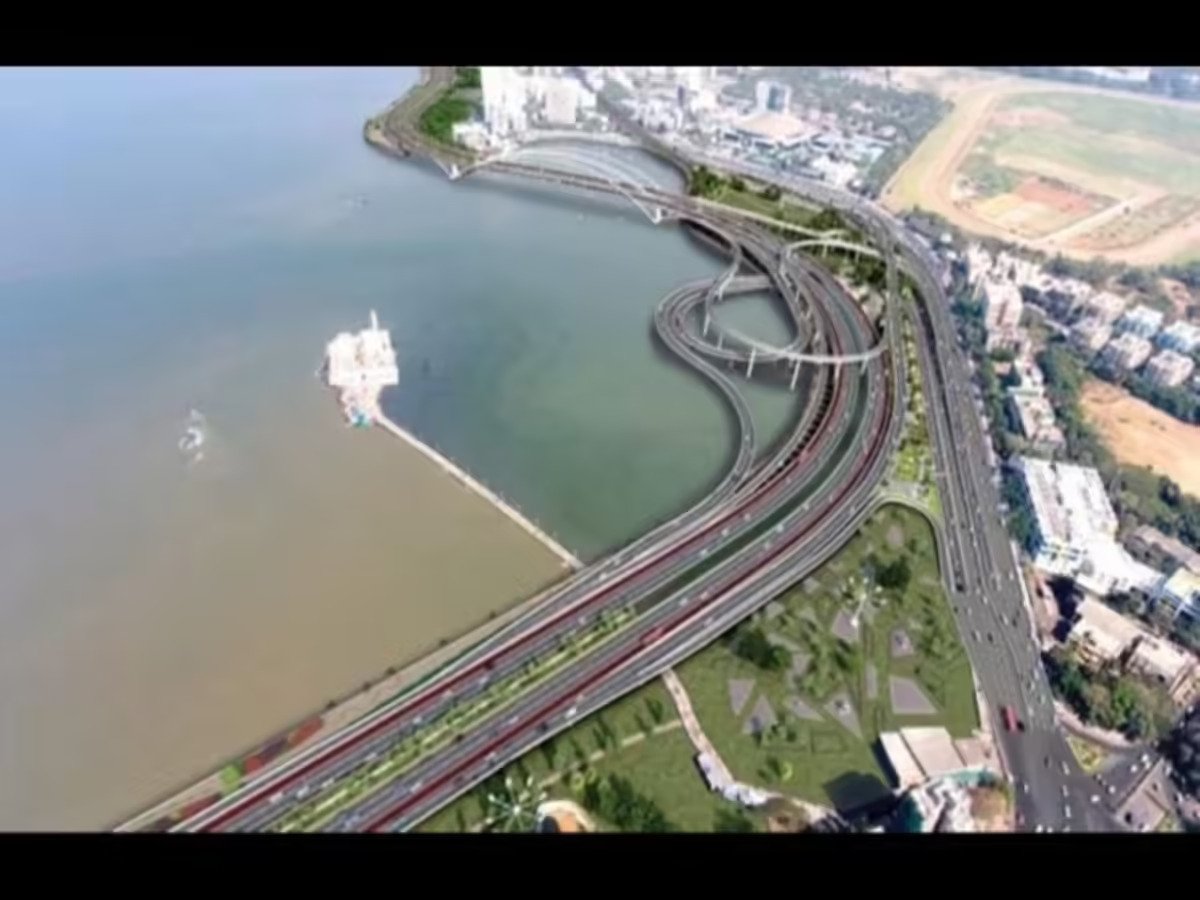
Mumbai’s coastal infrastructure push has taken a step forward after the civic administration cleared multiple on-ground impediments along the northern stretch of the planned seafront corridor, unlocking space for construction activity in the city’s western suburbs. The intervention is expected to help streamline execution timelines for a project positioned as a key mobility upgrade for the metropolitan region.
Municipal authorities recently undertook the removal of several built structures that had been obstructing the alignment of the Versova to Dahisar coastal road. Officials indicated that these sites had been identified as critical bottlenecks, preventing contractors from accessing continuous work zones and slowing construction sequencing. The Versova Dahisar coastal road forms part of a larger plan to extend Mumbai’s coastal corridor northwards, linking suburban zones with the operational southern section. Once completed, the route is expected to ease pressure on arterial roads such as the Western Express Highway and Link Road, which currently carry a significant share of daily commuter traffic.
However, the project’s trajectory has been shaped by a complex set of constraints. Land acquisition challenges, regulatory approvals under coastal zone norms, and environmental scrutiny—particularly around mangrove ecosystems—have contributed to delays. Urban planners note that such projects require a careful balance between mobility gains and ecological preservation, especially in a coastal city vulnerable to climate risks. Clearing physical encroachments is being seen as one of several sequential steps required to stabilise progress. A senior civic official described the approach as phased, involving land readiness, statutory compliance, and contract execution in parallel. With sections now opened up, construction agencies are expected to mobilise resources more efficiently and reduce idle time.
Infrastructure analysts highlight that continuity of work fronts is crucial in large linear projects. Fragmented construction often leads to cost escalations and prolonged timelines, both of which have implications for public finances and urban planning outcomes. In this context, enabling uninterrupted stretches could help improve project delivery efficiency. The coastal road project also intersects with broader questions about Mumbai’s long-term mobility strategy. While it promises reduced travel times and improved connectivity, experts emphasise the need to integrate such infrastructure with public transport systems and climate-resilient planning. Investments in road capacity, they argue, must be complemented by sustainable transport solutions to avoid reinforcing car dependency.
Budgetary allocations in recent civic planning cycles suggest that the northern coastal road remains a priority within the city’s infrastructure pipeline. Yet, its eventual impact will depend on how effectively remaining hurdles—both regulatory and environmental—are navigated in the coming phases. As work progresses, attention is likely to remain on balancing speed with sustainability, ensuring that the coastal road delivers mobility benefits without compromising Mumbai’s fragile coastal ecosystems or long-term resilience goals.
Mumbai Removes Barriers To Accelerate Coastal Road