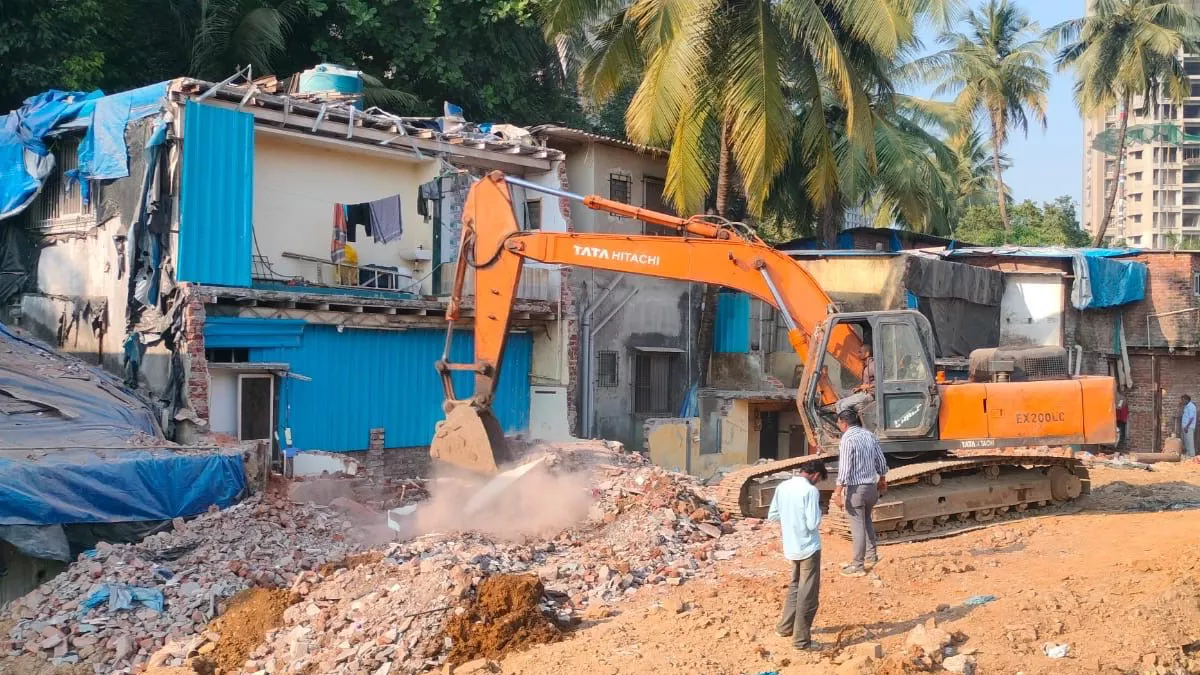
As Mumbai prepares for another intense monsoon season, civic authorities have stepped up efforts to restore the city’s stormwater drainage capacity by removing encroachments that restrict natural water flow. In the eastern suburb of Vikhroli, a coordinated demolition drive has cleared a significant stretch along a key drain, addressing a long-standing source of flooding and civic disruption.
Officials from the Brihanmumbai Municipal Corporation confirmed that most unauthorised structures built along the Kannamwar Nagar drain in Vikhroli East have been dismantled. The operation has released nearly 240 square metres of land, enabling the construction of a protective retaining wall designed to safeguard the waterway from future encroachment and waste dumping. Urban drainage experts have consistently identified illegal construction along natural and engineered drains as one of the primary contributors to monsoon waterlogging in Mumbai. When drains are narrowed or blocked, rainwater is unable to discharge efficiently into creeks and rivers, causing backflow that inundates roads and low-lying residential areas. Eastern suburbs such as Vikhroli have historically borne the brunt of this problem due to rapid, unplanned development near waterways.
Civic officials overseeing the operation said inspections revealed that the drain’s carrying capacity had been severely compromised over time. In addition to structural encroachments, the routine dumping of household waste and debris into the drain had further reduced its effectiveness, compounding flood risk during heavy rainfall events. Clearing the channel is expected to improve downstream flow and reduce pressure on adjacent road networks during peak monsoon showers. The demolition forms part of a wider citywide initiative to reclaim stormwater drains ahead of the rains. Over the past decade, Mumbai has invested heavily in road upgrades and coastal infrastructure, but drainage reform remains a critical pillar of climate resilience. With rainfall patterns becoming more intense and unpredictable, urban planners argue that preserving drainage corridors is as important as building new flood-control assets.
The reclaimed land along the Vikhroli drain will now be secured with a retaining wall, aimed at preventing repeat encroachments and discouraging waste disposal. Environmental planners note that such protective infrastructure must be complemented by sustained enforcement and community engagement to deliver lasting results. Without consistent monitoring, cleared drains are often reoccupied within a few seasons. From a real estate and housing perspective, the action also underscores the risks of informal development along natural infrastructure. Flood-prone neighbourhoods face repeated economic losses, disrupted mobility and declining liveability, costs that ultimately outweigh short-term gains from unauthorised construction.
With a few remaining structures scheduled for removal, civic authorities say the focus will now shift to completion of protective works before the monsoon intensifies. If executed effectively, the Vikhroli intervention could offer a replicable model for other vulnerable stretches across Mumbai, strengthening the city’s ability to cope with extreme rainfall while restoring balance between development and natural systems.
Mumbai Removes 39 Unauthorised Structures Near Vikhroli Drain Reducing Flooding