


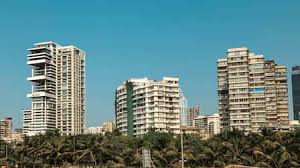
Fresh construction contracts and record-setting luxury home purchases across the Mumbai Metropolitan Region are reinforcing confidence in the city’s residential real estate cycle, even as developers and investors recalibrate strategies around long-term urban growth. Recent activity in Alibaug and Worli highlights how demand is expanding simultaneously across emerging suburban corridors and established prime districts.
In Alibaug, a coastal town increasingly positioned as an extension of Mumbai’s residential geography, a major developer has awarded a sizeable construction mandate for a new housing project. The contract covers the development of a residential tower and supporting infrastructure across a built-up area exceeding seven lakh square feet. Construction is expected to begin early next year, with execution spread over two years. Industry observers see the move as part of a broader shift towards planned, lower-density developments outside the city core, driven by improved road and ferry connectivity and rising preference for second homes and weekend housing. Urban planners note that Alibaug’s appeal lies not only in lifestyle positioning but also in the opportunity to implement more climate-sensitive design, including water management, energy efficiency and controlled density. “Peripheral markets allow developers to rethink how housing interacts with ecology, especially in coastal regions facing climate risks,” said an urban development expert.
At the other end of the spectrum, Mumbai’s ultra-luxury segment continues to attract significant private capital. A recent transaction in Worli saw two adjoining high-rise apartments change hands for a combined consideration nearing ₹200 crore. The purchase forms part of a wider trend in which entrepreneurs from capital-intensive sectors, particularly pharmaceuticals and manufacturing, are allocating wealth into prime residential assets. Data tracked by market analysts indicates that such buyers accounted for a substantial share of Mumbai’s high-value home deals last year. Real estate consultants say this pattern reflects both confidence in Mumbai’s long-term economic fundamentals and a preference for tangible assets amid global volatility. “Ultra-luxury homes are increasingly viewed as wealth preservation tools rather than discretionary indulgences,” an industry expert noted. Together, these developments underline the breadth of demand shaping the Mumbai region. While large-scale construction activity strengthens employment across the building ecosystem, high-value transactions support municipal revenues through stamp duty and reinforce the city’s global investment profile. However, experts caution that sustaining momentum will depend on balanced planning, timely approvals and infrastructure alignment.
As Mumbai expands outward and upward, the challenge for policymakers and developers alike will be ensuring that growth remains inclusive, resource-efficient and resilient to climate pressures. How effectively emerging corridors integrate sustainable infrastructure may determine whether the next phase of real estate growth translates into long-term urban value rather than short-term gains.
Also Read: Two plots, one vision: Bengaluru twin home designed by IT-engineer brothers goes viral
Mumbai Region Real Estate Sees Construction And Luxury Surge
