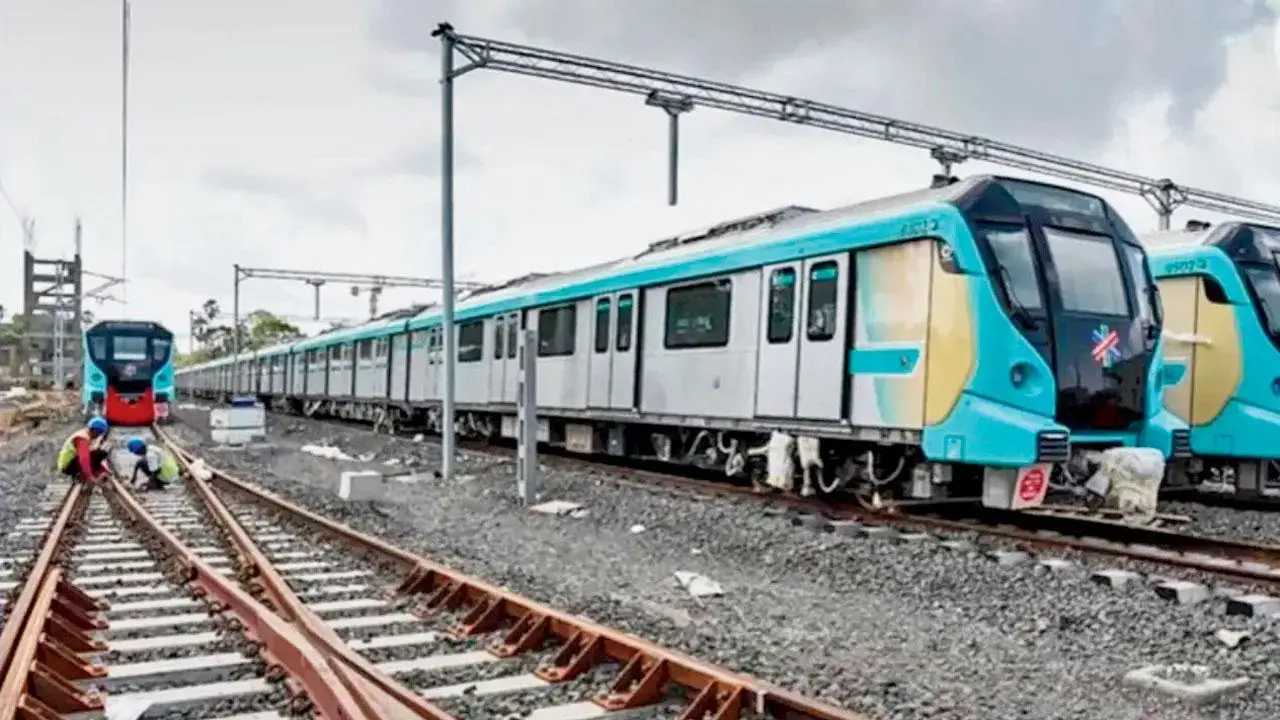
Transport planning across the Mumbai Metropolitan Region (MMR) may be set for a major recalibration, with fresh proposals seeking longer Metro corridors and integrated multi-level infrastructure to address mounting congestion in fast-urbanising parts of Thane district. A high-level review of ongoing and proposed Metro projects has placed renewed focus on extending east–west and north–south connectivity beyond traditional suburban rail catchments.
The review, held at the headquarters of the Mumbai Metropolitan Region Development Authority, examined the pace and scope of Metro construction in the Kalyan–Dombivli–Ulhasnagar belt, one of the region’s most densely populated and rapidly expanding zones. Officials overseeing transport infrastructure were urged to prioritise execution while simultaneously planning future-ready extensions to support balanced urban growth. Among the key proposals discussed was the expansion of Mumbai Metro Line 5, which is currently under construction. The corridor, originally planned to link Thane, Bhiwandi and Kalyan, is now being examined for phased extensions further east. Transport planners indicated that extending Metro access towards Ambernath and Badlapur could significantly reduce pressure on the heavily loaded suburban railway network and arterial roads serving industrial and residential clusters.
A similar emphasis was placed on accelerating work on Mumbai Metro Line 12, where elevated structures and station construction are underway. Officials were asked to evaluate an extension linking the corridor with Thane city via Mumbra and Kalwa, a move that could create a continuous public transport spine across multiple municipal boundaries within Thane district. Planning discussions also covered Mumbai Metro Line 14, a proposed long-haul corridor expected to serve emerging residential and employment zones. Urban development experts note that early integration of such corridors with land-use planning is critical to preventing car-dependent sprawl and ensuring equitable access to jobs and services.
One of the more transformative ideas reviewed was the development of select Metro stretches as integrated double-decker corridors. Under this concept, a ground-level road would be paired with a flyover and an elevated Metro viaduct above, optimising scarce urban land in congested areas. Infrastructure specialists say such multi-layered corridors, if carefully designed, can improve mobility without extensive land acquisition, though they require strong coordination across agencies and robust safety planning. Beyond Metro rail, the review also touched upon access-controlled road corridors linking eastern suburbs with Mumbai and Navi Mumbai, as well as pending land acquisition for key road projects and tunnels. Officials stressed the need for coordinated rehabilitation and redevelopment strategies to minimise displacement and ensure timely execution.
If advanced as proposed, the combined Metro extensions and multi-level corridors could reshape daily commuting patterns across the eastern MMR, shifting more trips to high-capacity, lower-emission public transport. Urban planners caution, however, that success will depend on phased implementation, financial sustainability, and last-mile connectivity. As the MMR continues to absorb population and economic growth, the next phase of Metro planning will be closely watched as a test of whether infrastructure expansion can keep pace with urbanisation while supporting a more inclusive and climate-resilient regional mobility framework.
Mumbai Region Pushes Metro Extensions Across Thane Belt