Mumbai Region Eyes Future With Tata AI Innovation City
The Tata Group’s $11 billion proposal to establish a dedicated AI Innovation City near the upcoming Navi Mumbai International Airport marks a pivotal moment in India’s urban‑industrial infrastructure strategy. Announced at the World Economic Forum in Davos, the initiative aims to create a technology‑led ecosystem anchored by artificial intelligence, data centres and advanced digital infrastructure — signalling a shift from conventional manufacturing‑centric growth to future‑ready economic clusters. This development could redefine urban innovation landscapes, integrate deep‑tech employment hubs with smart city planning, and position the Mumbai region as a global destination for AI and high‑tech enterprise.
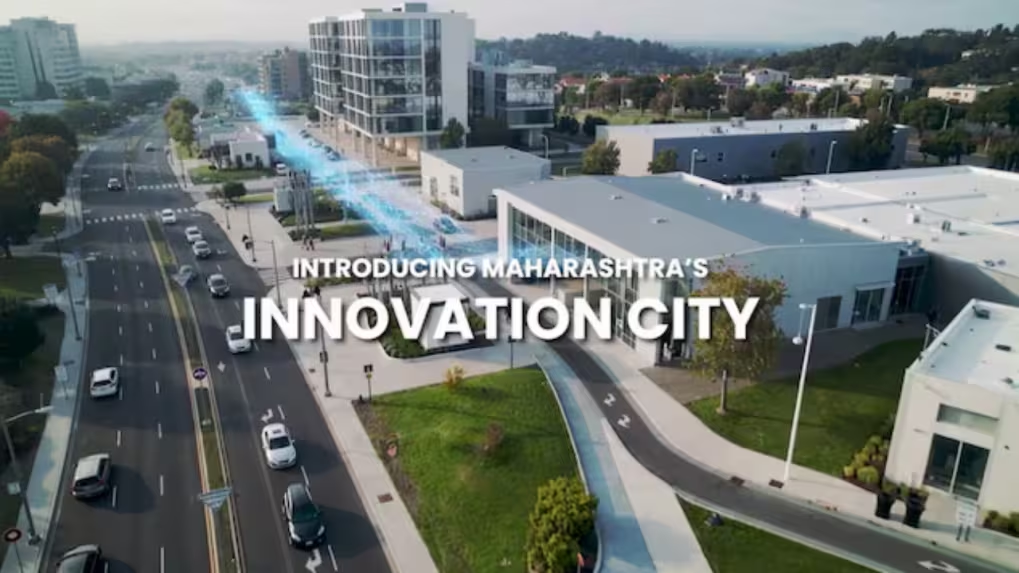
The planned Innovation City will be India’s first project of its scale to combine cutting‑edge digital infrastructure with a spatial blueprint designed to attract start‑ups, research institutions, multinational corporations and data-intensive enterprises. The Tata Group’s capital commitment — part of broader Memoranda of Understanding (MoUs) sealed by Maharashtra at the WEF — is intended to catalyse investment into AI ecosystems and build critical infrastructure such as high‑performance data centres and plug‑and‑play technology zones. Urban planners see this initiative as more than a corporate campus. By locating the Innovation City adjacent to a major global transport node, planners aim to align physical infrastructure with strategic connectivity, fast‑tracking the integration of knowledge economies into the regional urban fabric. This approach mirrors global models where innovation districts converge with metropolitan transit, residential zones and lifestyle amenities — potentially attracting skilled talent and enabling circular urban growth rather than isolated economic enclaves.
For local markets, the economic implications are significant. Projections accompanying the WEF announcements estimate that the wider set of investment deals, including the Innovation City and other sectoral commitments, could generate millions of jobs across technology, services and infrastructure segments over the next decade. Industry observers describe these projected employment gains as a critical counterbalance to automation trends that threaten routine labour markets, provided there is sustained investment in high‑skilled training, inclusive education pathways and urban workforce development. However, analysts also note challenges ahead. Building a world‑class tech hub requires dependable energy, robust digital connectivity, resilient urban infrastructure and sustainable environmental planning. Experts say planning must integrate climate‑resilient design, low‑carbon power sourcing and water‑smart frameworks to avoid replicating carbon‑intensive models of earlier tech parks. Without these elements, the innovation cluster risks straining local ecosystems and worsening urban externalities such as congestion and pollution.
Stakeholders stress the need for inclusive growth models that go beyond corporate footprints. Urban policy specialists argue that equitable access to employment opportunities, affordable housing near innovation clusters and partnerships with educational institutions will be essential to ensure the innovation city benefits the broader metropolitan population, not just a select cohort of high‑tech professionals.
As Maharashtra moves to fast‑track detailed design and ground mobilisation over the next six to eight months, policymakers, urban planners and private partners will need to balance competitive ambition with sustainable, people‑centric infrastructure principles — shaping an innovation ecosystem that supports economic dynamism and resilient urban futures.