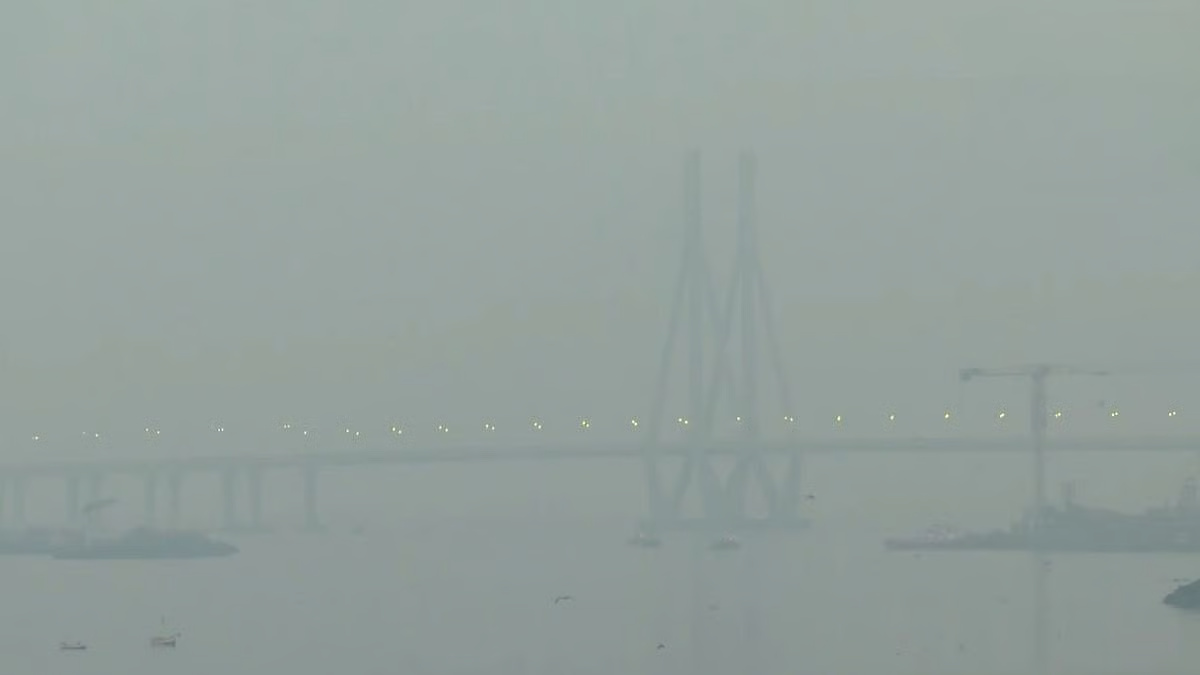
Air quality across the Mumbai Metropolitan Region (MMR) has deteriorated steadily in the opening days of 2026, pushing large parts of Mumbai, Thane, and Navi Mumbai into the ‘moderate’ pollution bracket and raising renewed concerns over winter air management in India’s most densely built urban cluster. The shift carries implications not only for public health, but also for infrastructure planning and construction practices across the region.
Monitoring data from government stations shows that average pollution levels rose consistently over four days, reversing the relatively cleaner conditions recorded at the end of December. By the weekend, Mumbai’s citywide Air Quality Index had climbed well above the ‘satisfactory’ threshold, while parts of Navi Mumbai crossed into the ‘poor’ category, indicating higher concentrations of fine particulate matter harmful to respiratory health. The trend was not uniform. Several neighbourhoods recorded pollution levels significantly above city averages. Central Mumbai locations and areas around major transport hubs showed elevated readings, while residential pockets in Navi Mumbai experienced some of the sharpest spikes. Urban health experts note that such spatial variation reflects the interaction between traffic density, construction activity, and local wind patterns rather than isolated pollution events.
According to environmental specialists, seasonal meteorology is playing a decisive role. Cooler winter nights, low wind speeds, and stable atmospheric conditions limit the vertical dispersion of pollutants, allowing dust and fine particles to accumulate close to ground level. These conditions amplify emissions from daily urban activity, particularly road traffic and building construction, which together account for a substantial share of particulate pollution in the MMR. Construction dust remains a structural challenge for the region’s growth-led development model. Despite ongoing enforcement drives and site-level mitigation rules, planners acknowledge that dust suppression measures are unevenly implemented, especially across smaller projects and infrastructure corridors. Long-term data suggests that the contribution of construction-related dust to overall pollution levels has remained stubbornly high, even as the real estate and infrastructure sectors continue to expand.
The implications extend beyond air quality metrics. Prolonged exposure to ‘moderate’ pollution can aggravate respiratory conditions among children, older adults, and outdoor workers, while ‘poor’ air increases health risks for the wider population. For a region positioning itself as a hub for finance, logistics, and climate-resilient urban growth, recurring winter pollution episodes highlight the need for stronger integration between environmental controls and development approvals. Urban planners argue that improving Mumbai region air quality will require moving beyond short-term advisories towards systemic interventions—better dust management at worksites, cleaner construction logistics, electrification of transport fleets, and more effective street-level enforcement. As winter conditions persist, authorities are expected to closely track pollution trends and adjust mitigation measures.
Whether early 2026 proves to be a temporary setback or a warning sign will depend on how decisively cities within the MMR align infrastructure growth with environmental accountability in the months ahead.
Mumbai Region Air Quality Slips Early 2026