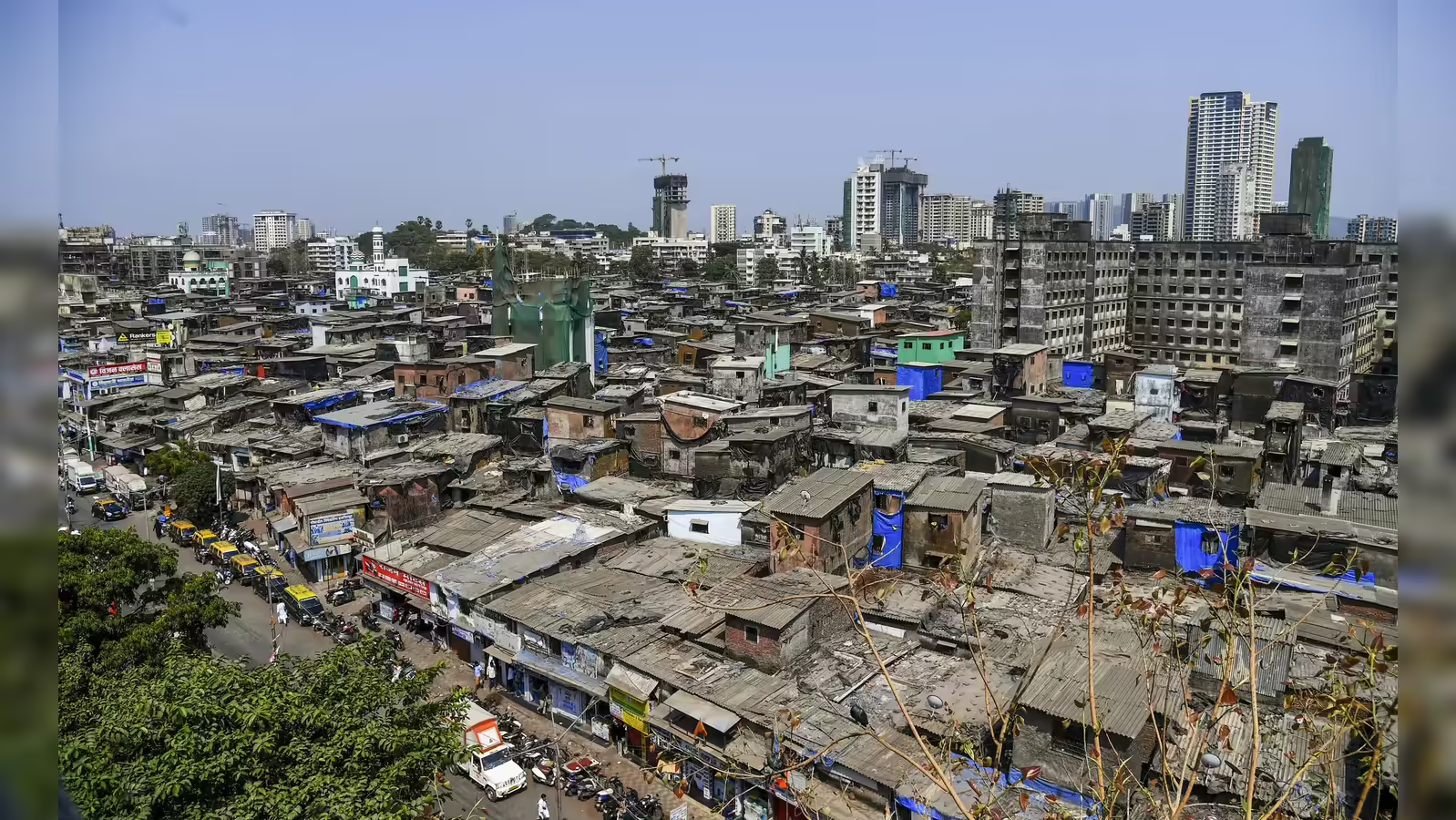
Housing demand in the Mumbai Metropolitan Region (MMR) continues to show resilience despite signs of moderation in overall transaction volumes, with developers increasingly focusing on Mumbai redevelopment projects to sustain growth in key urban corridors. One of the city’s prominent listed developers recently indicated that project launches aligned with strong local demand and infrastructure-led growth have continued to record healthy buyer interest. Industry observers note that while market-wide sales volumes have softened slightly in recent quarters, demand in well-connected micro-markets remains stable, particularly in areas witnessing transport upgrades and population expansion.
Real estate analysts say the strategy reflects a broader shift across Mumbai’s property sector. Rather than pursuing aggressive land acquisitions, developers are prioritising Mumbai redevelopment projects including cluster redevelopment of ageing residential precincts to unlock land within the city’s already built environment. Urban planners highlight that redevelopment has become central to Mumbai’s long-term housing strategy. Much of the city’s housing stock is decades old and requires structural renewal. Redevelopment allows developers to rebuild these neighbourhoods into modern residential communities while improving infrastructure efficiency and land utilisation in a city where developable land is extremely scarce.
Industry data suggests that the western suburbs continue to emerge as one of the most active redevelopment zones. Areas such as Malad, Andheri and Goregaon have seen a steady pipeline of cluster redevelopment initiatives in recent years. These locations benefit from multiple infrastructure upgrades, including metro rail lines, road improvements and enhanced suburban rail connectivity, factors that influence housing demand and property values.
Developers say decisions on where to launch projects are increasingly driven by granular data on urban expansion, transport connectivity and demographic trends. Monitoring population movement, commuting patterns and upcoming infrastructure corridors allows developers to identify neighbourhoods likely to see sustained housing demand over the next decade.
Cluster redevelopment—where multiple adjacent buildings are redeveloped together has gained particular traction in Mumbai. Compared with standalone building reconstruction, cluster projects allow for better urban design outcomes. They often create larger residential layouts, integrated amenities and improved open spaces, while also enabling planned road access and public utilities.
Urban development experts note that such redevelopment models can play an important role in making cities more liveable and resilient. By replacing ageing structures with energy-efficient buildings and better infrastructure planning, redevelopment can improve environmental performance while providing safer housing for residents. Recent financial disclosures by the developer also reflected a mixed but stable market environment. Sales bookings in the most recent quarter recorded a modest decline in value terms, although the total area sold increased. This trend suggests that while pricing growth may have moderated in some segments, buyer activity remains present in selected micro-markets. For Mumbai’s real estate sector, analysts say the continued expansion of Mumbai redevelopment projects reflects a structural shift rather than a short-term cycle. As the metropolitan region grows and infrastructure networks expand, redevelopment-led housing supply is expected to remain one of the most significant drivers shaping the city’s urban landscape over the coming decades.
Mumbai Redevelopment Projects Anchor Housing Demand Growth