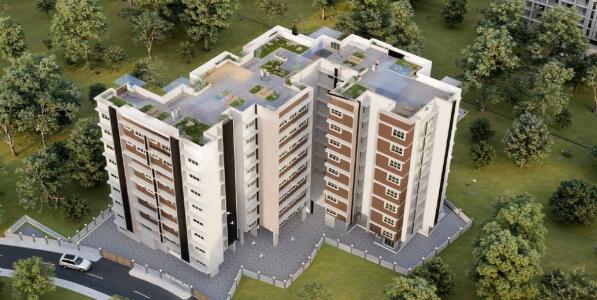
A new Mumbai redevelopment project in Santacruz (West) marks a significant entry into one of the city’s most complex yet high-demand real estate segments, as Arvind SmartSpaces Limited steps into the Mumbai Metropolitan Region’s (MMR) tightly regulated housing renewal market. The project, with an estimated topline potential of ₹300 crore, reflects a broader shift toward unlocking land value within established neighbourhoods rather than expanding into peripheral greenfield sites.
Located in Santacruz, the development is expected to deliver new residential inventory within an already built-up urban fabric. This approach aligns with Mumbai’s increasing reliance on redevelopment to address housing shortages while minimising additional pressure on land, infrastructure, and ecological systems. Urban planners note that such projects are critical in a city where land scarcity and ageing building stock intersect.The Santacruz micro-market offers strong connectivity through suburban rail networks, arterial road corridors, and proximity to key employment hubs such as Bandra Kurla Complex. This has sustained both end-user demand and rental absorption, making redevelopment financially viable despite regulatory and logistical challenges. Industry experts point out that redevelopment projects, while capital-efficient in some cases, require deep engagement with resident stakeholders and adherence to evolving building norms, including safety and sustainability mandates.
The Mumbai redevelopment project also signals a strategic recalibration by developers seeking to diversify beyond large land acquisitions. With infrastructure upgrades such as the Santacruz–Chembur Link Road and airport connectivity improving east–west mobility, inner-city redevelopment is increasingly being viewed as a resilient investment strategy. For residents, this often translates into upgraded housing, better amenities, and compliance with modern safety codes, though concerns around temporary displacement and construction timelines persist. From a sustainability perspective, redevelopment presents both opportunities and challenges. Replacing older, inefficient buildings with energy-efficient structures can reduce long-term emissions and improve urban liveability. However, construction activity itself remains resource-intensive.
Experts emphasise the need for integrating low-carbon materials, water-sensitive design, and climate-resilient infrastructure into such projects to ensure they contribute meaningfully to Mumbai’s environmental goals.The project adds to the developer’s growing footprint in MMR, following earlier township plans in the region. Analysts suggest that the cumulative pipeline indicates a long-term bet on Mumbai’s redevelopment cycle, which is expected to accelerate as policy frameworks streamline approvals and incentivise housing renewal. As Mumbai continues to densify, redevelopment-led growth is likely to shape the next phase of its urban evolution. The success of projects like this will depend not only on financial execution but also on how effectively they balance community needs, infrastructure capacity, and environmental responsibility.