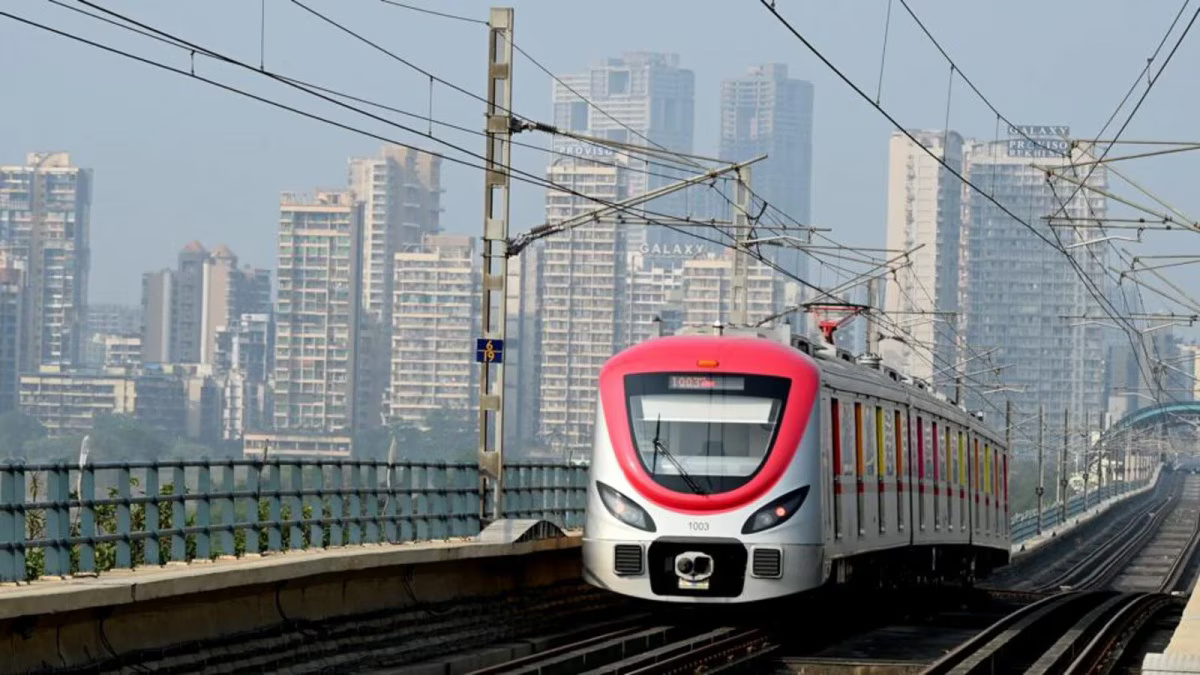
After months of construction and safety testing, the first phase of Mumbai Metro Line 9 — part of the city’s expanding Red Line network is poised to begin operations between Dahisar East and Kashigaon very soon, offering a new rapid-transit option for commuters in the northern suburbs and marking a major advance in metropolitan connectivity.
The Mumbai Metropolitan Region Development Authority (MMRDA) and metro safety regulators have cleared Phase 1 of Line 9 for commercial operation following technical inspections and trial runs, signalling that the corridor could be opened to the public within the first week of February.Spanning roughly 4.5 km and covering stations at Dahisar East, Pandurangwadi, Miragaon and Kashigaon, this stretch forms the northern extension of the broader Red Line network — which encompasses existing Lines 7 and 7A — and will provide a direct metro connection deep into the northern suburbs of the Mumbai Metropolitan Region.
Transit experts describe Line 9 as a strategic addition to Mumbai’s rapid transport infrastructure because it integrates with existing rail and metro routes, and will help relieve chronic congestion on local trains and roadways between Mira Road, Dahisar and central parts of the city. Phase 1’s imminent opening is expected to dramatically cut commute times for daily riders by linking suburban nodes to the metro grid and providing seamless transfers to other lines, including the Western Express Highway corridor via Lines 2A and 7. By replacing some local train trips and road traffic with high-capacity metro service, the project also aligns with wider goals to curb urban carbon emissions and freight-induced congestion.
Urban planning professionals note that this initial operational phase also serves as a real-world test of operational readiness, crowd management and service reliability ahead of the line’s full extension toward Mira-Bhayandar and beyond, which is targeted for later in 2026. For residents of Mira Road, Kashigaon and neighbouring precincts, this metro link will be more than just a faster ride; it will deepen access to jobs, education and services in larger economic centres. Stakeholders see improved rapid transit as a catalyst for more balanced growth across Mumbai’s sprawling suburbs — easing pressure on overloaded commuter rail and reducing dependence on private vehicles.
Real estate analysts have already pointed to rising property demand and expanding development interest along the Line 9 corridor, as enhanced connectivity typically boosts residential and commercial attractiveness in previously under-served areas. However, planners caution that full rider benefits will only materialise when the complete Red Line extension, including the station segment beyond Kashigaon to Mira Road and Bhayandar, is commissioned. That phase will unlock the line’s transformative potential as a north-west mobility spine and further integrate Thane district into Mumbai’s rapid transit network.
As the city moves closer to opening this section of the metro, emphasis on last-mile connectivity, feeder services and seamless transfers will be crucial to maximise ridership and enhance commuter experience — priorities that authorities are expected to pursue alongside the phased roll-out.