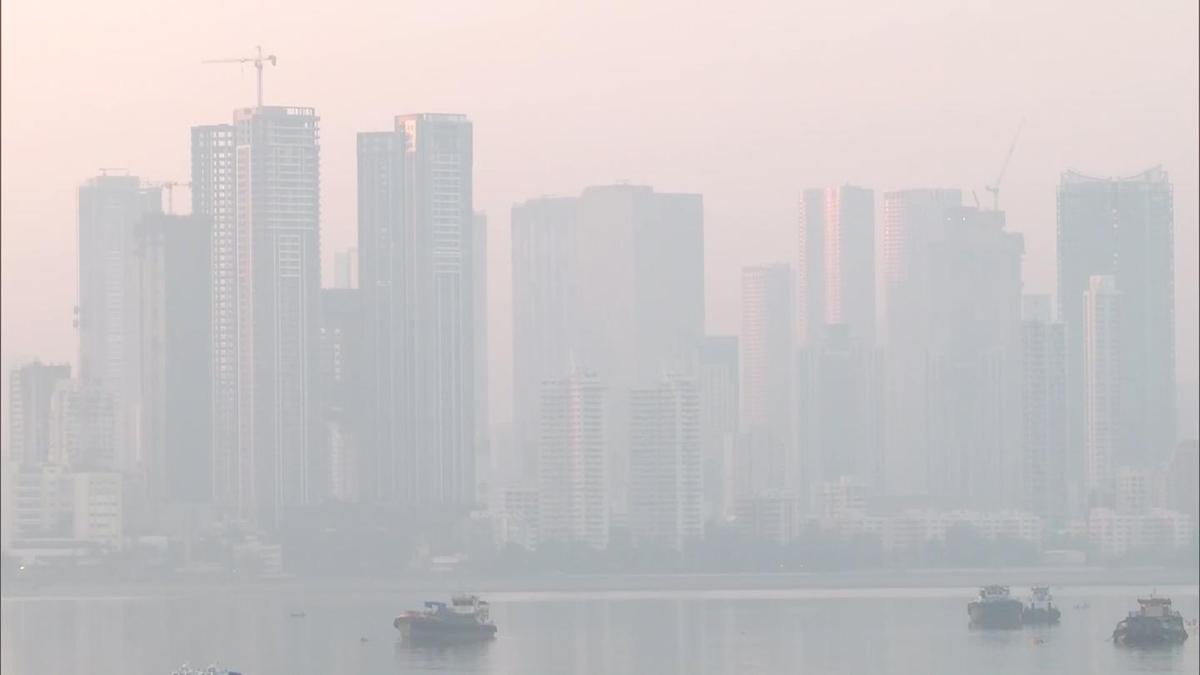
Mumbai Records Worst Air Quality of 2025 During Festive Season
Mumbai has witnessed its most severe air pollution levels of 2025, as October emerges as the city’s most hazardous month to date. Data from 19 monitoring stations indicate peak PM2.5 levels, while seven stations recorded the highest PM10 concentrations since January. The spike coincides with the festive period between October 18 and 22, a time typically marked by increased vehicular traffic, construction activity, and firecracker usage.
Experts from the Centre for Research on Energy and Clean Air (CREA) highlighted that particulate matter, including PM2.5 and PM10, continues to threaten public health. PM2.5 particles, being fine enough to enter the bloodstream, can contribute to cardiovascular diseases, respiratory complications, and increased mortality risk among vulnerable groups such as children, seniors, and those with pre-existing conditions. PM10 particles, while coarser, also exacerbate respiratory issues and can irritate eyes, nose, and throat.
The city’s continuous ambient air quality monitoring stations, managed by the Maharashtra Pollution Control Board, the Indian Institute of Tropical Meteorology, and the Brihanmumbai Municipal Corporation, reported critical levels in several areas. Bandra Kurla Complex recorded PM2.5 levels of 212 µg/m³, Malad West 188 µg/m³, Navy Nagar 167 µg/m³, and Mazgaon 130 µg/m³. PM10 levels peaked at Malad West (322 µg/m³), Deonar (321 µg/m³), and Mulund West (234 µg/m³), far exceeding the Central Pollution Control Board’s permissible 24-hour averages of 60 µg/m³ for PM2.5 and 100 µg/m³ for PM10.
Analysis of trends over the past four years underscores a worsening pattern during the Diwali period. PM2.5 levels in 2022 peaked at 174 µg/m³ in Chakala-Andheri East, while 2023 saw 144 µg/m³ in Chembur. In 2024, Mindspace-Malad West reached 196 µg/m³, and in 2025, Malad West recorded 187 µg/m³, reflecting a sustained rise in toxic particulate concentrations during seasonal festivities.Experts emphasise that short-term spikes caused by festivals compound the effects of everyday contributors, such as construction dust, industrial emissions, and vehicle exhaust.
They advocate for systemic measures to tackle pollution through stricter emissions enforcement, sustainable construction practices, and reduced reliance on polluting celebratory practices. Authorities are urged to prioritise public health by monitoring hotspots and implementing policies that reduce exposure to harmful pollutants. With Mumbai’s residents increasingly exposed to hazardous air, the call for long-term sustainable interventions has grown louder. Experts recommend greater awareness campaigns, enhanced green buffers, and policy interventions to curb particulate matter levels and safeguard health, ensuring the city evolves into a cleaner, more equitable urban environment.