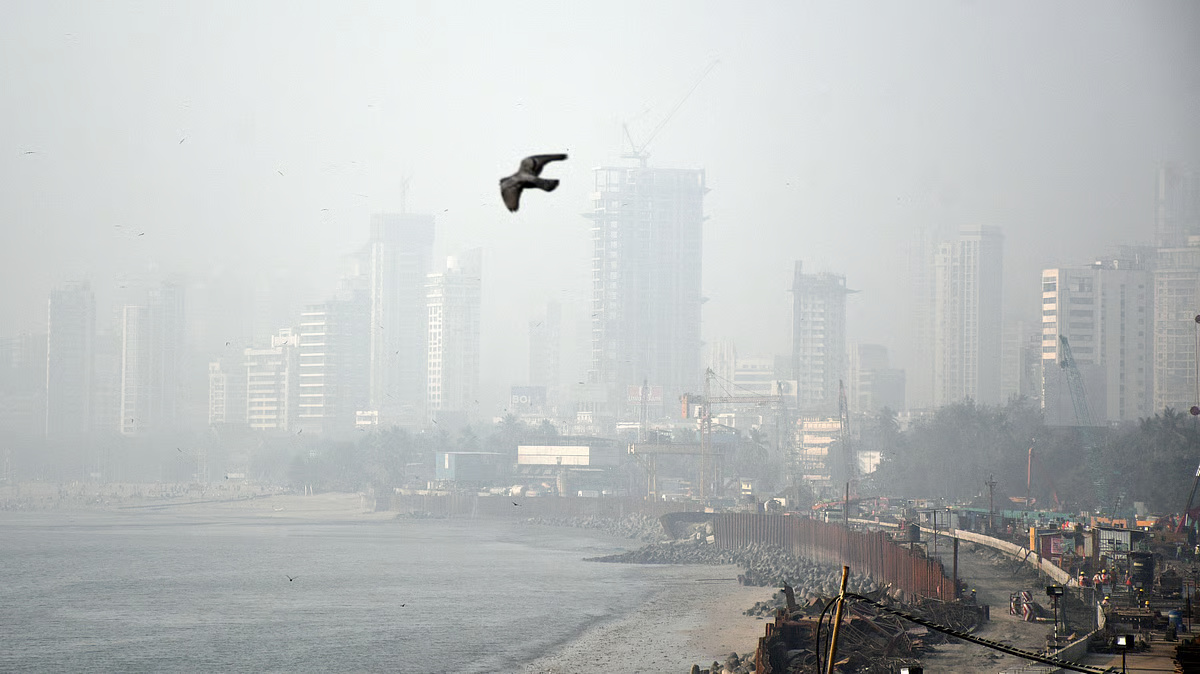
Mumbai witnessed a sharp deterioration in air quality on Sunday morning as pollution levels climbed into the unhealthy category, underscoring the city’s growing struggle with winter air quality management. Despite mild temperatures and clear skies, air monitoring data indicated that residents were exposed to elevated particulate pollution during early hours, a period when outdoor activity typically peaks.
According to air quality monitoring agencies, the Air Quality Index in several parts of the city approached the upper end of the “moderate to unhealthy” range by early morning. Environmental experts said the spike was primarily driven by fine particulate matter, with PM2.5 and PM10 concentrations significantly exceeding recommended safety thresholds. These particles pose heightened health risks because of their ability to penetrate deep into the respiratory system and, in some cases, enter the bloodstream. Health professionals warned that even short-term exposure to elevated particulate matter can trigger breathing discomfort, fatigue, and cardiovascular stress, particularly among children, older adults, and individuals with asthma or heart conditions. “Winter pollution episodes are increasingly common in coastal cities due to stagnant atmospheric conditions,” a public health expert noted, adding that visibility of clear skies can often be misleading.
Meteorological conditions offered little relief. Temperatures across Mumbai hovered in the low twenties, with moderate humidity and limited wind movement. Low wind speeds restricted the dispersion of pollutants, allowing emissions from vehicles, construction activity, and localised combustion sources to accumulate near ground level. In some areas, light mist further compounded the problem by trapping pollutants close to residential neighbourhoods. Urban planners point out that Mumbai’s air quality challenge is closely linked to land-use intensity and mobility patterns. Vehicular emissions remain a dominant contributor during winter months, particularly during morning and evening rush hours. The seasonal rise in pollution has renewed attention on the need for cleaner transport systems, improved traffic management, and stricter monitoring of construction dust.
While other pollutants such as nitrogen dioxide and sulphur dioxide remained within acceptable limits, experts stressed that high particulate concentrations alone are sufficient to impact public health. Doctors advised residents to reduce prolonged outdoor exposure during early mornings, avoid strenuous exercise near traffic corridors, and track daily air quality updates. The use of masks and indoor air filtration was also recommended for vulnerable groups. Officials monitoring air quality trends cautioned that conditions may remain volatile over the coming days if calm weather persists. Without stronger wind patterns or rainfall, pollutant build-up could continue intermittently through the winter period.
The episode highlights a broader urban challenge facing Mumbai and other large Indian cities: balancing economic activity and mobility demands with the need for cleaner, healthier living environments. As winter pollution episodes become more frequent, experts argue that long-term solutions—ranging from low-emission transport and dust control to better urban ventilation planning—will be critical in protecting public health while supporting inclusive and sustainable city growth.
Mumbai Records Unhealthy Air December 28 AQI Reaches 197 Temperature Around 22