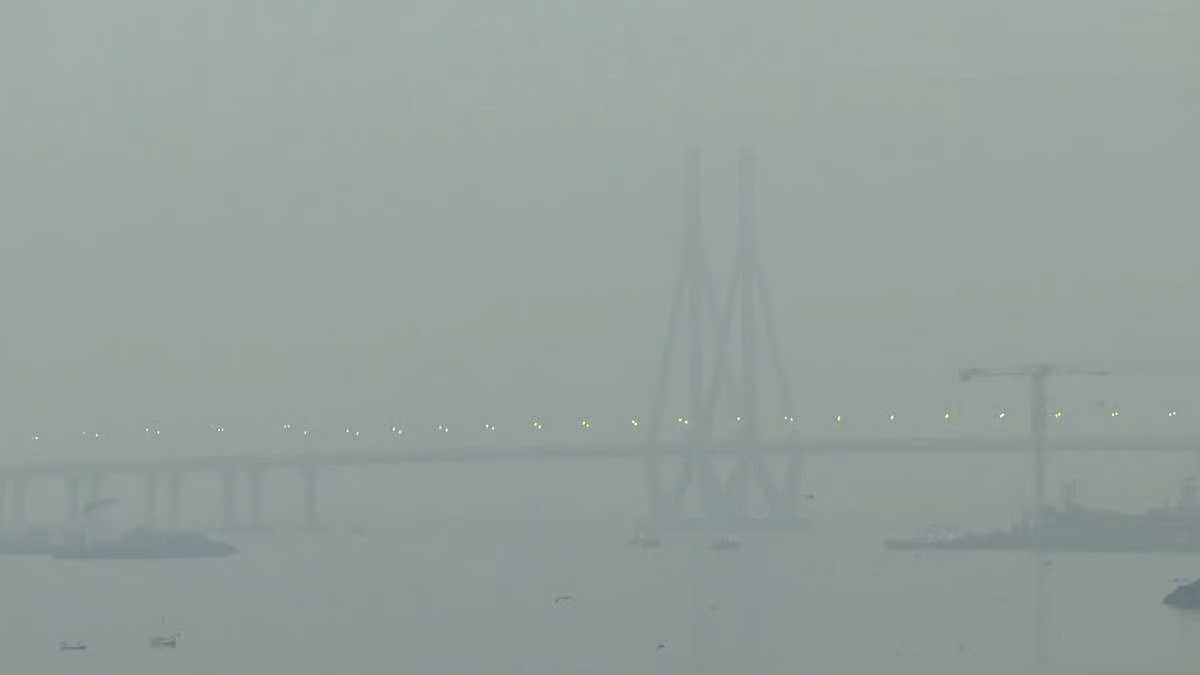
Mumbai woke up to an unusual contrast on Thursday as comfortable winter temperatures briefly offered relief, only to be quickly overshadowed by deteriorating air quality that reduced visibility across large parts of the city. While early hours brought mild winds and cooler conditions, a haze settled in by mid-morning, masking the skyline and underscoring persistent concerns around urban air pollution.
Meteorological data indicated stable weather patterns, with minimum temperatures hovering near 20 degrees Celsius and daytime highs expected to remain close to seasonal averages. However, environmental indicators told a different story. Air quality monitoring platforms recorded the city’s Air Quality Index moving into the unhealthy range, reversing the short-lived improvement seen earlier this month. Urban environment specialists point to suspended particulate matter as the dominant factor behind the decline. Continuous construction activity across Mumbai—spanning metro corridors, flyovers, coastal infrastructure, road expansion, and large-scale redevelopment—has significantly increased dust concentrations. Combined with low atmospheric dispersion during winter, these conditions have amplified pollution levels despite favourable weather.
Several eastern and central neighbourhoods emerged as pollution hotspots. Industrial zones and logistics hubs recorded the poorest air quality, with readings entering the severe category. Southern precincts along the harbour belt also reported elevated pollution levels, reflecting the cumulative impact of port activity, traffic congestion, and construction-related emissions. In contrast, some western suburban pockets recorded comparatively moderate readings, though experts caution that “moderate” levels still pose risks for vulnerable groups such as children, the elderly, and those with respiratory conditions. Health professionals note that repeated exposure to unhealthy air, even over short periods, can aggravate long-term cardiovascular and pulmonary issues.
From an urban planning perspective, the episode highlights the growing challenge facing rapidly redeveloping cities. Mumbai’s transformation—driven by transport upgrades, housing renewal, and commercial expansion—has improved connectivity and economic opportunity but has also intensified environmental stress. Planners argue that infrastructure delivery must be matched with stricter dust-control enforcement, real-time monitoring, and cleaner construction practices. Policy analysts also emphasise the need for coordinated action between civic agencies, developers, and contractors. Measures such as on-site dust suppression, covered material transport, greener construction technologies, and better scheduling of high-emission activities could reduce pollution spikes without slowing urban growth.
As Mumbai enters its peak winter construction phase, the return of unhealthy air serves as a reminder that climate resilience is not only about extreme weather but also about managing everyday environmental risks. Sustaining liveability in dense cities will depend on how effectively development ambitions are balanced with public health safeguards in the months ahead.
Mumbai Records Unhealthy Air Amid Calm Winter Weather