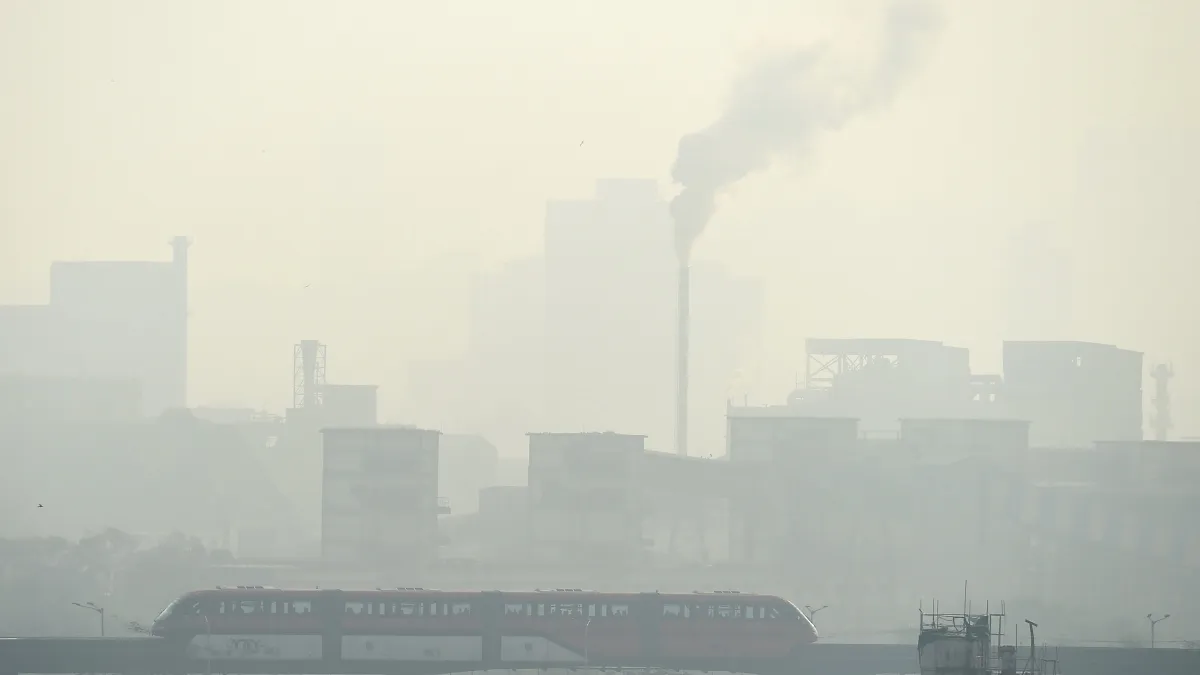
Mumbai witnessed a sharp deterioration in air quality on Saturday as dense smog enveloped several neighbourhoods, undermining a brief spell of clear and warm weather earlier in the day. While skies remained largely cloud-free, suspended pollutants reduced visibility across large parts of the city, underscoring persistent challenges in managing urban air quality during seasonal transitions.
Weather conditions on February 7 pointed to rising daytime temperatures, with readings climbing towards the mid-30s Celsius range, marginally above recent averages. Urban climate experts note that such conditions, combined with low wind speeds, often trap pollutants close to the ground. As a result, residents commuting during early hours encountered hazy conditions despite the absence of rain or cloud cover. Citywide air quality data placed Mumbai in the ‘poor’ category, with an average Air Quality Index (AQI) exceeding safe thresholds. More concerning, however, were sharply elevated pollution levels in specific micro-markets. Industrial and transport-heavy zones such as Wadala and Chandivali recorded AQI levels well above 300, entering the ‘severe’ category. These readings reflect sustained exposure to vehicular emissions, freight movement, construction dust, and limited green buffers.
Urban planners point out that such spatial disparities are not new. Mumbai’s air pollution is increasingly localised, driven by land-use patterns and infrastructure intensity. Logistics corridors, truck terminals, and high-density redevelopment zones tend to experience significantly worse air quality than residential neighbourhoods with lower traffic volumes and better tree cover. In contrast, pockets such as Gamdevi and parts of south Mumbai reported comparatively moderate air quality, highlighting the uneven environmental burden borne by different sections of the city. Public health researchers warn that prolonged exposure to ‘poor’ and ‘severe’ AQI levels can exacerbate respiratory conditions, particularly among children, the elderly, and outdoor workers.
The episode also brings renewed focus to Mumbai’s preparedness as it moves towards warmer months. Rising temperatures can intensify secondary pollutant formation, including ground-level ozone, compounding health risks. Climate specialists argue that addressing air quality cannot be isolated from broader urban resilience strategies, including public transport electrification, construction regulation, decentralised freight management, and expansion of urban green cover. From a real estate and infrastructure perspective, persistent air pollution has begun influencing housing preferences and commercial investment decisions. Developers are increasingly marketing air filtration systems and green design features, while businesses factor environmental quality into location choices for offices and campuses.
Civic officials maintain that long-term improvements will require coordinated action across transport planning, waste management, and energy transition. Short-term advisories may offer limited relief, but sustained policy enforcement and cleaner urban systems remain critical. As Mumbai continues to balance growth with livability, the latest smog episode serves as a reminder that environmental performance is becoming as central to the city’s future as economic competitiveness and infrastructure expansion.
Mumbai Records Severe Air Pollution Pockets