


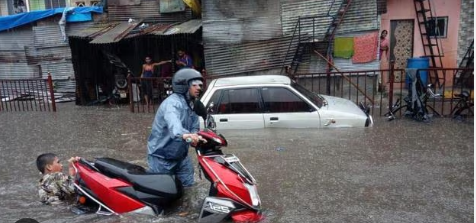
Mumbai: Mumbai experienced a significant resurgence in rainfall, recording the second-highest 24-hour rainfall in July in the past 15 years. The India Meteorological Department’s (IMD) Santacruz observatory registered an impressive 268mm of rain on Monday, with an intense downpour of 170mm occurring within a three-hour window post-midnight.
This deluge prompted the IMD to upgrade its weather alert to ‘red’ for Mumbai and Raigad, indicating heavy to very heavy rainfall at several locations and extremely heavy rainfall in isolated areas. The highest 24-hour rainfall for July in the past 15 years was 375.2mm on July 2, 2019, while the all-time record remains 944.2mm from the infamous deluge on July 26, 2005. Initially, on Sunday night, the IMD had issued a ‘yellow’ alert, forecasting heavy rain activity at isolated places for 24 hours. However, Mumbai witnessed an intense downpour between 2.30am and 5.30am. An IMD official attributed this sudden surge to a strengthened offshore trough around 12.30am, which brought in the heavy rains. There was no existing weather system warranting an orange or red alert at that time, as the heavy rainfall was confined to a brief period.
IMD’s data reveals that the Santacruz observatory recorded 40.9mm of rain by 2.30am, which surged to 210.9mm by 5.30am. The remaining 57mm was recorded between 5.30am and 8.30am. By morning, the IMD had upgraded its warning to ‘orange’ for Mumbai, Thane, and Palghar, indicating heavy to very heavy rainfall with thunderstorms, lightning, and gusty winds at isolated places. This warning was revised to ‘red’ by evening, following a cloud patch over Raigad moving to Mumbai. This movement resulted in the IMD Colaba observatory recording 134.8mm of rain between 8.30am and 8.30pm. For the 24-hour period ending Monday 8.30am, the Colaba observatory had recorded 84mm of rainfall.
In the 12-hour period ending 8.30pm Monday, the Santacruz observatory recorded 72.2mm of rainfall. This season, Santacruz observatory has recorded a total of 734.8mm of rainfall, with more than one-third of this amount received on Sunday and Monday alone. Data from the BMC’s automatic weather station highlighted that Powai and Andheri recorded over 300mm of rain, with 327mm and 303mm respectively. In contrast, other areas in the Mumbai Metropolitan Region (MMR) experienced comparatively less rainfall, including Thane with 128mm, Bhiwandi with 32mm, Ambernath with 27mm, Kalyan with 24mm, Ulhasnagar with 24mm, and Shahapur with 12mm. Despite the heavy rains, temperatures remained relatively high, with minimum temperatures recorded by the Colaba and Santacruz observatories at 25.5°C and 24.6°C respectively.
The heavy rainfall and subsequent red alert underscore the need for robust preparedness and responsive governance to handle extreme weather events effectively. Residents are advised to stay informed through official channels and adhere to safety advisories issued by local administrations.
