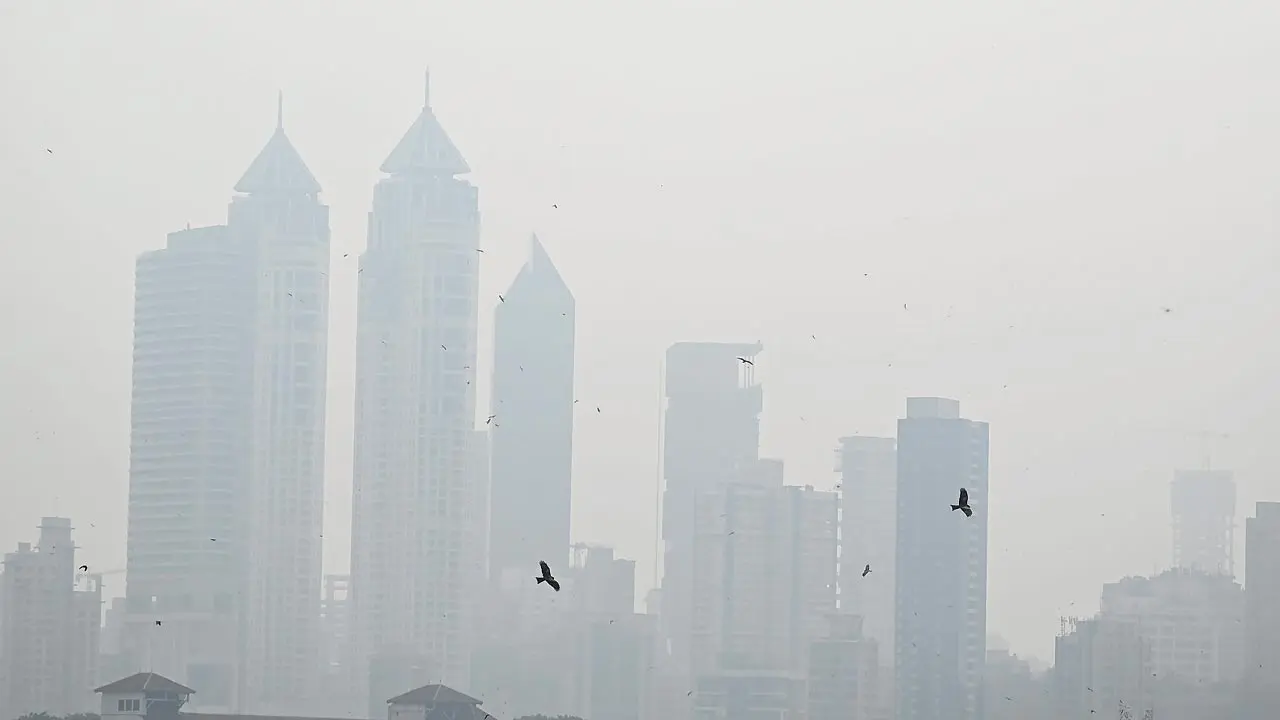
Mumbai’s air quality worsened over the weekend, with pollution levels climbing into the ‘moderate’ category across most parts of the city, underscoring how seasonal weather patterns continue to expose structural weaknesses in urban environmental management. Data from official monitoring stations showed a sharp rise in particulate concentration, affecting residential, commercial, and transit-heavy zones alike.
The city’s overall Air Quality Index (AQI) touched around 140 on Sunday, marking a notable deterioration from the previous week when readings hovered closer to the lower end of the moderate band. What stands out is the widespread nature of the decline. Monitoring stations across central, eastern, and western suburbs recorded elevated values, suggesting that Mumbai air quality is currently shaped more by atmospheric conditions than by isolated emission sources. Several dense neighbourhoods and industrial-adjacent areas reported AQI readings approaching the ‘poor’ threshold. Central Mumbai locations, port-influenced eastern pockets, and high-traffic commercial districts all logged higher pollution loads, while a limited number of greener or less congested areas showed relatively better readings. Urban planners note that such spatial patterns reflect land-use intensity, traffic volumes, and proximity to legacy infrastructure rather than short-term activity spikes.
Meteorological conditions have offered little assistance. Weather data indicates that while daytime temperatures remain near seasonal norms, night-time temperatures are staying unusually high. This combination, coupled with weak and shifting wind patterns, has reduced the dispersion of pollutants. Experts tracking urban climate trends explain that this period typically marks a transition in wind direction along the coast, creating stagnant air that traps fine particles close to the ground. In addition to local emissions, regional factors are also influencing Mumbai air quality. Pollution generated in inland regions during peak winter conditions can travel long distances, adding to the city’s baseline load. Moisture in the atmosphere further allows fine particulate matter to remain suspended for longer durations, increasing exposure risks, particularly during early morning hours when visibility often drops.
Civic officials say enforcement teams remain active at construction sites and along traffic corridors, attributing the current spike largely to unfavourable dispersion conditions rather than a sudden rise in emissions. However, public health professionals are already observing consequences. Hospitals and clinics across the city are reporting a rise in respiratory complaints, especially among children, older adults, and individuals recovering from recent illnesses, indicating that even ‘moderate’ pollution levels can have tangible health impacts. From an urban policy perspective, the episode highlights the limits of reactive pollution control. Mumbai’s experience mirrors that of other large coastal cities where weather-driven pollution episodes are becoming more frequent due to climate variability and dense urban form. Sustainable urban development experts argue that reducing baseline emissions—from transport, construction, and energy use—is critical, as stagnant conditions are unavoidable.
As the city moves deeper into the winter transition, attention will remain on whether short-term weather shifts bring relief. Longer term, the episode reinforces the need for cleaner mobility, stricter construction management, and climate-resilient planning to ensure Mumbai air quality does not continue to fluctuate with every seasonal pause in the wind.
Mumbai Records Citywide Rise In Air Pollution