


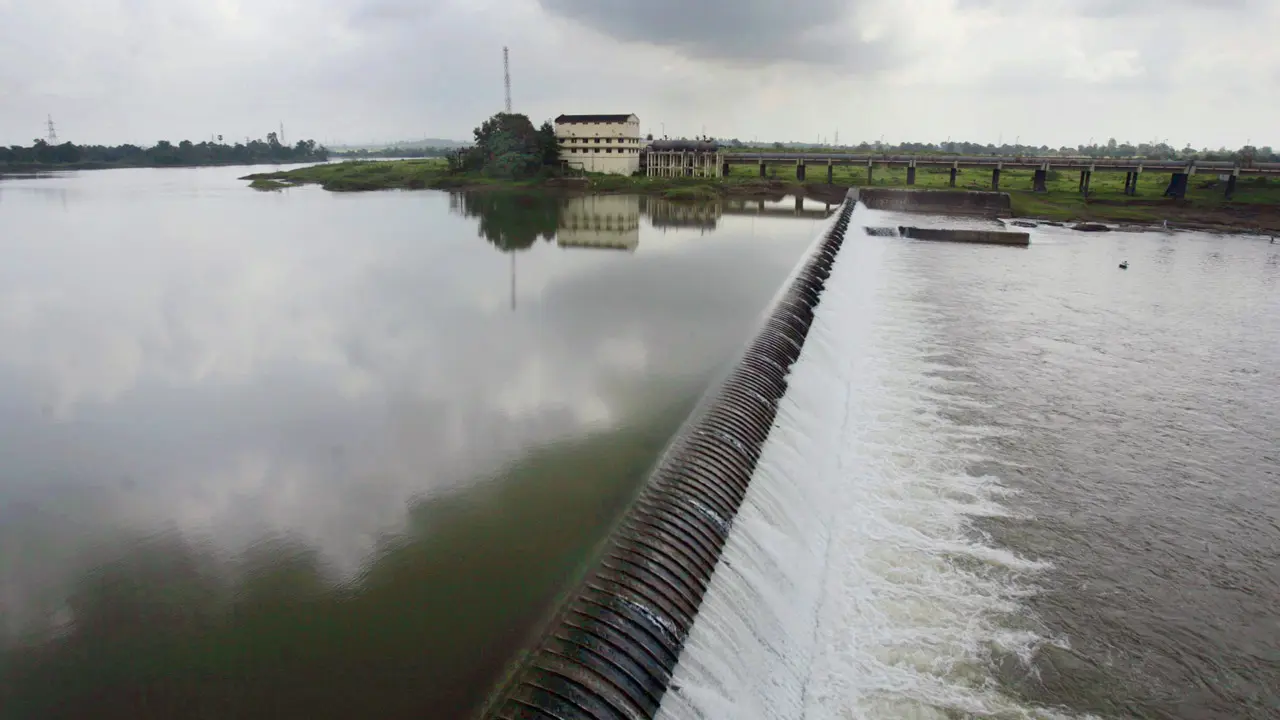
Mumbai’s water security for the year ahead looks reassuring, with the city’s seven lakes now holding nearly 97 per cent of their full storage capacity. Civic data released on Wednesday shows that combined water stock has reached 14,00,219 million litres, strengthening the outlook against possible water cuts, even as intermittent heavy rains are forecast to continue into September.
The Hydraulic Engineer’s Department has reported that four lakes—Middle Vaitarna, Modak Sagar, Tulsi, and Vihar—have already reached 100 per cent storage. Upper Vaitarna stands at 96.60 per cent, Bhatsa at 95.52 per cent, and Tansa close behind at 99.10 per cent. Officials emphasise that the steady inflows coupled with heavy rainfall have positioned the city favourably to meet demand without disruptions. This year’s monsoon has delivered above-average rainfall across catchment areas. Tulsi has recorded the highest at 3,474 mm, while Bhatsa has received 2,467 mm. Overall, the cumulative rainfall across the lake system stands at 2,383 mm. With heavy downpours in the past week, reservoir gates were briefly opened at Middle Vaitarna on 18 August and Upper Vaitarna on 21 August to regulate levels and minimise flood risk downstream.
For residents, the near-full reservoirs bring relief at a time when erratic rainfall patterns in other parts of the country have raised concerns over water scarcity. Civic officials note that while water cuts appear unlikely this year, continuous monitoring remains essential to ensure sustainable use and to buffer against any late-season weather fluctuations. The assurance of stable water reserves comes just as the city gears up for Ganesh Chaturthi, with millions of devotees expected to gather for celebrations starting 27 August. However, the India Meteorological Department (IMD) has issued a yellow alert, warning of heavy showers, waterlogging, and traffic disruptions during the festival period. Forecasts suggest rain accumulations of 5–35 mm daily, with temperatures ranging between 24°C and 28°C, ensuring damp conditions for commuters and festival organisers alike.
Experts stress that while abundant storage secures short-term supply, long-term resilience requires investment in sustainable water management. Rainwater harvesting, leakage control, and equitable distribution remain critical to reducing dependence on monsoon cycles. In the context of climate change, authorities are being urged to accelerate eco-friendly urban planning to protect both water security and flood resilience. As Mumbai looks to September with confidence in its water reserves, civic leaders continue to balance immediate relief with the long-term challenge of ensuring the city’s growing population remains shielded from both drought and flooding.
Also Read: Indore Launches Anti-Encroachment Drive, Frees 3,620 Sq. Metres Government Land
