


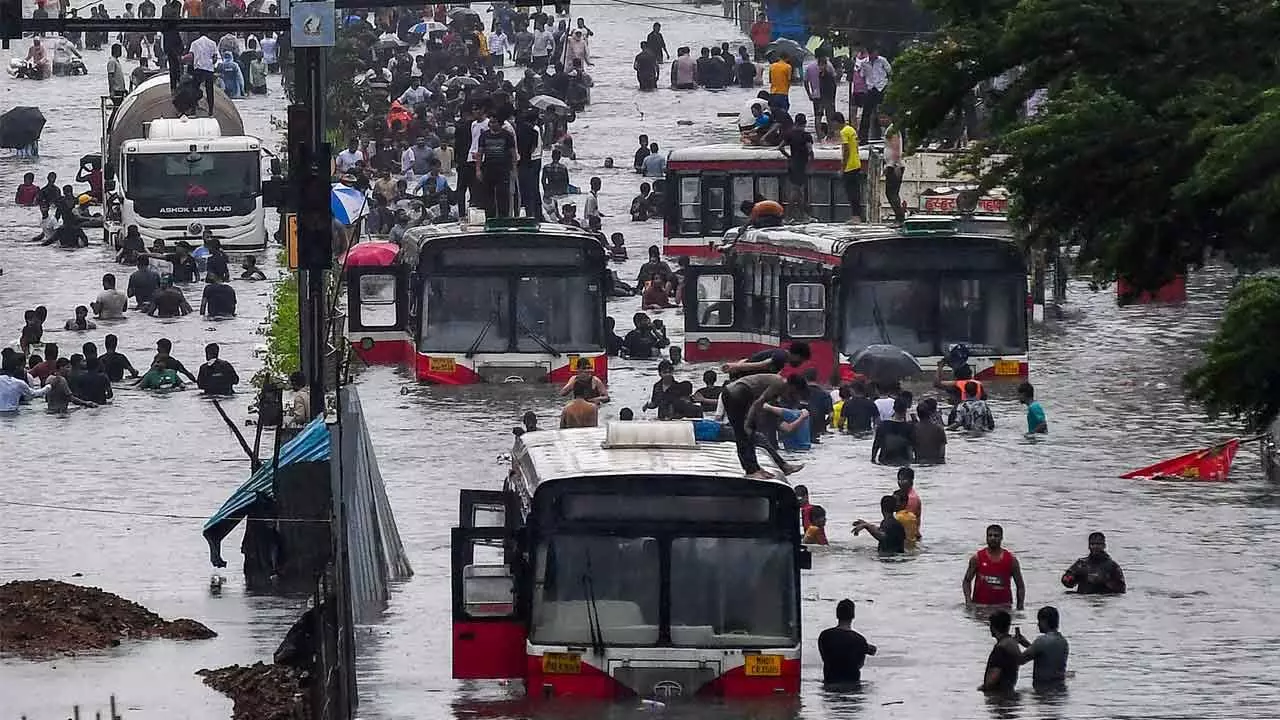
Mumbai was once again left paralysed on Tuesday as over 500 millimetres of rainfall in just 84 hours swamped the city, forcing the closure of schools, disrupting air and rail traffic, and stranding thousands of commuters. A fresh red alert issued by the weather bureau for Mumbai and Raigad signalled the possibility of more intense showers, coupled with wind speeds reaching 65 kilometres per hour.
The scale of the deluge was evident as the Mithi river swelled, prompting the evacuation of nearly 500 residents from low-lying areas. Several neighbourhoods including Chembur, Dadar, Hindmata, Andheri and King’s Circle were left submerged, once again exposing the fragile state of Mumbai’s flood preparedness. For citizens, navigating through flooded streets felt like wading through rivers, with vehicles breaking down and pedestrians struggling to commute. Railway infrastructure bore the brunt of the downpour as tracks on both the Central and Harbour lines were submerged under nearly 17 inches of water. Trains were delayed by an hour or more, disrupting the lifeline of Mumbai. Officials confirmed widespread cancellations and diversions, even as thousands of passengers remained stranded on platforms.
Air travel too suffered. At least eight flights were diverted while several others faced delays as airlines implemented low-visibility protocols. Passengers were advised to expect longer waiting times, with some flights forced to attempt multiple landings before managing to touch down safely. Educational institutions also faced disruption, with authorities announcing a closure of schools and colleges across the city and suburbs. Mumbai University postponed 32 examinations scheduled for Tuesday, rescheduling them later in the week to ensure students were not disadvantaged by the weather.
The human cost of the extreme rainfall was equally concerning. Rescue workers reported that one individual went missing after entering the Mithi river, while another was injured when a tree collapsed in Sahar. Road traffic was gridlocked across major junctions, with waterlogged underpasses and arterial roads slowing vehicular movement to a crawl. For a city that prides itself on resilience, the flooding yet again underlined the pressing need for climate-adaptive urban planning. Experts warn that extreme rainfall events, which once occurred sporadically, are becoming an annual phenomenon. They argue that unless Mumbai upgrades its drainage, transport and housing infrastructure with sustainable, climate-resilient solutions, the city risks reliving this crisis every monsoon.
As Mumbai continues to battle relentless rainfall, the question is no longer about endurance but about preparedness. For its residents, the rains are no longer just a seasonal inconvenience — they have become a stark reminder of the urgent need for equitable and eco-friendly urban planning that prioritises safety and sustainability over short-term fixes.
Also Read : Mumbai Under Fresh Red Alert, Flights, Roads And Rail Services Impacted
