


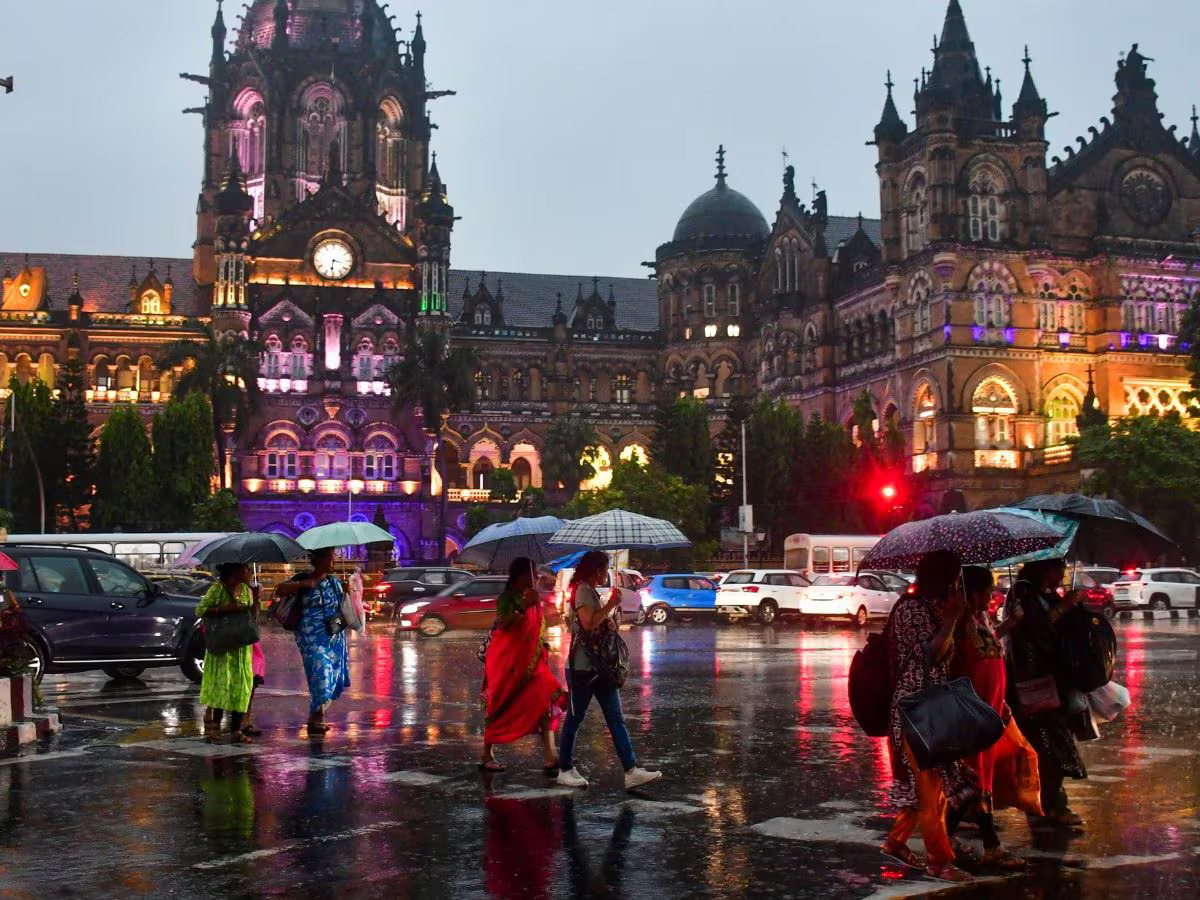
Mumbai has received just under one-fourth of its annual rainfall quota in the first 30 days of the monsoon season, reflecting both the early onset and erratic behaviour of this year’s southwest monsoon. Despite the monsoon covering the entire country well ahead of schedule, rainfall patterns in the financial capital have been marked by spatial disparity and prolonged dry spells, challenging the predictability and planning of civic infrastructure.
According to data from meteorological authorities and the city’s municipal records, Mumbai registered 502.05 mm of rainfall as of June 29—roughly 24 percent of its annual average. The eastern suburbs recorded 483.62 mm, while the western suburbs saw a lower figure of 449.71 mm. This patchy distribution, despite early monsoon arrival on May 26, has sparked concerns about intra-city variability and implications for sustainable water management. While initial days of the monsoon saw intense rainfall episodes, these were not sustained. Instead, the city experienced alternating periods of heavy downpours and extended lulls, leaving weather experts cautious about extrapolating trends. Officials from the India Meteorological Department (IMD) have indicated that while the current rainfall shortfall is not alarming, the spatial inconsistency and fluctuating intensity warrant close observation.
At Colaba, which typically receives a lesser share of rainfall compared to Santacruz, the season’s total reached 591.4 mm—approximately 28 percent of its 2,095 mm annual average. Meanwhile, Santacruz recorded 511.2 mm, about 22 percent of its 2,319 mm benchmark. Interestingly, despite these figures seeming moderate, they align closely with the previous year’s performance, indicating that 2025’s monsoon so far has not significantly underperformed, but remains unpredictable in pattern. Compared to the same period in 2024, the city had received a comparable 507 mm of rainfall by the end of June, reflecting 24.2 percent of its annual average. However, the disparity in Santacruz last year, which had clocked only 346.9 mm (about 15 percent), demonstrates the volatility of micro-climatic conditions within the metro region.
Weather forecasts for the first week of July remain moderately hopeful. IMD projections indicate generally cloudy skies with moderate rain for most days, with heavy showers expected on July 2. Temperatures are likely to hover between 24 to 32°C, and no severe weather warnings have been issued beyond July 2’s rainfall alert. Meteorologists attribute the current monsoon dynamics to a mix of favourable and fluctuating synoptic systems. An official from IMD’s regional office highlighted that while the onset phase was strengthened by conducive conditions in the Arabian Sea and Bay of Bengal, the subsequent lulls are not uncommon during the transitional weeks of monsoon evolution.
This uneven distribution, however, poses critical challenges for city planners, particularly regarding water resource allocation, flood preparedness, and urban resilience. The Brihanmumbai Municipal Corporation (BMC), tasked with maintaining city infrastructure, has been monitoring reservoir levels and pre-monsoon desilting operations. While water stocks remain sufficient for now, a sustained lull could lead to conservation advisories later in the season. Environmental experts argue that monsoon uncertainty must prompt a shift in how Indian megacities, especially coastal ones like Mumbai, approach climate adaptation. The idea that early monsoon arrival guarantees surplus rainfall is increasingly being challenged by erratic intra-seasonal activity. For citizens, this means bracing for alternating periods of intense deluges and long dry stretches—a pattern that affects not just daily life but also agriculture, public health, and economic productivity.
Climate researchers from institutions studying South Asian weather anomalies believe that climate variability is intensifying due to rising sea surface temperatures and jet stream disturbances. These forces are altering monsoon trough positions and wind patterns, making long-term forecasting more complex. While these anomalies may not always result in drastic rainfall deficits, they increase the risk of hyperlocal flooding and waterlogging due to sharp bursts of rainfall in short durations. Urbanists also warn that Mumbai’s drainage infrastructure, though improved in parts, still remains vulnerable in zones with poor slope gradients and encroachments. Inconsistent rainfall forces drainage systems to cope with high volumes in narrow windows, leading to overflow risks. On the other hand, extended dry spells delay recharge of urban aquifers and increase dependency on distant dams.
Social advocates are calling for increased citizen participation in water conservation, pointing to the pressing need for decentralised water storage, rainwater harvesting, and rooftop recharge in housing societies. With Mumbai’s population crossing 20 million and real estate continuing to push boundaries, water equity remains a crucial urban sustainability challenge. The uncertainty surrounding rainfall patterns, experts say, must also inform future city development codes. From rain-resilient road construction to better stormwater runoff management and building regulations that account for high-intensity, short-duration rains, Mumbai must embed climate responsiveness into its urban DNA.
As the city waits for more stable monsoon activity in July, authorities remain cautiously optimistic. While current figures are not cause for alarm, the longer-term trend of erratic monsoons and uneven distribution highlights the urgency for sustainable planning, data-driven weather preparedness, and active civic engagement. Mumbai’s monsoon story, once predictable and poetic, now reflects the broader climate narrative—one of uncertainty, variability, and adaptation. In a city that lives and breathes the rains, the first 30 days offer more than just water—they are a barometer of how resilient urban India is becoming in the face of an unpredictable future.
Also Read : Bengaluru Power Cut Disruption on June 30 Hits Mantri Mall and Key Areas
