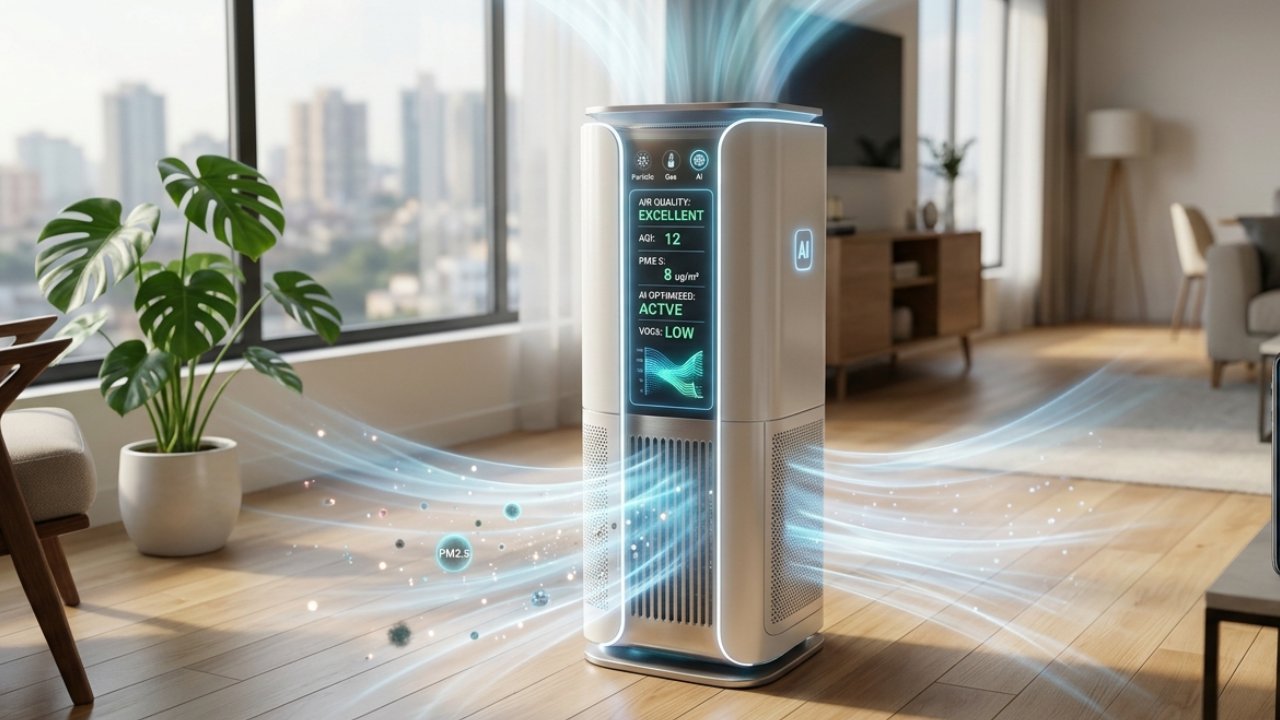
Mumbai’s property market is beginning to experiment with a new category of design intervention AI-powered breathable buildings signalling a shift in how urban housing responds to rising environmental health risks. A pilot initiative in the city is integrating intelligent air management systems into large residential developments, positioning indoor air quality as a central feature rather than an afterthought.
The move reflects growing concern over prolonged exposure to polluted air in dense urban environments. With residents spending the majority of their time indoors, urban planners and developers are increasingly acknowledging that indoor environments can carry higher pollutant concentrations than outdoor spaces. This has prompted a re-evaluation of how buildings are designed, ventilated and operated in cities facing chronic air quality challenges.At the core of the breathable buildings concept is a network of sensors and AI-driven controls that continuously track environmental conditions. These systems respond dynamically to fluctuations in both indoor and outdoor air quality, adjusting filtration intensity, ventilation rates and airflow patterns. Unlike conventional air purifiers or HVAC add-ons, the technology is embedded within the building’s infrastructure, allowing for real-time optimisation rather than periodic intervention.
Industry experts note that this approach marks a departure from earlier smart home innovations that focused largely on automation and connectivity. The current transition towards breathable buildings introduces a health-centric framework, where air quality becomes a measurable and marketable attribute. Developers are beginning to treat clean air as a critical utility, similar to water and electricity, especially in high-density urban clusters.The economic implications are also becoming evident. As awareness of pollution-linked health risks rises, prospective homebuyers are showing increased sensitivity to environmental conditions within living spaces. This is gradually influencing property valuations, with projects offering superior air quality controls expected to command a premium. For developers, breathable buildings may emerge as a differentiator in an increasingly competitive housing market.
Urban planners suggest that the scalability of such systems will be key to their long-term impact. While initial adoption may be limited to premium residential segments, wider integration across mid-income housing and commercial spaces could significantly reshape urban living standards. Cities with severe pollution burdens are likely to watch Mumbai’s pilot closely, assessing both performance outcomes and cost feasibility.The development also aligns with broader shifts in urban policy thinking, where resilience and public health are gaining prominence alongside infrastructure expansion. If breathable buildings prove viable at scale, they could influence building codes and design norms, embedding environmental responsiveness into the core of urban growth strategies. For a city grappling with air quality pressures and high population density, the success of this experiment could redefine expectations of what constitutes a liveable home placing clean, breathable air at the centre of future real estate development.