


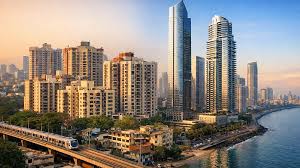
Select neighbourhoods across the city are witnessing an unusual paradox visible construction intensity alongside steady buyer enquiries as leading developers report resilient demand despite emerging oversupply in redevelopment-heavy micro-markets. The trend signals a structural shift within the Mumbai real estate market, where brand credibility and execution capacity are increasingly shaping buyer decisions.
Senior leadership at one of the city’s largest listed developers told investors during a recent quarterly earnings interaction that while certain suburban clusters are experiencing a surge in redevelopment-led launches, enquiry volumes and booking conversions for established brands remain stable. The executive indicated that buyers appear more selective, favouring developers with a proven track record of timely delivery and product quality. Data from property advisory firms show that western and central suburbs such as Borivali, Andheri, Bandra, Malad, Ghatkopar and Mulund are currently among the most redevelopment-active zones. In these areas, ageing housing stock is being replaced by taller, denser projects under incentive-based regulations. While this improves safety and infrastructure integration over time, it has temporarily increased available inventory in specific pockets. However, the broader Mumbai real estate market is undergoing consolidation. Industry observers note that institutional capital and homebuyers alike are gravitating toward established players amid regulatory tightening and higher compliance costs. This concentration effect has become more pronounced over the past two to three years. Another visible shift is occurring at the lower end of the price spectrum. Homes priced below Rs 75 lakh historically a volume driver have seen declining supply and absorption across the metropolitan region. Analysts attribute this moderation to higher land prices, construction costs and changing developer strategies that prioritise margin stability over volume expansion. As a result, overall transaction values have remained firm even as industry-wide unit sales have softened.
Recent market reports indicate that housing sales across India’s top eight cities declined in 2025 compared to the previous year, with the Mumbai region recording one of the sharpest contractions in unit volumes. By contrast, southern markets such as Bengaluru, Hyderabad and Chennai posted growth, supported by improved supply pipelines and stable employment trends in technology and services sectors. Financially, the developer in focus reported marginal year-on-year growth in net profit for the December quarter, alongside an increase in total income. The results suggest operational stability even as market volumes moderate. Urban planners point out that the redevelopment surge, if managed well, could improve building safety standards, energy efficiency and land utilisation in a land-constrained city. Yet they caution that oversupply in isolated pockets must be balanced with infrastructure readiness, mobility planning and social amenities to ensure long-term liveability.
As Mumbai recalibrates, the trajectory of the Mumbai real estate market may increasingly hinge on quality-led consolidation rather than rapid expansion a shift that could redefine how India’s financial capital grows in a climate-conscious and infrastructure-sensitive decade ahead.
Also Read: Ahmedabad Launches Fast Rail Link To Udaipur
Mumbai Real Estate Shifts Beyond Affordable Segment
