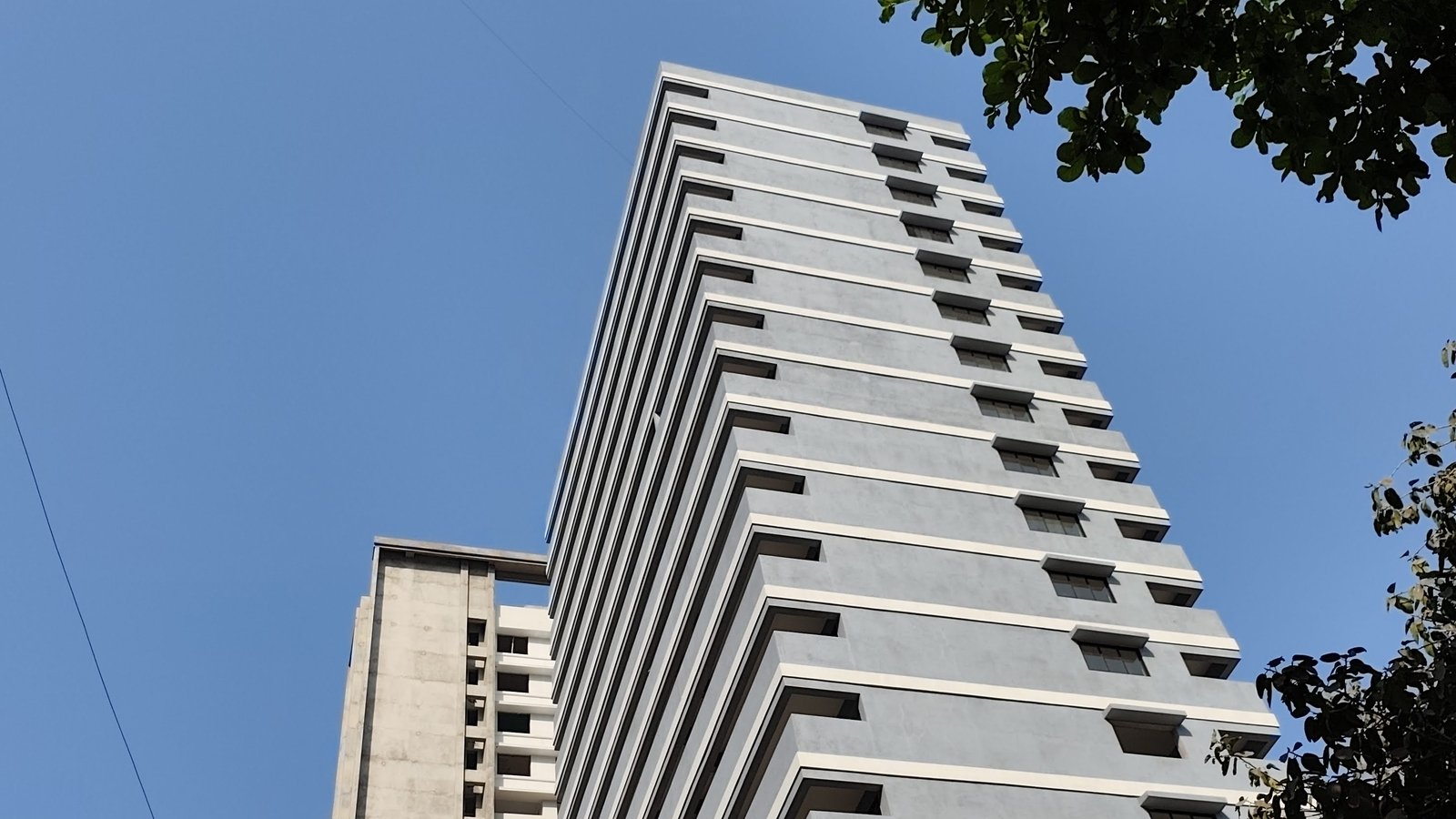
In India’s financial capital, the threshold for entering the housing market has shifted sharply upward. Mumbai property prices now place ₹1 crore as little more than a starting point for home ownership, with buyers often receiving extremely compact homes in return. The shift reflects a broader national trend where premium housing dominates supply while affordable segments shrink, reshaping the aspirations of urban middle-class households.
Recent residential market assessments show that homes priced above ₹1 crore now represent a significant portion of housing transactions across major Indian cities. At the same time, supply in the sub-₹50 lakh category has declined sharply as developers increasingly prioritise projects with higher margins. The imbalance between rising demand in metropolitan regions and limited affordable supply is pushing entry-level buyers toward smaller homes and distant suburbs. In Mumbai, where land scarcity and infrastructure-driven redevelopment shape the housing market, the consequences are particularly visible. Property listings suggest that a budget of ₹1 crore can translate into extremely limited living space in central neighbourhoods. In some high-demand areas, the carpet area offered within this price range may be well below the size of housing units delivered under government-backed rehabilitation schemes.
Urban economists say the trend reflects the city’s structural housing shortage and the premium attached to proximity to employment corridors and transport infrastructure. Apartments near suburban railway lines, metro corridors, or commercial hubs command steep prices even when floor space is minimal. As a result, first-time buyers often prioritise connectivity over size. Across eastern and western suburbs, properties within the ₹1 crore range frequently fall into compact one-bedroom units in older buildings or redevelopment projects. In redeveloped public housing colonies and cooperative societies, similarly sized homes now command comparable price tags due to upgraded infrastructure and improved neighbourhood accessibility.
Financial calculations reveal how tight affordability margins have become for middle-income households. Housing finance analysts note that lenders typically consider properties priced four to five times a family’s annual income as financially manageable. For salaried households in the ₹15–25 lakh income bracket, this places entry-level purchases close to the ₹1 crore mark, often supported by long-term mortgages stretching over two decades. However, the gap between entry-level housing and premium neighbourhoods remains vast. In several established districts, two-bedroom apartments routinely command multi-crore valuations, placing them well beyond the reach of most middle-income buyers. This forces many families to adopt a staged approach to home ownership starting in peripheral areas before gradually moving closer to the city’s economic core.
Urban planners warn that the continuing erosion of affordable housing supply could deepen socio-spatial inequality across metropolitan regions. As Mumbai property prices climb, the city risks pushing younger and lower-income residents further from employment hubs, increasing commute distances and urban infrastructure pressure. Policy experts suggest that long-term solutions will require stronger affordable housing frameworks, expanded public housing models, and incentives for inclusive urban development. Without such interventions, the price of entry into Mumbai’s housing market may continue rising while the physical size of first homes steadily shrinks.