


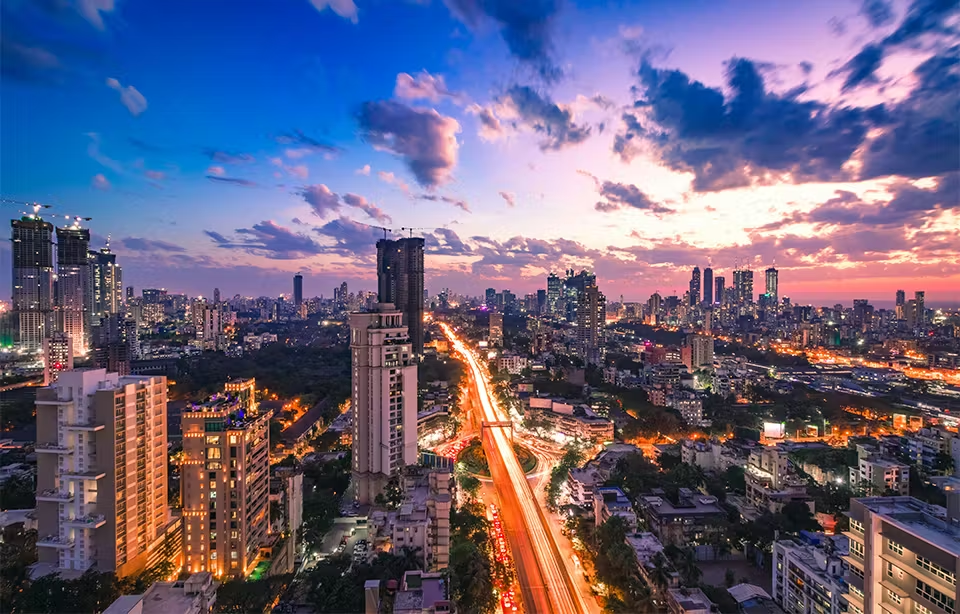
A Mumbai-based real estate developer has taken an unconventional step in a market crowded with celebrity endorsements, signalling a broader shift in how premium housing brands are positioning themselves in India’s most competitive property ecosystem. By appointing a nationally revered sportsperson with deep roots in the city as its public face, the developer is reframing luxury housing around trust, continuity and long-term civic identity rather than short-term visibility.
The move reflects a recalibration underway within Mumbai’s upper-end residential market. As buyers become more discerning and capital values rise, developers are increasingly recognising that brand credibility and governance track records matter as much as design language or amenities. Industry observers note that this is particularly relevant in a city where luxury housing often doubles as a generational asset rather than a purely lifestyle-driven purchase. According to senior market analysts, the use of a sportsperson known for discipline, restraint and longevity represents a deliberate departure from the film-star-led marketing that has traditionally dominated real estate advertising. The strategy is aimed squarely at high-net-worth and ultra-high-net-worth households who prioritise stability, legacy planning and institutional trust when making long-term residential investments. This branding shift also mirrors changing buyer psychology. With regulatory oversight improving and information asymmetry narrowing, reputation risk has become a decisive factor in high-value transactions. Developers that can demonstrate consistency across cycles rather than rapid expansion are better placed to attract buyers who view housing as part of intergenerational wealth planning. In this context, aligning with figures associated with credibility rather than glamour serves as a form of reputational signalling.
Urban planners see a secondary implication for the city’s built environment. When developers emphasise legacy over speed, it often translates into longer design horizons, higher construction standards and greater sensitivity to neighbourhood character. While branding alone does not guarantee responsible development, it can influence how projects are conceived, communicated and ultimately integrated into the urban fabric. The timing is also notable. Mumbai’s luxury housing segment has shown resilience despite broader affordability pressures, with premium transactions contributing disproportionately to stamp duty revenues. As competition intensifies within this narrow segment, differentiation is increasingly cultural rather than spatial less about pin codes and more about values, stewardship and permanence. For the developer, the association is being positioned as a long-term commitment rather than a campaign-led exercise, intended to anchor upcoming residential launches within a narrative of continuity. Market experts caution, however, that such positioning will be tested not by advertising recall but by delivery on timelines, environmental performance and community impact.
As Mumbai continues to balance density, aspiration and resilience, the evolution of real estate branding offers a subtle indicator of where the market believes value truly lies: not only in square footage, but in trust that endures across decades.
Also Read: Mumbai property market opens year resilient
Mumbai real estate leans on legacy trust
