


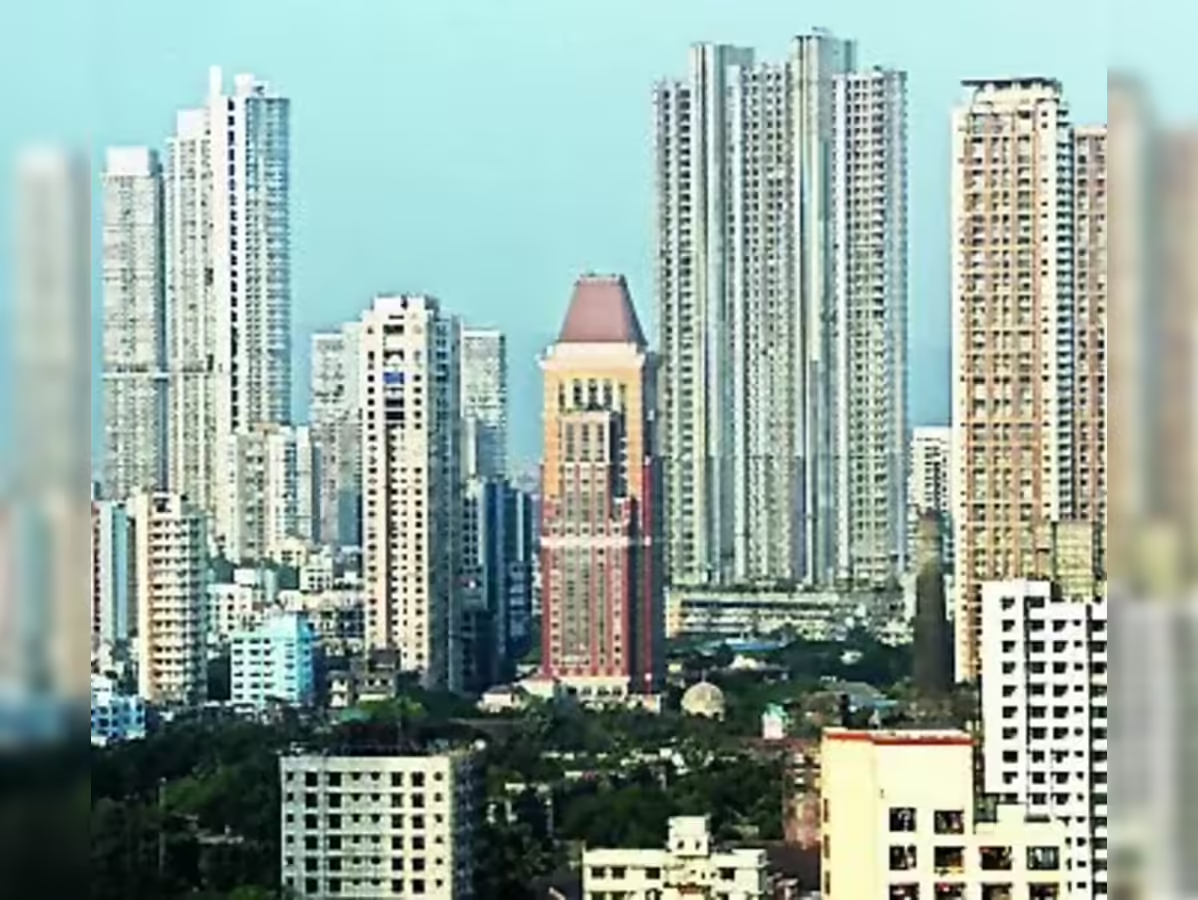
A Mumbai-based real estate developer has reported a strong financial performance for the December quarter, highlighting continued resilience in the city’s residential property market despite higher construction costs and cautious buyer sentiment in some segments. The company’s latest results point to improving execution capacity and steady demand across its project portfolio.
According to regulatory disclosures, consolidated net profit for the third quarter rose by 37 per cent year-on-year to Rs 70.22 crore. Total income nearly doubled during the same period, climbing to Rs 239.78 crore compared to Rs 123.59 crore a year earlier. The growth reflects both improved project deliveries and higher value recognition from ongoing developments. Market analysts note that such results are significant in the context of Mumbai’s tightly regulated and capital-intensive real estate environment. Developers operating in the city face rising land acquisition costs, stricter compliance norms, and increasing expectations around construction quality and timelines. Sustained profitability, therefore, often indicates disciplined project management rather than aggressive expansion. The company, which entered the Mumbai real estate market in the mid-2010s, has steadily expanded its footprint through a redevelopment-led strategy. It has completed four residential projects to date, with several more under construction and a sizeable pipeline planned across different micro-markets of the city. This approach aligns with Mumbai’s broader urban renewal model, where new housing supply largely comes from redeveloping ageing buildings rather than greenfield development.
Industry experts say the revenue jump suggests that ongoing projects have reached critical construction or sales milestones, allowing for higher income recognition during the quarter. In Mumbai, cash flows tend to be lumpy and closely tied to regulatory approvals and completion stages, making quarterly performance an important indicator of execution health. The results also reflect underlying demand for well-located residential housing, particularly in redevelopment corridors where improved infrastructure and connectivity are supporting buyer confidence. While affordability remains a concern for first-time buyers, mid- and premium-segment demand has shown relative stability, contributing to stronger toplines for developers with the right product mix. From a city-planning perspective, financially stable developers play a crucial role in ensuring safer housing stock and better compliance with updated building norms. Redevelopment projects, when executed responsibly, replace structurally weak buildings with energy-efficient homes that meet modern fire safety, seismic, and water management standards an increasingly important factor as cities adapt to climate risks. Analysts caution that maintaining this growth trajectory will depend on timely project delivery and prudent balance-sheet management. With multiple projects under execution and more in the pipeline, capital allocation and construction discipline will be closely watched by both regulators and homebuyers.
As Mumbai continues to rebuild itself through phased redevelopment, the latest quarterly performance underscores how operational consistency and focused expansion can translate into financial strength. For the broader market, it reinforces the view that while volumes may fluctuate, well-managed developers remain positioned to grow alongside the city’s long-term housing needs.
Also Read: Thane Wagle Estate emerges as new urban core
Mumbai real estate firm scales revenues rapidly
