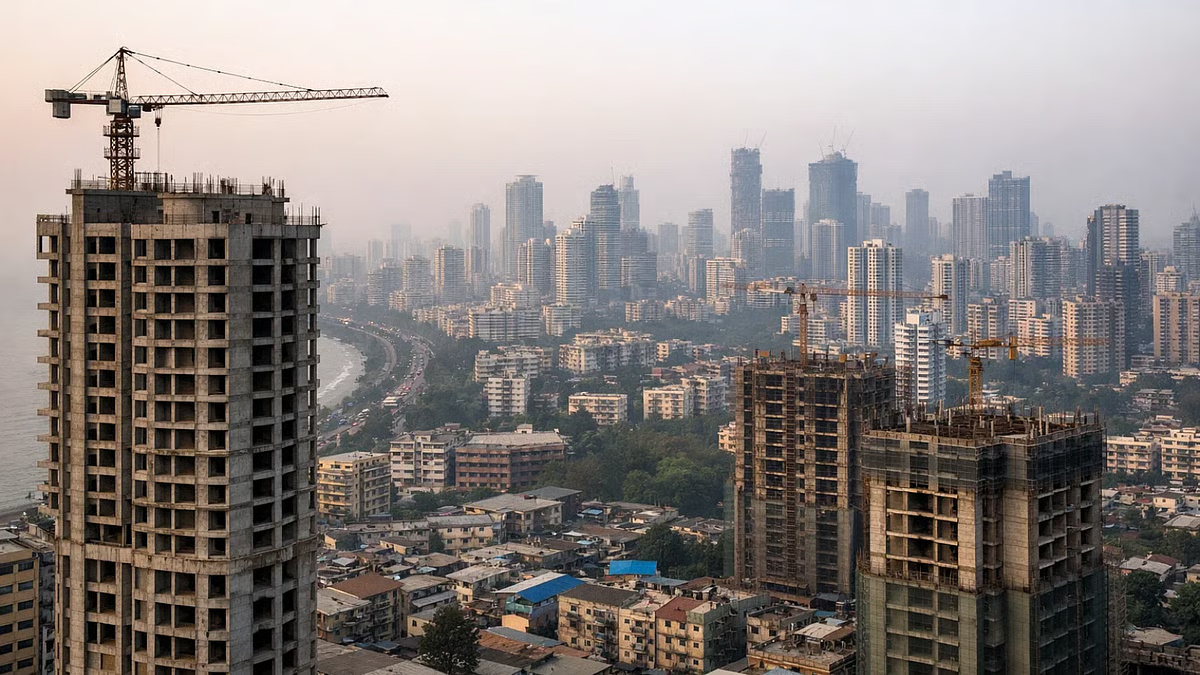
Mumbai’s residential property market has entered a slower growth phase in 2025, with new housing launches and project registrations showing a notable decline. Data from the Maharashtra Real Estate Regulatory Authority (MahaRERA) indicates that developers launched 42,643 residential units this year, marking a 40 per cent drop compared with 70,892 units sold in 2024. The slowdown highlights shifting buyer preferences and a more cautious stance among developers in a market historically defined by high demand.
Project registration data reinforces the trend. In 2025, only 689 projects were registered across the city, a 5 per cent decline from 731 projects in 2024. This represents the lowest annual registration figure in the past five years, suggesting tighter development planning and strategic recalibration by real estate firms in response to market conditions, rising costs, and evolving consumer demand. While overall launches have fallen, the composition of newly launched housing units points to changing buyer priorities. Smaller homes, particularly 1BHK and 2BHK units, accounted for nearly 57 per cent of total launches. These homes continue to dominate Mumbai’s market, appealing to first-time buyers, young professionals, and small families seeking affordable entry points in the city’s premium suburbs. Mid- to large-sized homes, including 2.5BHK to 4BHK units, made up roughly a quarter of new launches, indicating selective demand for spacious accommodations among high-income buyers.
Geographically, launch activity remains concentrated in western and northern suburbs. Localities such as Malad West, Kandivali West, and Mulund West emerged as hotspots, benefiting from well-established infrastructure, connectivity, and access to urban amenities. Urban planners note that these areas’ sustained appeal underlines the importance of integrated development corridors that balance density, transport access, and neighbourhood services, aligning with Mumbai’s long-term sustainability objectives. The slowdown also reflects broader market dynamics. Rising construction costs, regulatory oversight, and a growing focus on sustainable development have prompted developers to prioritise project viability and delivery quality over volume. Industry experts suggest that developers are increasingly aligning launches with buyer affordability, design preferences, and energy-efficient features, contributing to a measured pace of new projects.
For urban stakeholders, the reduced supply of new launches has implications for housing affordability, demand-supply equilibrium, and long-term city planning. Analysts anticipate that Mumbai’s residential market will continue to witness selective launches prioritising compact, efficient units and sustainable construction practices while maintaining space for premium developments in strategic pockets. As the city adapts to shifting demand and evolving urban priorities, careful monitoring of launch patterns, buyer behaviour, and infrastructure readiness will be crucial to sustaining housing market balance and promoting equitable, climate-resilient urban growth.
Mumbai Real Estate Faces Reduced New Launches