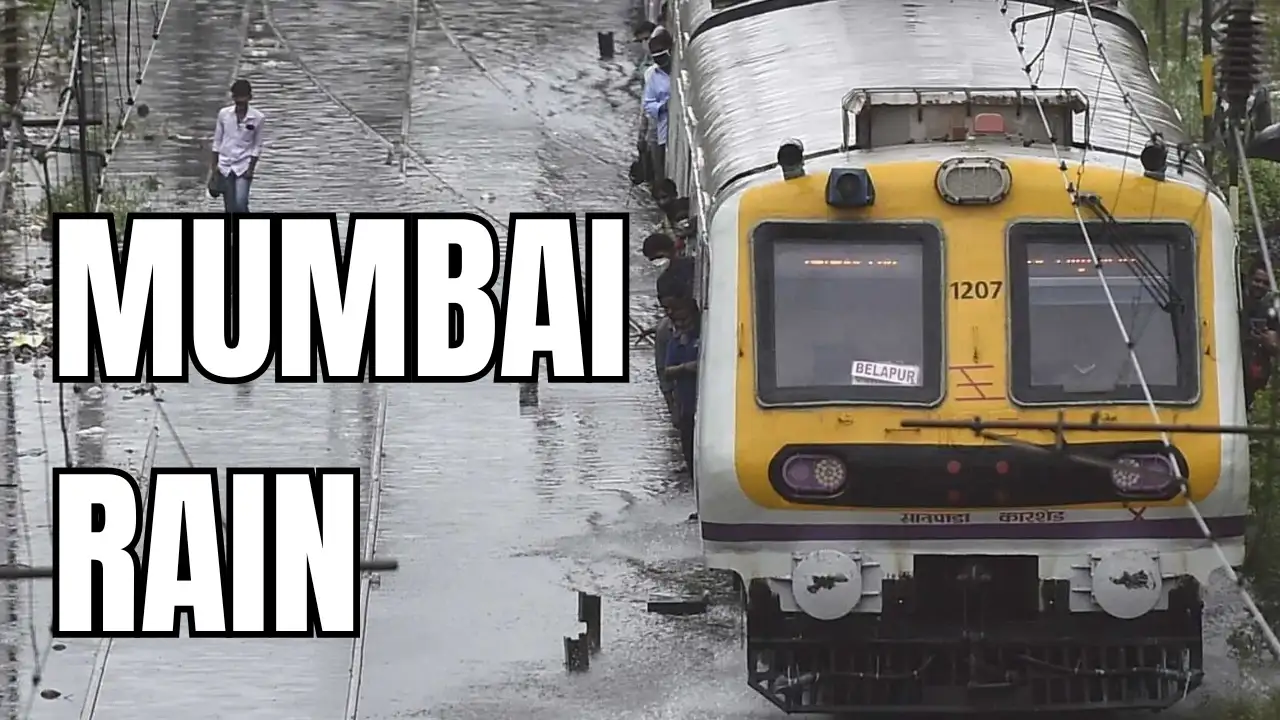
Mumbai Rains Flood City But Local Trains Continue Lifeline Services
Relentless monsoon showers battered the city once again, but its most dependable lifeline—the local trains—continued to operate on Tuesday, defying waterlogging and disruptions that paralysed several other modes of movement. With the India Meteorological Department issuing a red alert for “very heavy to extremely heavy rainfall” and gusty winds, authorities emphasised that suburban services would remain functional, even if delayed.
The financial capital recorded intense rainfall across its three zones in the 24-hour period ending Tuesday morning, with eastern and western suburbs receiving over 200 mm. Severe waterlogging was reported at Hindmata, Andheri Subway, Dadar, Matunga, Parel, Sion and along key arterial highways, including the Eastern Express Highway and Mumbai-Gujarat Highway. Road transport was brought to a crawl as vehicles waded through submerged stretches, while flights at the city’s international airport faced delays and diversions.
Yet, the suburban railway system—widely regarded as the city’s backbone—remained resilient. A spokesperson from the Western Railway confirmed that while visibility slowed operations, water levels had not reached track height, allowing trains to keep running. Officials monitoring the Central Railway reported minor delays of 10 minutes on the mainline and about 5 minutes on the harbour line following a signalling snag.
City administrators took precautionary measures, announcing the closure of government and semi-government offices while urging private employers to allow staff to work from home. This was intended to ease commuter pressure and minimise risks in low-lying flood-prone areas. The threat of high tide, measuring 3.75 metres in the morning and another above three metres in the evening, heightened concerns about worsening inundation. Experts point out that while the endurance of suburban railways demonstrates remarkable operational commitment, it also exposes deeper urban planning concerns. The city’s stormwater drainage system, designed over a century ago, is ill-equipped for the increasing intensity of monsoon events linked to climate change. Urban planners argue that without modernising flood management infrastructure, transport resilience will continue to be tested each year.
Sustainability advocates suggest that Mumbai’s ability to keep trains moving despite extreme weather underscores the importance of strengthening public transport as a zero-carbon mobility solution. With road traffic crippled and flights delayed, railways offered the only reliable, large-scale transport mode, reducing the dependence on private vehicles and curbing further carbon emissions during the crisis. As the rain alert remains in force, the dual narrative of Mumbai’s monsoon persists—widespread disruption on one hand and extraordinary resilience on the other. For millions of residents, the continued movement of local trains provides not just connectivity but also reassurance, reinforcing why they remain the beating heart of India’s most populous metropolis.