


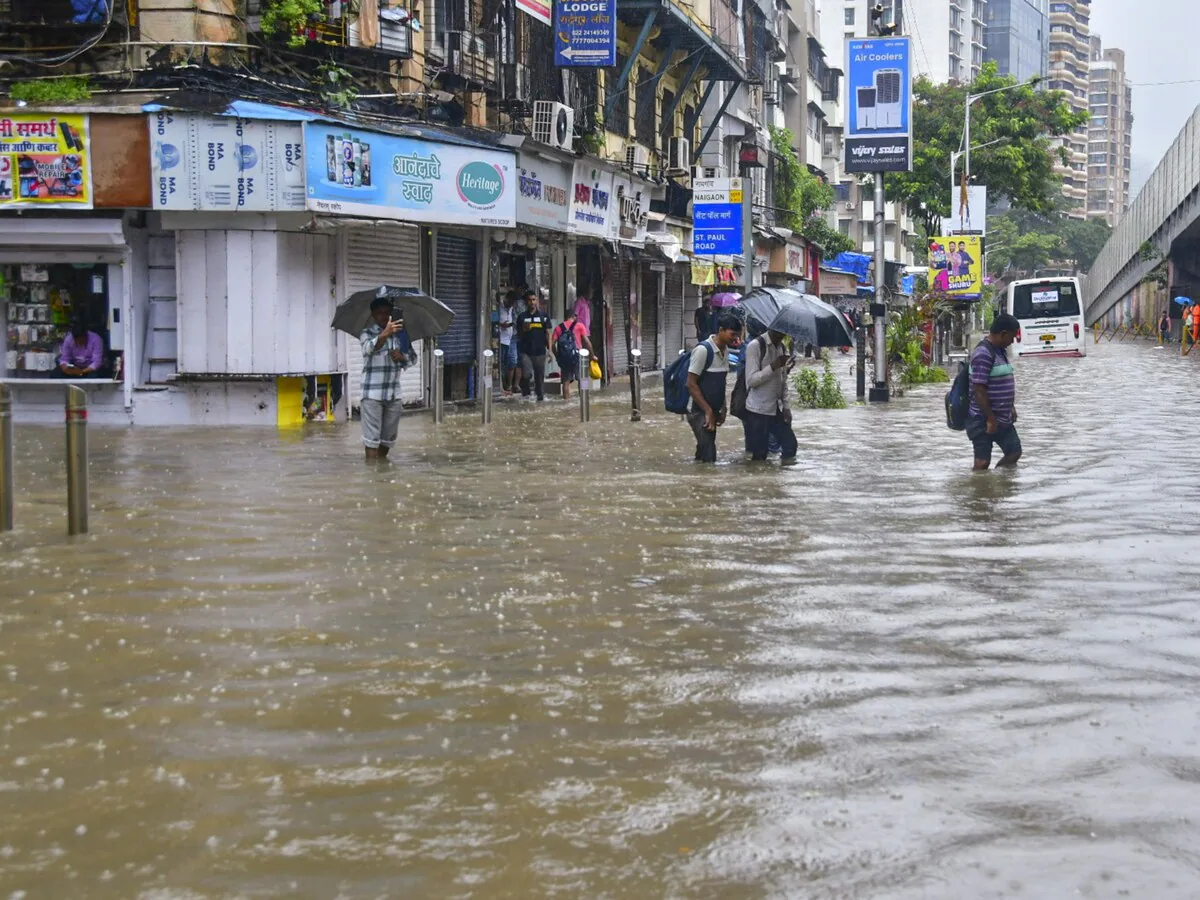
Mumbai’s first major spell of monsoon rain this season has once again highlighted the city’s persistent vulnerability to climate-induced weather disruptions. From grounded flights and traffic snarls to stalled infrastructure, the megacity’s resilience is being tested anew.
As relentless rainfall swept through the city on Wednesday, major arteries and low-lying areas witnessed heavy waterlogging, disrupting daily life and bringing transportation to a crawl. South Mumbai bore the brunt of the storm, with neighbourhoods like Khar and areas along Swami Vivekananda Road near National College partially submerged. Commuters were seen wading through knee-deep water during peak hours, struggling with delayed public transport and snarled traffic.Private carriers, too, were affected. SpiceJet issued a travel advisory urging passengers to check their flight status as weather-related delays loomed large over departures and arrivals at Chhatrapati Shivaji Maharaj International Airport. The airline acknowledged that bad weather in Mumbai could impact flight schedules and advised passengers to monitor updates via its official website.
The heavy showers also affected critical infrastructure projects. A barge involved in the ongoing Mumbai Coastal Road project drifted due to strong tidal currents and became stranded in the muddy shallows near Mahim, adjacent to Hinduja Hospital. Technical experts were reportedly mobilised to re-float the vessel at high tide, underlining the logistical and environmental challenges of executing major infrastructure projects in a city susceptible to climatic extremes.The India Meteorological Department (IMD) forecasted further moderate to heavy rainfall across Mumbai and its suburbs, warning of thunderstorms, lightning, and gusty winds in some areas. This alert comes as urban residents brace for more rain, raising concerns around flooding, traffic disruption, and public safety in a city where climate resilience is a mounting concern.
In a broader national context, the IMD also updated its monsoon outlook, predicting that India is likely to receive 106% of the Long Period Average (LPA) rainfall during the June to September season. This upward revision from 105% signals robust monsoon activity, with most of Central and South Peninsular India expected to experience above-normal rainfall. However, pockets in the Northeast and some southern states may still see below-average precipitation. For June specifically, IMD anticipates above-normal rainfall across much of the country.The deluge in Mumbai is not an isolated incident but rather an echo of the broader climate crisis urban India is grappling with. While the rainfall is welcome for agriculture and water supply, its impact on urban mobility and public infrastructure exposes the widening gaps in sustainable city planning. With dense populations, aged drainage systems, and rapidly expanding urban footprints, cities like Mumbai face a growing need to embrace eco-sensitive design, invest in green infrastructure, and implement climate-resilient policies.
The recurring sight of inundated streets and stalled traffic each monsoon is a stark reminder that climate adaptation is no longer optional—it’s urgent. As cities continue to swell, the call for inclusive, sustainable, and future-ready urban infrastructure has never been louder.
Also Read : Heavy rain hits Mumbai flight barge stranded near Mahim
