


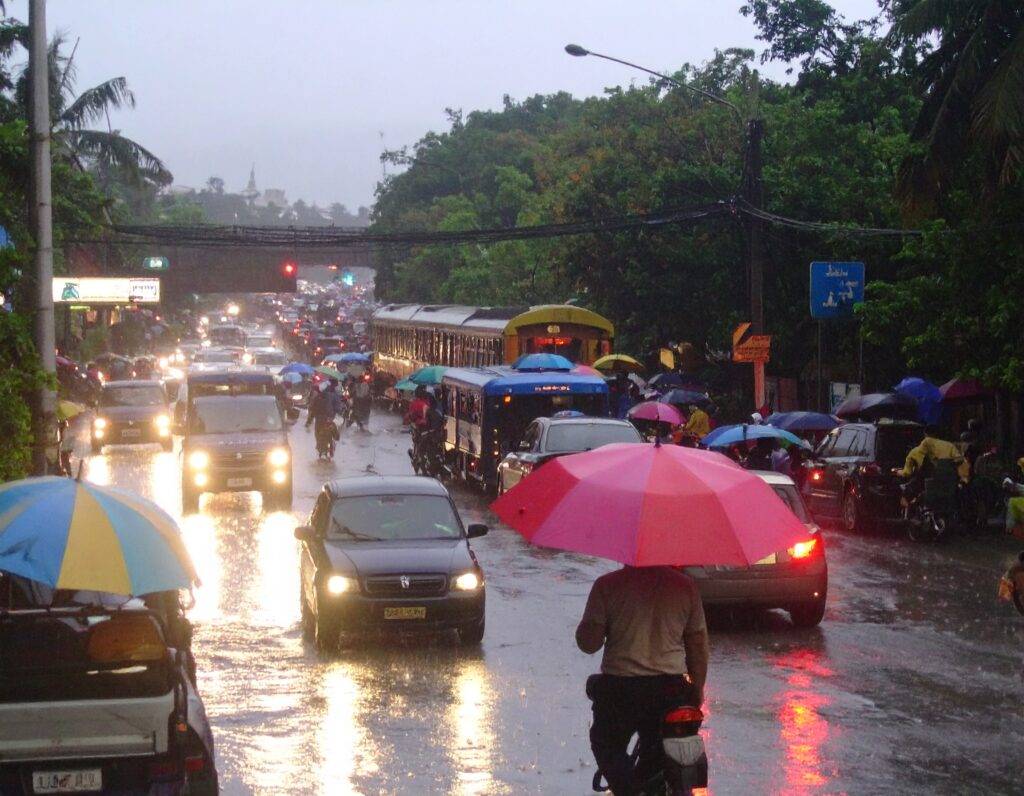
Mumbai is battling the aftermath of one of its heaviest monsoon spells in recent years, with officials racing to restore essential services after nearly 300 millimetres of rainfall drenched the city within 24 hours. The intense downpour, recorded from Tuesday, triggered large-scale flooding, traffic paralysis and transport disruptions, while road repair and clean-up operations began across key corridors on Wednesday morning.
Rail connectivity in the city bore the brunt of the weather chaos. Three long-distance trains originating from Chhatrapati Shivaji Maharaj Terminus were rescheduled due to operational delays linked to waterlogging. Although suburban rail services on the Central and Harbour lines resumed with relative normalcy, authorities cautioned that the network remains vulnerable to further disruptions if rainfall continues at the predicted scale. For a city where local trains are the lifeline, such interruptions highlight how fragile public infrastructure becomes under the strain of extreme weather. The aviation sector, too, braced for turbulence. Airlines issued travel advisories anticipating congestion and possible delays, urging passengers to account for longer commute times and to rely on official digital channels for live updates. Officials explained that air traffic management becomes particularly challenging during continuous heavy rain, with visibility and runway safety posing additional concerns.
The weather office issued an ‘orange’ alert for Mumbai and its adjoining districts of Raigad and Palghar, signalling moderate to heavy rainfall. For Thane, however, a ‘red’ alert was declared, reflecting the heightened risk of rivers overflowing and low-lying areas facing inundation. The Thane district administration announced the closure of all schools and colleges as a precautionary measure, reflecting a growing emphasis on prioritising citizen safety during climate emergencies. Experts note that while monsoons are central to India’s climate and water security, the severity of this year’s episodes is a reminder of the compounding effects of climate change and unplanned urban growth. Mumbai’s drainage systems, choked by construction waste and shrinking wetlands, continue to falter during peak downpours. Urban planners argue that investing in sustainable stormwater management, restoring natural floodplains, and strengthening public utilities must take precedence in future development.
Beyond the immediate inconvenience of delayed trains and flights, the rains expose deeper systemic vulnerabilities. Public infrastructure, designed decades ago for a less intense monsoon, is now being tested by increasingly erratic rainfall patterns. Unless reimagined through the lens of resilience, India’s financial capital will remain at the mercy of each extreme weather event. As Mumbai works to restore its battered roads and clear debris from residential areas, the focus is on maintaining mobility while preventing further casualties. The rains may subside in the coming days, but for millions who rely on daily connectivity, the message is stark—building climate-resilient infrastructure is not optional, it is essential for the city’s future stability.
Also Read : Mumbai Schools And Colleges Reopen As Rains Ease And Transport Resumes
