Mumbai rain shuts schools halts flights as IMD issues red alert
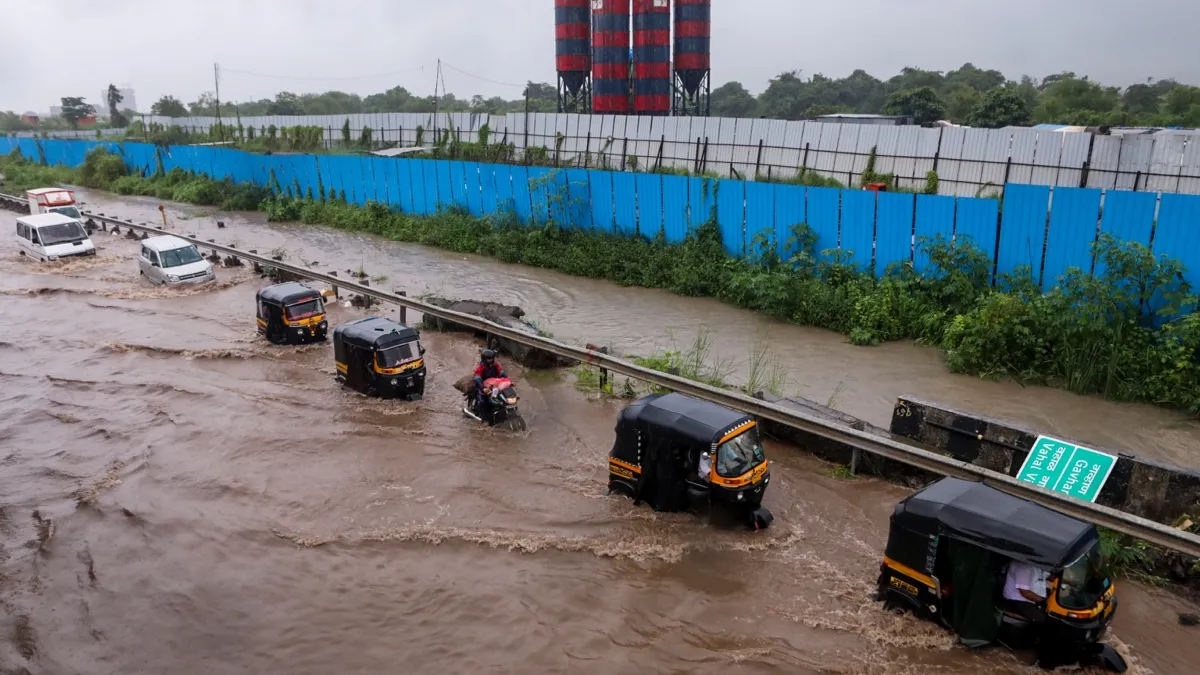
Mumbai came to a near standstill on Monday as torrential rains triggered widespread flooding, forcing schools to shut, disrupting transport networks, and placing large swathes of the city under water. The India Meteorological Department (IMD) issued a red alert for the next 48 hours, warning of further heavy downpours that threaten to deepen the crisis. With several districts across Maharashtra facing similar alerts, the financial capital is once again confronting the fragility of its urban resilience.
Neighbourhoods including Vikhroli, Ghatkopar, Bhandup, and Andheri reported severe waterlogging that slowed traffic to a crawl and left residents wading through flooded streets during peak morning hours. Visuals from Marine Drive, Nalasapora, and Chhatrapati Shivaji Maharaj Terminus captured the struggles of commuters navigating submerged stretches. Despite the downpour, local trains on the central and harbour lines were running with only minor delays of 10–15 minutes, though crowding intensified as buses and taxis struggled on submerged roads.The city administration announced an afternoon holiday for schools and colleges, citing the safety of children amid continuing rainfall. Officials confirmed that six children were trapped briefly inside a school bus in Matunga after the vehicle stalled on a flooded stretch, though they were later rescued unharmed. Another incident in South Mumbai saw a staircase collapse under heavy rain, temporarily trapping residents until rescue teams reached the spot.
The wider state of Maharashtra is facing similar pressure, with Pune, Raigad, Satara, Ratnagiri, and Kolhapur also placed on red alert, while Thane, Aurangabad, Jalna, Beed, Latur, and Sindhudurg are under orange warnings. A cloudburst in Nanded district triggered flash floods in Mukhed taluka, leaving at least five missing as Latur recorded 206 mm of rainfall since Sunday. Environmental experts warn that Mumbai’s recurring monsoon disruptions highlight the urgent need for climate-resilient infrastructure. Rapid urbanisation has left little room for natural drainage, while concretisation and the loss of mangroves continue to exacerbate flooding. Officials stress that unless investments are prioritised towards sustainable urban design, zero-carbon mobility, and green stormwater solutions, Mumbai risks repeating the same cycle of paralysis each monsoon season.
For residents, the immediate concern remains safety and mobility. Knee-deep water in areas such as Dadar and Andheri forced schoolchildren and office workers alike to trudge through flooded streets. More than 80 mm of rainfall was recorded in Bandra alone, with other pockets such as Chembur, Juhu, Sion, and Vikhroli crossing 50-90 mm within a single day.As the city braces for another 48 hours of intense rainfall, the challenge is as much about urban planning as weather. Unless Mumbai invests decisively in sustainable, equitable, and eco-friendly urban systems, each spell of extreme rain will continue to transform the financial hub into a waterlogged maze.