


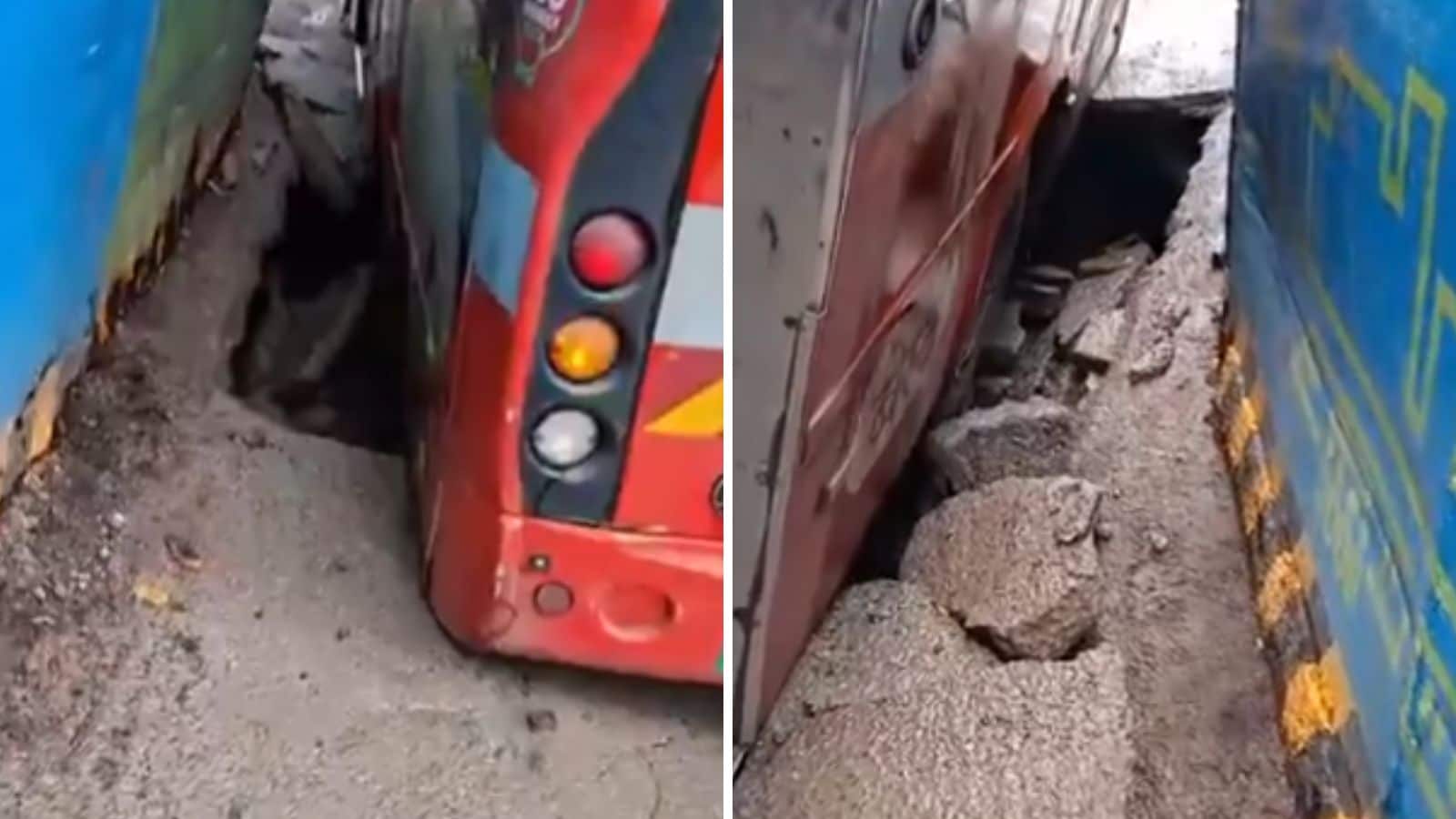
Mumbai’s relentless monsoon downpour led to a dramatic road cave-in near the under-construction Girgaon Metro station early Monday, bringing public attention back to the city’s recurring struggle with urban infrastructure fragility during the rainy season. The incident resulted in a city-run BEST bus getting stuck, though no injuries were reported.
The cave-in occurred in South Mumbai’s densely populated Girgaon area, where work is ongoing for the underground Metro Line 3 project. As the rain-soaked road gave way, the rear wheels of a BEST bus sank partially into the collapsed section, tilting the vehicle and prompting swift intervention from local authorities. Barricades were immediately erected around the site to prevent further damage and ensure pedestrian and vehicular safety.
Eyewitness footage, now widely circulated on social media platforms, showed the tilted bus alongside shocked onlookers and municipal staff. The bus driver and conductor were seen assessing the situation, while emergency response personnel rushed in to initiate damage control. While initial reports confirm no casualties, the incident has intensified public scrutiny of civic safety and engineering accountability, especially in areas undergoing large-scale infrastructure works.
This cave-in is not an isolated occurrence. It follows a similar incident on May 26 near Kemps Corner in Grant Road, where a road collapse disrupted traffic and left another BEST bus immobilised. That collapse occurred along a critical link between Kemps Corner and Nepean Sea Road, forcing a complete shutdown of traffic flow until the area was stabilised.
In both cases, the underlying triggers appear to include a combination of saturated soil, inadequate drainage, and compromised road base stability—factors that become more pronounced during Mumbai’s monsoon season. These failures also raise questions about how construction linked to underground metro tunnels is impacting the structural integrity of road surfaces above.
The India Meteorological Department (IMD) has issued continued heavy rainfall warnings for Mumbai and the wider Konkan region, placing authorities on high alert. The city’s ageing drainage infrastructure and the stress placed on roads near construction zones are key challenges the Brihanmumbai Municipal Corporation (BMC) now faces as it attempts to balance long-term development with immediate public safety.
Metro Line 3, also known as the Colaba-Bandra-SEEPZ corridor, is a flagship infrastructure project intended to ease traffic congestion and offer sustainable transit solutions. However, incidents like the one near Girgaon risk undermining public confidence in the project’s execution. Commuters and residents have called for more stringent pre-monsoon audits, better barricading near construction sites, and real-time geotechnical monitoring to prevent similar occurrences.
Civic engineers and urban planning experts continue to urge a re-evaluation of how monsoon preparedness intersects with large-scale urban construction. As Mumbai accelerates towards a future built on underground metros and high-capacity transit corridors, the city must also prioritise the robustness of surface infrastructure and stormwater systems.
For now, while the damaged road is being repaired and traffic diversions are being managed, the message from Girgaon is clear: monsoon resilience must be foundational to all of Mumbai’s infrastructure ambitions.
Also Read : Mumbai Central Railway Intensifies Ticket Checking in First-Class Compartments
