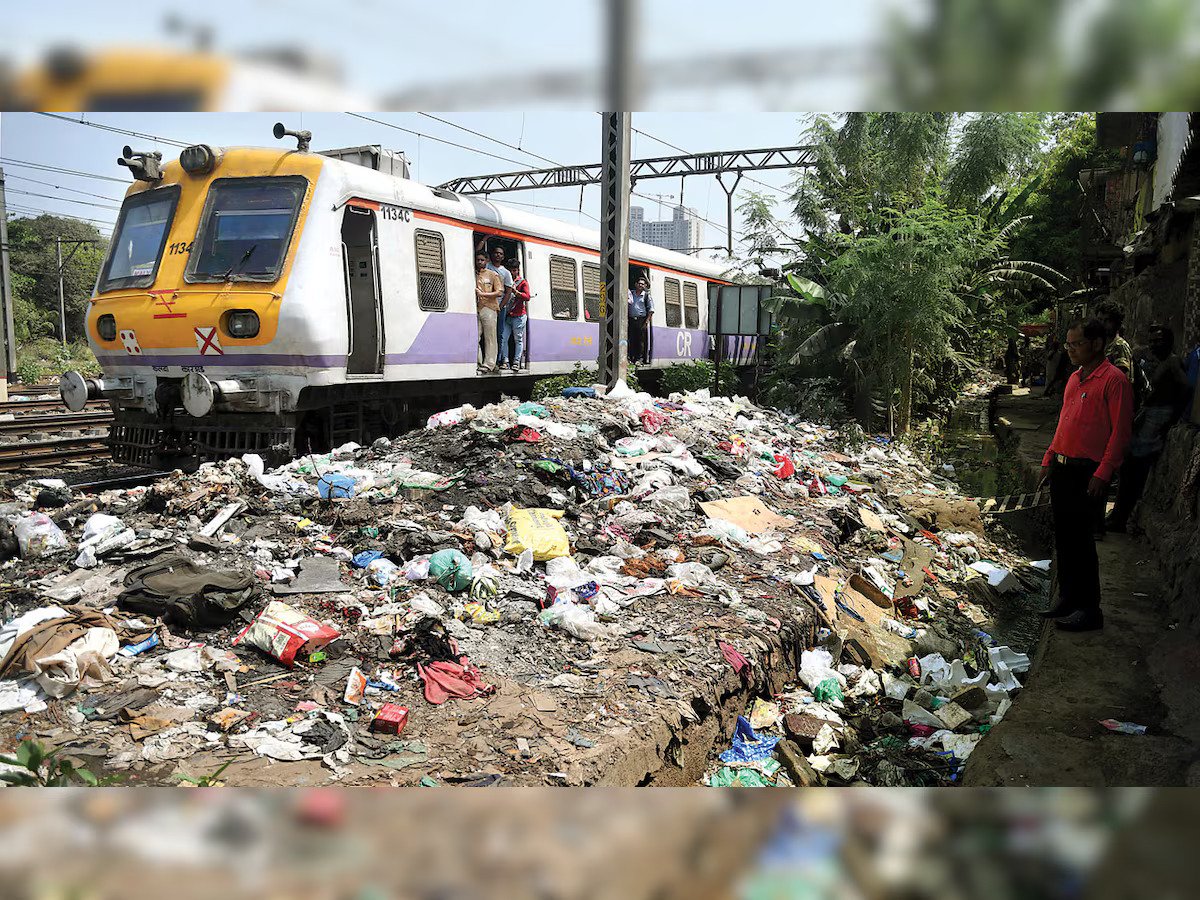
Authorities managing Mumbai’s suburban railway network have undertaken an extensive clean-up operation along railway corridors, removing more than a million bags of debris and garbage over the past eleven months. The large-scale drive forms part of preparations ahead of the monsoon season, when blocked drains and culverts along rail tracks frequently lead to waterlogging and major disruptions to daily train services.
According to railway officials, the exercise has resulted in the removal of approximately 1.16 million muck bags, representing nearly seventy million kilograms of accumulated waste from areas adjoining the tracks. The material, collected from both the central suburban corridor and the harbour line, was transported using hundreds of railway wagons specially deployed for the task. The scale of the operation highlights a persistent urban management challenge for India’s financial capital. Waste dumping along railway land remains widespread in several densely populated neighbourhoods, particularly where informal settlements have developed along transport corridors.
Railway engineers say the presence of garbage along tracks is not only an environmental concern but also a critical operational risk. During heavy rains, debris often blocks stormwater drains and culverts running beneath the tracks, preventing water from draining away efficiently. The resulting water accumulation can damage rail infrastructure, slow train movement and, in extreme cases, suspend services on key commuter routes. The issue has gained urgency in recent weeks as civic authorities and railway agencies coordinate their annual pre-monsoon preparedness efforts. Meetings between municipal officials and railway departments have focused on preventing flooding hotspots that historically disrupt mobility in the metropolitan region.
Data from the railway administration indicates that waste accumulation tends to peak during certain months of the year, suggesting that dumping is continuous rather than seasonal. Areas such as Sion, Kurla, Wadala, Mahim and parts of Bandra have been identified as recurring pressure points where trackside dumping is particularly severe. Urban infrastructure experts say these locations reflect the complex interface between railway land and surrounding residential settlements. Informal housing clusters often emerge along rail corridors due to proximity to employment opportunities and transport connectivity, but the absence of organised waste management systems can lead to uncontrolled dumping.
To address the problem, authorities have begun installing protective barriers along particularly vulnerable sections of the tracks. In one section of the suburban network, railway officials have initiated the construction of metal fencing designed to discourage dumping and limit unauthorised access to railway land. However, transport policy observers argue that long-term solutions will require coordination between railway agencies, civic bodies and state authorities. Measures such as improved solid waste management, better urban sanitation infrastructure and inclusive housing strategies could help reduce pressure on transport corridors.
For a rail network that carries millions of commuters daily, maintaining clear trackside infrastructure is essential not only for operational efficiency but also for the safety and resilience of the city’s mobility systems. As the monsoon season approaches, the success of these clean-up efforts will be tested by heavy rainfall and the city’s ongoing struggle to manage waste within its rapidly expanding urban landscape.
Mumbai Railways Remove Massive Trackside Waste Before Monsoon