


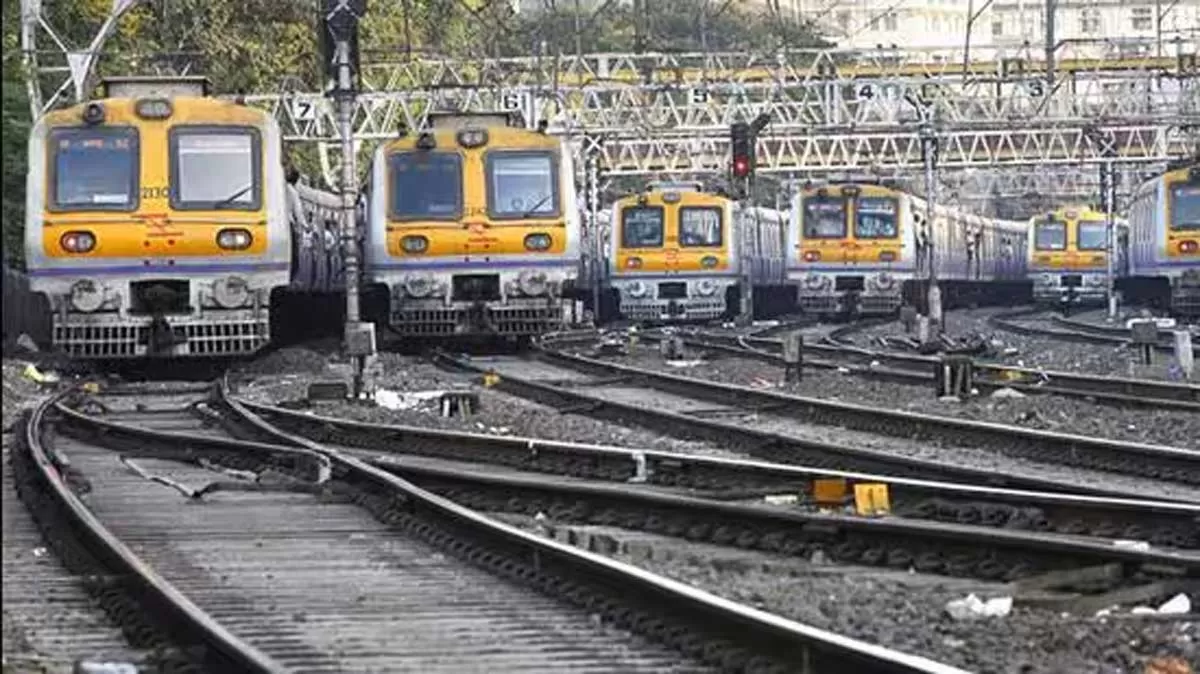
Mumbai’s suburban railways, long regarded as the city’s lifeline, are weighing a major operational overhaul by splitting existing routes into independent corridors. Officials said the proposed restructuring aims to reduce cascading delays, boost efficiency, and create space for more trains in a network that already moves over seven million passengers daily.
The proposal, under review for both Central Railway (CR) and Western Railway (WR), suggests creating self-contained suburban corridors rather than running end-to-end services across the 120-km stretch. Officials argue that dividing the network could insulate each corridor from disruptions, similar to the operational model used in metro systems. For CR, the plan outlines eight corridors: CSMT-Thane (slow), Thane-Kalyan (slow), Kalyan-Kasara (slow), Kalyan-Karjat (slow), CSMT-Kalyan (fast), CSMT-Panvel (slow), Belapur-Uran (slow), and Thane-Nerul/Vashi (slow). Each corridor would operate independently, with uniform halts and crew schedules, reducing confusion for commuters and allowing a metro-style cyclical timetable. Experts said this could cut train intervals to as little as 4–6 minutes during peak hours.
Railway authorities are simultaneously preparing to introduce 300 additional services across CR and WR on top of the 3,200 already in operation. Alongside the corridor division, initiatives include wider deployment of air-conditioned trains, cab-based signalling to replace traditional poles, and expansion of tracks and platforms. Such measures, officials said, are critical to handling growing passenger demand while meeting sustainable transport goals. The corridor model also opens the door to gradually implementing advanced technologies such as Communications-Based Train Control (CBTC), which would be phased in to avoid city-wide disruptions. Officials noted that this approach offers flexibility in planning fully air-conditioned corridors where public resistance is minimal.
However, the plan faces significant operational and infrastructural hurdles. Officials have flagged that existing stations are not designed to handle surges of passengers arriving simultaneously from different directions. Major junctions such as Thane, Kalyan, and Wadala, which already manage both suburban and long-distance trains, would require complete redesigns and platform expansions to absorb additional pressure. Infrastructure constraints further complicate the plan. Level crossings at Diva and Chunabhatti, frequent trespassing incidents, and encroachments along tracks continue to cause delays and safety hazards. Experts said that unless these systemic issues are resolved, splitting corridors alone will not achieve the desired efficiency.
On WR, where the Churchgate-Dahanu route runs in a relatively straight line, officials believe that completion of additional tracks till Borivali and Virar and the removal of encroachments could significantly ease operations. Unlike CR’s complex web, WR may not require full-scale corridor division to see improvement. The blueprint also highlights the urgent need for projects such as extending extra lines up to Kasara and Karjat, doubling the Khopoli stretch, creating additional sidings for train parking, and redeveloping key stations. Transport experts argue that completing these projects in tandem with corridor restructuring could help Mumbai achieve a suburban rail system that is more resilient, punctual, and ready for sustainable growth.
While the idea of splitting suburban routes carries both promise and risk, its success will depend on how effectively authorities balance technological upgrades with crowd management and infrastructure expansion. For a city that depends on its trains as much as its residents do, even a minute of improvement can have transformative effects on daily life.
Also Read : Bengaluru Faces Potholes And Traffic Woes Forcing BlackBuck Exit
