


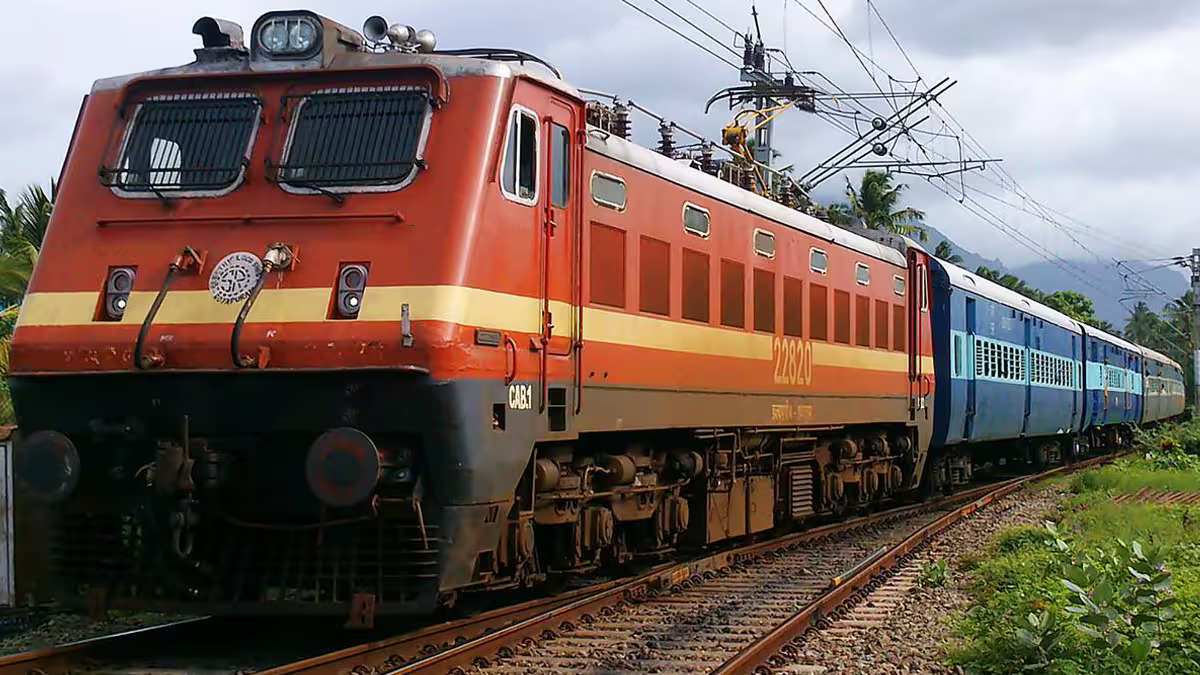
To ease passenger traffic during the annual Shrawani Mela, Indian Railways has announced special train services catering to the influx of devotees and travellers to Jharkhand and eastern Uttar Pradesh. These measures are aimed at ensuring hassle-free travel while maintaining operational efficiency across the zone.
The East Central Railway (ECR) zone, responding to increasing demand, has introduced the Asansol–Gorakhpur Shrawani Mela special train. Operating under the number 03527/03528, this daily service will run till August 10. The service aims to handle the unprecedented spike in traffic during the religious season. The train departs Asansol at 9 pm, halts at Jasidih at 11 pm, reaches Patna at 4.10 am, and terminates at Gorakhpur at 10.45 am. On the return journey, it leaves Gorakhpur at 1.45 pm and is scheduled to arrive back in Asansol by 3.50 am the next morning. With lakhs of pilgrims travelling to Deoghar during Shrawan, known for its spiritual significance among Shaivite devotees, the train is a crucial link for seamless mobility. Officials noted that crowd control and timely arrivals are top priorities, and additional staff and safety measures are being deployed.
Further bolstering the network, a new long-distance service connecting western Rajasthan to eastern Jharkhand has also been announced. From August 3, the Dorai (Ajmer) to Godda train (numbered 19603/19604) will operate every Sunday from Dorai, covering major cities including Delhi, Deoghar, Gaya, and DDU before arriving at Godda the following day at 10.20 pm. The return leg departs Godda every Tuesday at 5 am, reaching Dorai on Wednesday evening. The new train service is being welcomed as a strategic move, both to support religious tourism and to strengthen inter-regional rail connectivity. The addition of sleeper, 3AC, 2AC and general coaches is expected to serve a broad spectrum of passengers from across socioeconomic backgrounds. Rail officials confirmed that coach composition is tailored to expected demand and will be modified as required.
The timing of these services is significant, aligning with the seasonal surge in religious footfall and rural mobility. Railway experts suggest that these moves also enhance rail-based carbon efficiency, potentially reducing vehicular congestion and emissions on key highways connecting Bihar, Jharkhand, and Uttar Pradesh. With these steps, Indian Railways reinforces its role as a dynamic enabler of religious and regional connectivity while pushing toward greener, inclusive urban travel goals. While operational success during the Shrawani Mela will be closely watched, the broader implications for long-term route planning and carbon-conscious logistics are equally vital.
Also Read : BMC Tells SC Kanjurmarg Restoration Unviable Without New Dump Site
