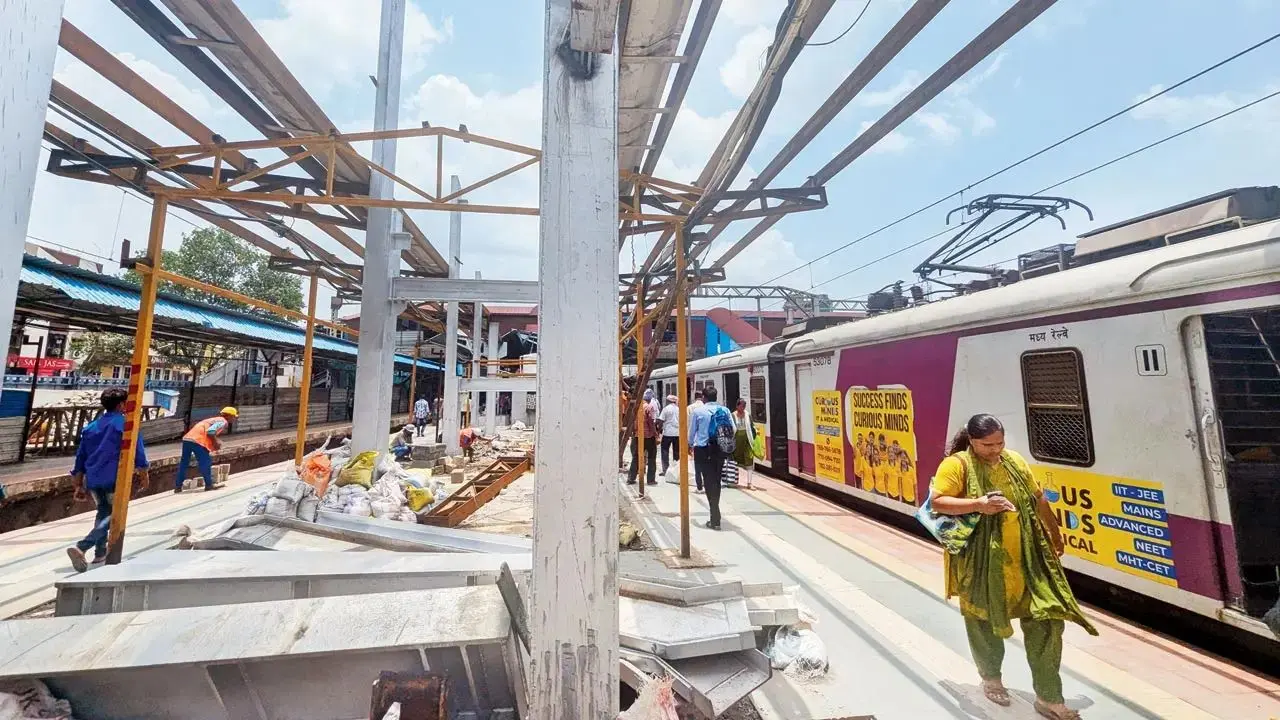
Mumbai railway roofing gaps exposed, safety works still remain incomplete
Mumbai railway stations are undergoing rapid improvements after media reports exposed serious monsoon-related risks due to incomplete platform roofing. Following the coverage, several stations have seen significant progress in fixing roof gaps and advancing shelter infrastructure. While actions have been taken at many locations, critical stations like Dadar and Kurla continue to face delays, raising concerns about passenger safety amid ongoing upgrades and seasonal rains.
After public attention was drawn to the lack of monsoon protection at several suburban stations, railway authorities accelerated roofing works at multiple locations. Stations like Ghatkopar, Santacruz, and Kandivli have seen advanced stages of shelter installation. These works are part of broader station redevelopment plans, but the initial oversight in providing adequate cover during the rainy season drew widespread criticism. Prompt action has helped mitigate risks in some areas, though challenges persist.
Despite progress, key stations such as Dadar and Kurla remain partially exposed due to pending construction or unresolved safety dimension issues. Platform 5 at Thane has received partial roof extensions, while Dombivli’s additional foot overbridge has finally been covered. Senior observers point out that monsoon preparedness should be prioritised in advance of annual weather patterns rather than implemented reactively after public complaints or press intervention, especially at high-footfall locations.
Authorities claim that roofing disruptions often coincide with station upgrade projects involving escalator installations, new lifts, or additional foot overbridges. In such instances, roofing is temporarily removed and replaced later. Although makeshift covers are usually installed during transition periods, passengers have reported inadequacies in these temporary arrangements. Experts argue that safety infrastructure should not be compromised even during renovations and that contingency measures must be robust enough to handle seasonal rainfall.
As works continue across the suburban network, long-term shelter solutions are being integrated with modernisation plans. Officials note that roofing improvements are now part of phased station upgrades designed to improve commuter comfort and safety. However, public confidence hinges on timely execution and visible results. Commuters and urban planners alike urge consistent monitoring and public communication, especially when infrastructural changes directly impact daily movement during peak weather vulnerability.
Mumbai’s railway response to media scrutiny highlights the importance of proactive infrastructure planning. While commendable progress has been made, gaps remain in ensuring consistent monsoon protection across key suburban stations. With passenger safety at stake, experts urge sustained attention and timely completion of all roofing projects. In a city where millions rely on rail daily, reliable shelter is not a luxury—it’s a necessity.