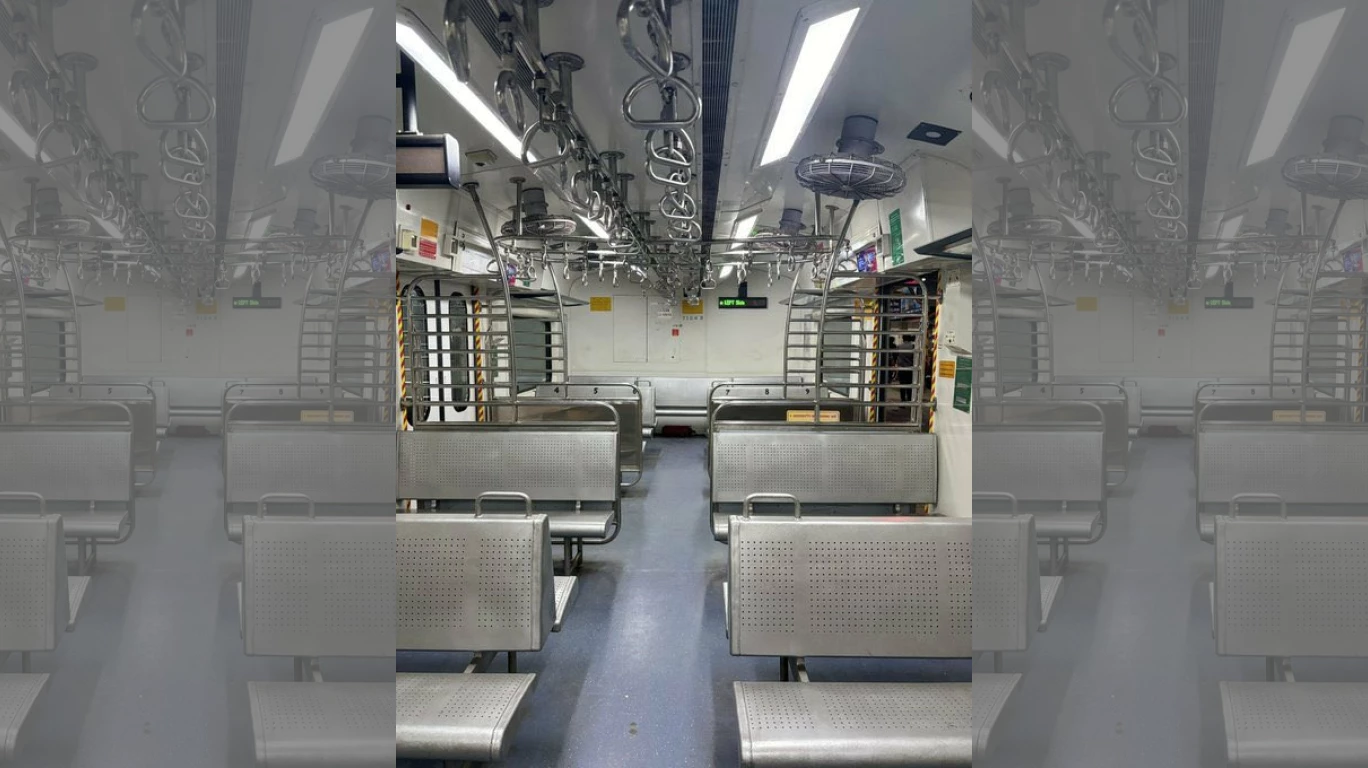
Mumbai’s suburban rail network is set for a significant safety-focused shift, with Central Railway preparing a pilot run of non AC trains with automatic doors on the high-density CSMT–Kalyan corridor. The move marks a critical operational change on one of the city’s most crowded commuter routes, aimed at reducing fatal accidents linked to open doors during peak-hour travel.
Railway officials involved in the planning said the pilot is being designed as a targeted intervention following repeated safety concerns on the central line, particularly after a fatal overcrowding incident last year. The corridor handles some of the highest passenger volumes in the country, making it a logical testing ground for design changes that prioritise passenger containment and controlled boarding. Unlike existing non-AC locals, the new rakes will feature doors that remain shut while the train is in motion, similar to air-conditioned services but without climate control. Officials said initial deployment will focus on peak-hour services, where crowd pressure and risk levels are highest. Existing rolling stock on the route is expected to be gradually replaced as part of the trial phase.
Urban transport planners note that the introduction of non AC trains with automatic doors represents a shift in how safety is addressed in legacy mass transit systems. Rather than relying solely on behavioural messaging or platform policing, the railways are moving towards engineering-led solutions that physically limit risky commuter behaviour in overcrowded conditions. Concerns around ventilation and thermal comfort have been a key issue in public discussions. Railway engineers involved in the project said airflow has been factored into the design through fully interconnected coaches. Open gangways between cars are expected to allow continuous air circulation and enable passengers to redistribute themselves more evenly along the train, easing pressure near doors.
The coaches are being developed at a public-sector manufacturing unit and are part of a broader modernisation programme for Mumbai’s suburban fleet. A senior railway official said feedback from the pilot will guide future deployment decisions across other high-density routes, including whether similar designs can be adapted for long-term use without increasing operational costs. From a sustainability perspective, rail experts say improving safety and reliability on existing electric rail infrastructure is essential for reducing the city’s dependence on private vehicles and road-based transport. Safer suburban trains support higher ridership retention, lower per-capita emissions, and more equitable access to employment for lower- and middle-income commuters who rely on non-AC services.
Economists tracking urban mobility investments add that incremental upgrades like automatic doors often deliver higher social returns than large, capital-intensive expansions, particularly in space-constrained cities like Mumbai. Preventing accidents also reduces service disruptions, healthcare costs, and productivity losses across the metropolitan economy. No formal launch date has been announced, and the final operating timetable is still being refined. For Mumbai’s daily commuters, however, the pilot signals a growing acknowledgement that safety, dignity, and reliability must evolve together as the city’s transport systems adapt to rising demand and climate stress.
Mumbai Railway Pilots Non AC Automatic Doors